




A Landmark Policy Shift
For decades, India's space programme was a government-led endeavour, with ISRO achieving remarkable feats on a lean budget. While private firms acted as suppliers, they were never in the driver's seat. That all changed in 2020 when the government announced
historic reforms, opening the entire space sector to private participation. This wasn't just about letting private companies build components; it was an invitation to design, launch, and operate their own space missions. The goal was to unleash the country's vast entrepreneurial talent and transform the space industry into a major economic engine. The number of space startups has since surged, growing from just one in 2014 to over 450 by 2026.
Public Sector as Enabler, Not Gatekeeper
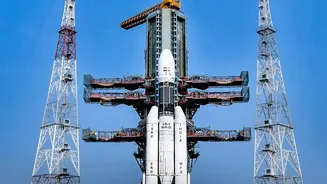
The success of this new model hinges on a re-imagined role for the public sector. Instead of controlling everything, government bodies now act as facilitators. At the heart of this is the Indian National Space Promotion and Authorisation Centre (IN-SPACe), established as a single-window agency to guide and regulate private players. IN-SPACe acts as the crucial interface between startups and ISRO, allowing private companies to use state-of-the-art government facilities, testing centres, and launchpads. This saves startups enormous capital and time. Meanwhile, ISRO has transitioned into a mentorship role, providing technical expertise and transferring technology to the private sector, allowing it to focus on more complex, deep-space scientific and national security missions.
The Rise of Private Pioneers
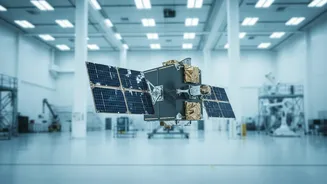
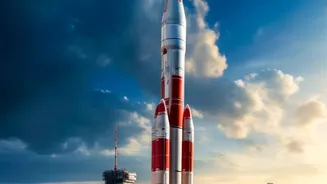
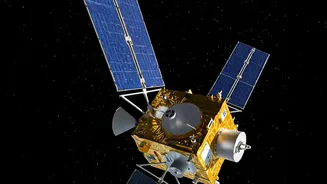
The policy reforms have ignited a firestorm of innovation. Companies like Skyroot Aerospace and Agnikul Cosmos are at the forefront of this private space race. In a landmark achievement in July 2026, Skyroot Aerospace successfully launched its Vikram-1 rocket, making India the third nation after the US and China with private orbital launch capability. Agnikul Cosmos has also made waves with its successful test of the world's first single-piece 3D-printed rocket engine. Beyond launch vehicles, other startups are making significant strides. Pixxel is building a constellation of hyperspectral Earth-observation satellites, while companies like Dhruva Space and Bellatrix Aerospace are developing critical satellite and propulsion technologies.
An Economic Star is Born
This collaborative energy is translating into serious economic growth. India's space economy, valued at around $8.4 billion in 2022, is projected to skyrocket to approximately $44 billion by 2033. This rapid expansion is attracting significant investment, with the sector drawing nearly $400 million in funding over the last three years. This growth isn't just about big numbers; it's creating high-value jobs and a ripple effect across the economy. With 100% FDI allowed for manufacturing components and systems, India is positioning itself as a global hub for space technology, aiming to capture a much larger share of the global space market, which is currently estimated at over $360 billion.