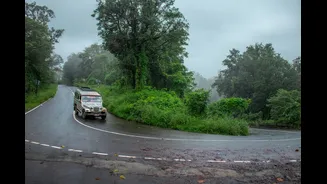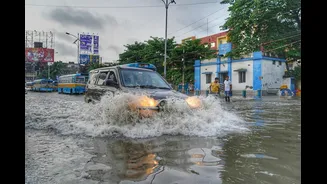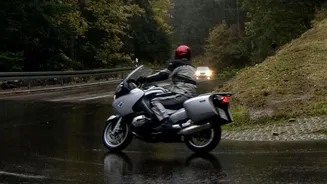




The Double Challenge: Water and Gravity
Driving on a wet road is fundamentally different from driving on a dry one. Water acts as a lubricant, creating a thin, slick layer between your tyres and the asphalt. This drastically reduces the friction, or grip, your car needs to accelerate, steer,
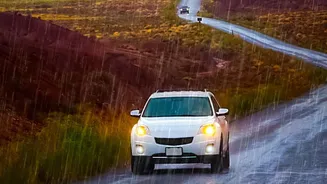
and, most importantly, stop. Stopping distances on wet roads can be up to 50% longer than on dry surfaces. Now, add a mountain's incline or decline to this equation. When driving downhill, gravity is actively working against your brakes, pulling your vehicle forward and further increasing the distance needed to stop. Conversely, while gravity helps you slow down when going uphill, a sudden stop on a wet incline can still be challenging. This combination of reduced friction from rain and the constant pull of gravity makes mountain driving uniquely hazardous.
Your Tyres: The First and Only Contact
Your tyres are the only part of your vehicle that touches the road, making them your first line of defence. Their effectiveness in wet conditions hinges on one key design feature: the tread. The grooves in a tyre's tread are not just for show; they are engineered to channel water away from the contact patch—the area of the tyre touching the road. When the tread is deep enough, it effectively clears a path for the tyre to maintain grip. However, if the tyres are worn, the shallow grooves can't disperse water quickly enough. This can lead to a dangerous phenomenon called aquaplaning (or hydroplaning), where the tyre loses contact with the road entirely and essentially surfs on a wedge of water, resulting in a complete loss of steering and braking control. In India, the legal minimum tread depth is 1.6mm, but for safe monsoon driving, experts recommend having at least 3mm.
Beyond Tread: Pressure and Alignment
Proper tyre maintenance goes beyond just tread depth. Tyre pressure is equally critical. Underinflated tyres can compromise stability and increase wear, while overinflated tyres reduce the size of the contact patch, limiting grip. Monsoon temperature fluctuations can affect tyre pressure, so it’s wise to check it every couple of weeks. Similarly, wheel alignment ensures your tyres wear evenly and make optimal contact with the road. Misalignment, often caused by hitting potholes hidden by rainwater, can lead to uneven tyre wear and compromised handling. Regular tyre rotation, typically every 8,000-10,000 kilometres, helps ensure all four tyres wear down at a similar rate, prolonging their life and maintaining balanced traction.
Your Brakes: The Ultimate Safety Net
While tyres provide grip, your brakes provide the force to slow you down. On wet mountain roads, their job becomes much harder. Water on brake pads and rotors can reduce friction, momentarily increasing the distance you need to stop. On long downhill stretches, frequent braking can cause brake fade, a condition where the brakes overheat and become less effective. This is where modern braking systems like the Anti-lock Braking System (ABS) become invaluable. When you brake hard on a slippery surface, ABS prevents the wheels from locking up. It rapidly pumps the brakes for you, allowing the wheels to keep rotating just enough to maintain steering control while slowing down. This ability to steer while braking can be the difference between avoiding an obstacle and a dangerous skid.
Pre-Monsoon Checks for Peace of Mind
Before tackling mountain roads this monsoon, a thorough check of your tyres and brakes is not just recommended—it's essential. Inspect your tyres for adequate tread depth and any signs of damage like cuts or bulges on the sidewalls. Ensure they are inflated to the vehicle manufacturer's recommended pressure. For your brakes, listen for any squealing or grinding noises and pay attention to whether the car pulls to one side when braking, as these can be signs of wear. During the monsoon, especially if you frequently drive in hilly areas, consider having your brakes inspected more often, perhaps every 2,000-3,000 kilometres. A professional can check brake pad thickness, rotor condition, and brake fluid, which can absorb moisture over time and become less effective.