




From Concept to Core Tool
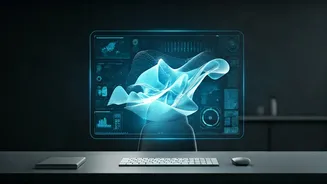
Prompt-to-design refers to a category of artificial intelligence systems capable of generating visual media, from illustrations to full user interfaces (UI), based on simple text descriptions. For a long time, the results were more amusing than useful,
producing distorted images and nonsensical layouts. But in the last couple of years, the technology has crossed a critical threshold. Powered by more sophisticated models, tools can now generate wireframes, user flows, and even production-ready code, moving from a curiosity to a key part of the modern creative workflow. This shift marks the beginning of the technology's practical era, where AI is less a gimmick and more of a junior partner in the design process.
The New Creative Co-Pilots
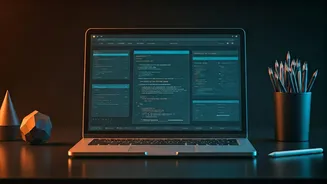
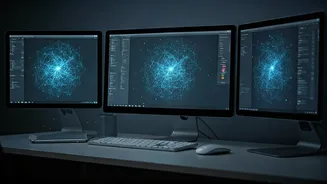
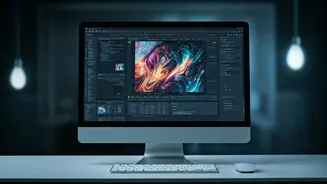
A new breed of AI tools is integrating directly into the workflows of designers. Platforms like Vercel's v0, Google's Stitch, and Framer AI can create front-end code and responsive web pages in minutes from a prompt. Tools like Uizard can turn a rough sketch into a polished wireframe, while UX Pilot can generate entire app designs. These systems are not just creating static images; they are building interactive prototypes and multi-screen user flows. Adobe, a long-time leader in creative software, has embedded its Firefly AI model across its suite, allowing designers to use features like Generative Fill in Photoshop or generate design variations in Firefly Boards, their collaborative workspace. This enables designers to automate repetitive tasks, like background removal or creating filler text, freeing them up to focus on more strategic work.
Redefining the Designer's Role
The rise of practical AI is not leading to the replacement of designers but to a redefinition of their role. The consensus in 2026 is that AI serves as a powerful collaborator, automating the tedious aspects of design so humans can focus on what they do best: strategy, problem-solving, and storytelling. Instead of starting with a blank page, a designer might now start with an AI-generated 'zero draft'—a foundational layout to react to and refine. This process accelerates ideation and prototyping, allowing teams to test ideas faster. The most valuable designers are becoming those who can effectively direct AI, critique its output, and add the crucial layers of human judgment, emotional intelligence, and cultural context that machines still lack.
Adoption Under Duress?
Despite the benefits, the industry's adoption of AI is complex. A recent survey found that while 86% of creatives use AI in their work, only 10% believe its overall impact is positive. Many feel they are adapting out of necessity rather than enthusiasm, driven by client demands for faster, cheaper work. There are valid concerns about the homogenization of design styles if AI models are all trained on similar data, and the potential for AI to devalue the craft by making it seem easy. There are also unanswered questions around copyright and authorship when AI is heavily involved in the creation process.
The Road Ahead
The practical era of prompt-to-design is just beginning. While AI excels at speed and generating variations, human oversight remains critical for quality, originality, and ensuring designs meet user needs. AI tools are still prone to producing generic or flawed outputs, and they cannot replicate the strategic thinking and empathy that define great design. The future will likely involve a deeper partnership between human and machine. As AI handles more of the mechanical production, the designer's role will elevate, focusing more on creative direction, strategic insight, and ensuring the final product truly connects with people. The tools have changed, but the goal of creating meaningful human experiences remains the same.