



The Thin Air on Mars
Walking on Mars without a spacesuit is a fatal fantasy for one primary reason: the atmosphere. The Martian air is incredibly thin, about 100 times less dense than Earth's, and is composed of roughly 96% carbon dioxide (CO2). For human explorers, this
is a non-starter. We need oxygen to breathe, and carrying enough of it for a multi-year mission, plus enough to fuel a rocket for the return journey, is logistically and financially impractical. The cost of launching mass from Earth is astronomical. This reality has forced space agencies to embrace a new philosophy known as In-Situ Resource Utilization (ISRU), which basically means living off the land. For Mars, the most abundant resource to leverage is the CO2-rich atmosphere itself.
The MOXIE Blueprint
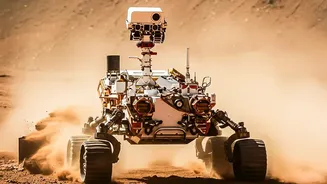
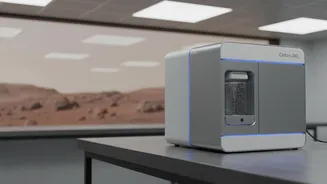
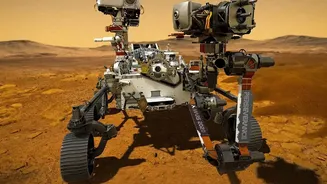
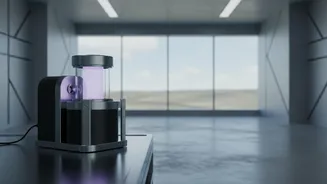
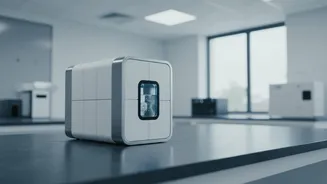
The first major breakthrough in Martian oxygen production came from a lunchbox-sized instrument aboard NASA's Perseverance rover called MOXIE (Mars Oxygen In-Situ Resource Utilization Experiment). MOXIE proved that it is possible to create oxygen on Mars by pulling in the Martian air, filtering it, and then using a process called solid oxide electrolysis. This process heats the CO2 to around 800 degrees Celsius and applies an electric current, which splits the CO2 molecules into breathable oxygen (O2) and carbon monoxide (CO). Between 2021 and 2023, MOXIE successfully ran multiple times under various seasonal and daily conditions, consistently producing about 6 to 12 grams of high-purity oxygen per hour—roughly the rate of a small tree on Earth. While a small amount, it was a monumental proof-of-concept, confirming the viability of ISRU for life support.
Next-Generation Oxygen Reactors
While MOXIE was a success, its electrolysis method requires significant heating and pressurization, which consumes energy and adds to the system's size and complexity. The next generation of reactor designs aims to be smaller, faster, and more efficient. Researchers are now developing plasma-based reactors that could revolutionize oxygen production. These systems use powerful electric fields to energize the Martian CO2 into a plasma state, causing electrons to slam into CO2 molecules and break them apart into oxygen and carbon monoxide. This method can operate at lower temperatures and pressures than solid oxide electrolysis, potentially making the hardware lighter and more compact. Early lab results are incredibly promising, with some prototypes demonstrating oxygen production rates nearly 30 times faster than MOXIE for the same energy input.
More Than Just Breathing
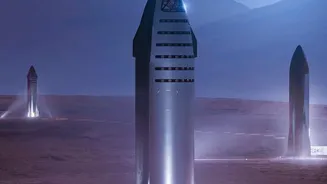
The massive amount of oxygen needed for a human mission isn't primarily for breathing. The biggest consumer is the Mars Ascent Vehicle—the rocket that will launch astronauts off the Martian surface for their journey home. NASA estimates that lifting a crew off Mars will require about 25 metric tons of liquid oxygen to act as the propellant's oxidizer. To produce that much, a future, scaled-up oxygen plant would need to run continuously for months, likely well before astronauts even arrive. This is where the efficiency gains of new reactor designs become critical. A faster, more efficient system reduces the time needed to stockpile propellant, decreases the size and power requirements of the plant, and ultimately lowers the overall risk of the mission. Other innovative approaches being explored include systems to extract oxygen from the salty brines found beneath the Martian surface, which could also produce hydrogen for fuel.
The Road to a Martian Outpost
The development of advanced oxygen reactors is a critical piece of the puzzle for establishing a long-term human presence on Mars. An industrial-scale version of these technologies, perhaps 200 times the size of the original MOXIE experiment, could create a vast reservoir of breathable air and rocket propellant, making a sustainable outpost possible. Some next-generation designs even show promise for producing nitrogen-based compounds from the atmosphere, which could be used as fertilizers for growing crops on the Red Planet. By learning to harness the resources already on Mars, scientists and engineers are methodically overcoming the planet's hostile environment, bringing the prospect of Martian boot prints from science fiction closer to reality.