




The Constant Battle in the Fields
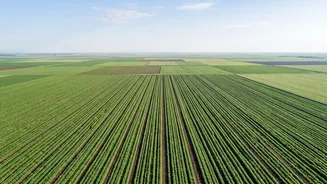
Growing organic cotton is a constant struggle against nature. Without the use of synthetic herbicides, farmers are left with two primary options for controlling weeds that compete with cotton plants for water, sunlight, and nutrients: tilling the soil
or pulling them by hand. Both methods are fraught with problems. Tilling can damage soil structure and release carbon, while manual weeding is incredibly labor-intensive and expensive, a cost that is becoming unsustainable as farm labor gets harder to find. Uncontrolled weed growth can slash cotton yields by anywhere from 30% to a staggering 80%, making it one of the biggest economic threats to organic farmers. This challenge has historically kept organic cotton as a niche, costly product, but that is beginning to change thanks to a technological leap forward.
What is Precision Edge AI?
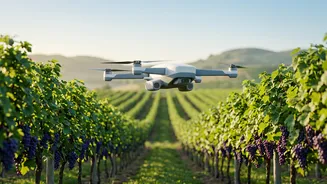
Let's break down the jargon. Artificial Intelligence (AI) allows a machine to learn and make decisions. "Edge" computing means this AI brain is located directly on the machine itself—like a tractor or a drone—rather than in a distant cloud server. This is critical for agriculture because internet connectivity in rural fields is often unreliable or slow. By processing data 'at the edge,' the machine can make instant, real-time decisions as it moves through the crop rows. "Precision" refers to the technology's ability to act with incredible accuracy. So, a Precision Edge AI system is a smart machine that can see, think, and act on its own, right in the field, with pinpoint accuracy.
See, Think, and Act on Weeds
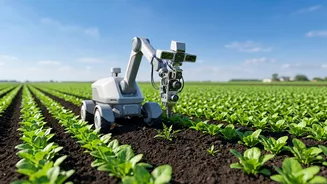
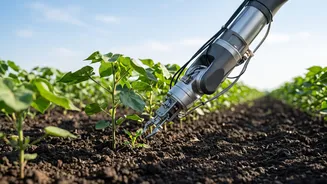
In practice, these systems are mounted on tractors or autonomous rovers. As the machine moves, high-resolution cameras continuously scan the ground. The Edge AI chip, which has been trained on millions of images, instantly analyzes the video feed to distinguish a valuable cotton seedling from an unwanted weed. The accuracy is remarkable, with some systems able to identify weeds with over 90% accuracy even while moving at speed. Once a weed is identified, the system acts. Several methods are being pioneered. Some machines use robotic arms to fire high-power lasers that incinerate the weed without touching the crop plant just millimeters away. Others use a micro-jet to spray a tiny, targeted dose of an organic-approved herbicide directly onto the weed, reducing total spray volume by over 85% compared to broadcast spraying.
A Revolution for Farmers and the Planet
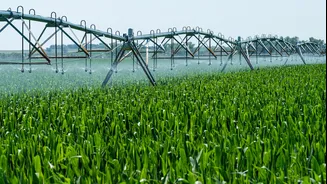
The benefits of this technology are transformative. For farmers, it promises to dramatically lower costs associated with manual labor and resource use. By precisely targeting only the weeds, it also enables more efficient use of water and organic-approved inputs. This not only saves money but also enhances soil health and reduces the environmental footprint of farming. Most importantly, by offering a scalable and effective solution to the weed problem, it makes organic farming more economically viable. This could lead to an increase in organic cotton cultivation, providing more sustainable options for the global textile industry and consumers. Some companies in India, like Hyderabad-based Harvested Robotics, are developing laser-weeding robots specifically to tackle the estimated $11 billion in annual crop losses due to weeds in the country.
The Road Ahead for Smart Farming
Despite its immense potential, Precision Edge AI is still an emerging technology. The high initial cost of these advanced machines can be a significant barrier for many small and medium-sized farms. Furthermore, the AI models require continuous updates and training to recognize different weed species under various weather and soil conditions. Integrating this new tech with existing farm equipment also presents a challenge. However, as the technology matures and costs come down, its adoption is expected to grow. The development of low-energy, autonomous systems and region-specific AI models will be crucial for widespread use. Experts believe this is not a fleeting trend but a fundamental shift towards a more efficient, sustainable, and data-driven future for agriculture.