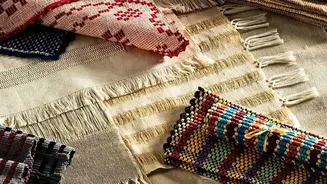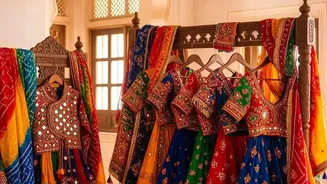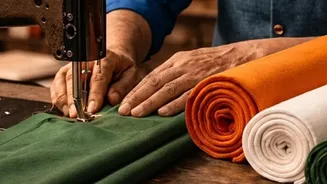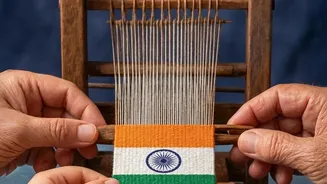


In homes across India, old fabrics are not discarded; they are storytellers. They carry the scent of memories and the softness of time. This spirit of reuse finds beautiful expression in traditions like Kantha and Godhadi, which turn old cloth into new
art.
The Soul of Scraps
Long before 'upcycling' became a global trend, it was a way of life in India. The philosophy of not wasting anything is deeply embedded in the culture, especially when it comes to textiles. An old saree, a worn-out dhoti, or a soft lungi are seen not as waste, but as materials rich with potential. This mindset gave birth to a host of regional crafts where women transformed scraps of fabric into functional and beautiful items. These were not just acts of thrift but of love, weaving together layers of cloth that held personal histories, creating new objects imbued with warmth and memory. From quilts that swaddle newborns to spreads that welcome guests, this tradition is a testament to a sustainable and resourceful heritage.
Kantha: A Stitch in Time From Bengal
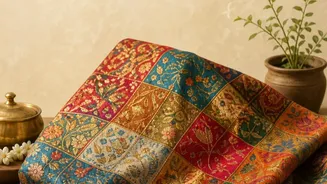
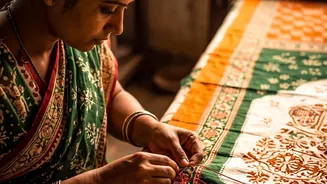
Kantha is perhaps the most well-known of India's fabric reuse traditions, originating centuries ago in Bengal. The word itself is believed to derive from 'kontha', meaning rags in Sanskrit. At its heart, Kantha is a simple running stitch used to sew together layers of soft, old sarees or dhotis. Traditionally, women would pull threads from the borders of old sarees to do the embroidery, making it a complete act of recycling. What begins as a simple stitch, however, evolves into intricate patterns that tell stories. Motifs of flowers, birds, animals, and scenes from folklore and daily life cover the surface, creating a 'Nakshi' or illustrative Kantha. While originally used to make quilts (Lep Kantha) and baby wraps, the technique has been adapted for everything from sarees to home decor, gaining global recognition.
Godhadi: The Warmth of Maharashtra
Travel west to Maharashtra, and you'll find the cozy comfort of the Godhadi, also known as Gudri. Much like Kantha, a Godhadi is a quilt made from layers of old clothing, particularly sarees. The process is a communal one, where women often gather in the afternoons to stitch these quilts, sharing stories as their needles work through the fabric. Unlike the often intricate embroidery of Kantha, the primary purpose of a Godhadi is functionality and warmth. The layers are hand-stitched together to create a soft, durable blanket. Each Godhadi is unique, its patchwork of colours and patterns a vibrant collage of the fabrics it was made from. These quilts carry immense sentimental value, often passed down through generations as a physical embodiment of a mother's or grandmother's love.
Beyond the Famous Two
While Kantha and Godhadi are prominent examples, the tradition of quilting with old fabric is pan-Indian. In Bihar, there is Sujani, an embroidery craft where layered old fabrics are stitched together to make quilts, often for newborns. The name itself combines 'su' (easy) and 'jani' (birth). Sujani embroidery often features narrative motifs from daily life or mythology. In Karnataka, the Koudi (also spelled Kowdhi) is a patchwork quilting tradition where women repurpose old cloth into multi-layered quilts, bags, and mats. Further north, Chindi rugs are made from leftover strips of fabric, and in Rajasthan, Gudri quilts feature patchwork made from old garments. Each technique, with its unique stitching style and regional motifs, tells a similar story of ingenuity and respect for materials.
A Modern Renaissance
In a world grappling with the environmental cost of fast fashion, these age-old techniques are more relevant than ever. Designers and conscious consumers are increasingly drawn to the sustainable ethos and unique beauty of handcrafted textiles. Kantha, Godhadi, and Sujani are no longer confined to rural homes; they are appearing in high-fashion collections and contemporary home decor. Social enterprises and NGOs are working with artisan communities, helping them adapt their skills for modern markets and providing them with sustainable livelihoods. This revival is not just preserving a craft; it is championing a philosophy. It reminds us that the most beautiful things are often made with time, care, and a story to tell, turning what was once old into something to be cherished for years to come.