







From Ambition to Action
For years, India's environmental narrative was defined by ambitious long-term pledges made at global climate summits. While important, these goals often felt abstract. That's changing. The national conversation has shifted from 'what we will do by 2070'
to 'what we are building today'. A key driver is a suite of concrete, action-oriented policies. The Production-Linked Incentive (PLI) schemes, for instance, are not just about setting targets but about actively creating a domestic manufacturing ecosystem for high-efficiency solar panels and advanced chemistry cell batteries. This isn't just about being green; it's a strategic economic move to reduce import dependence on China and position India as a global leader in clean technology manufacturing. This policy muscle gives the 'green future' a tangible, economic backbone it previously lacked.
The Solar Powerhouse Awakens
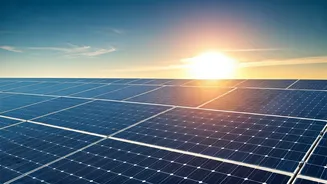
India's solar energy story is perhaps the most visible sign of this green transition. The country has rapidly scaled its installed solar capacity, becoming one of the world's cheapest producers of solar power. This is no longer about a few rooftop panels on eco-conscious homes. We are talking about colossal solar parks, like the Bhadla Solar Park in Rajasthan, which stretch across thousands of acres and power millions of homes. The drop in solar tariff rates has been so dramatic that it is now often cheaper to build a new solar plant than to continue running an old coal-fired one. This economic reality is the single most powerful accelerator for the energy transition. The government’s goal is to turn this success in deployment into dominance in manufacturing, ensuring that the solar panels powering India’s future are also made in India.
Electric Vehicles Hit the Streets
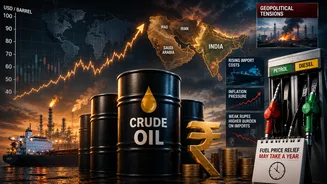
If solar is changing how India generates power, electric vehicles (EVs) are changing how it moves. For the average citizen, this is where the green transition becomes personal. While electric cars are still a niche market, the revolution is happening on two and three wheels. The scooter, the auto-rickshaw, and the delivery bike—the lifeblood of Indian urban mobility—are rapidly going electric. This shift is driven by a combination of government subsidies (like the FAME-II scheme), rising fuel prices, and a growing number of homegrown startups creating affordable and reliable EVs. The result is quieter, cleaner streets in our congested cities and a significant dent in India's massive oil import bill. The proliferation of charging stations and battery-swapping networks is turning EVs from a novelty into a practical, everyday choice for millions.
Green Hydrogen: The Next Big Bet
While solar and EVs are the present, green hydrogen represents India's ambitious bet on the future of energy. In simple terms, green hydrogen is a clean fuel created by splitting water using renewable energy. It has the potential to decarbonise 'hard-to-abate' sectors like steel, cement, and long-haul freight, where batteries are not a viable solution. India's National Green Hydrogen Mission is one of the most ambitious in the world, aiming to make the country a global hub for producing and exporting this 'fuel of the future'. By leveraging its abundant sunshine to create cheap green electricity, India believes it can produce some of the world’s cheapest green hydrogen. This is a long-term play, but it signals a profound shift in thinking—from being a passive energy importer to an aspiring clean energy exporter.
The Road Ahead is Not Without Hurdles
Of course, this optimism must be tempered with realism. The path to a fully green future is steep and complex. Integrating vast amounts of intermittent renewable energy into a grid designed for fossil fuels is a massive technical challenge. The need for large-scale energy storage solutions is critical and still expensive. Securing the supply chains for essential minerals like lithium and cobalt for batteries presents geopolitical challenges. Furthermore, the transition must be 'just', ensuring that the millions of people dependent on the coal economy are not left behind. These are not small problems, and they will require sustained focus, immense investment, and innovative policy solutions to overcome.