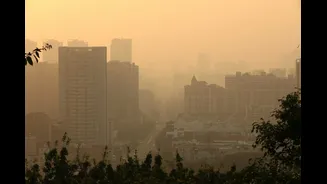







When smog blankets the city, we retreat indoors, hoping our leafy houseplants are scrubbing the air clean. It’s a comforting thought, but does this popular belief stand up to science when faced with severe pollution? Let's clear the air.
The Green Sanctuary Myth
The belief that
houseplants can purify indoor air is widespread, largely thanks to a 1989 NASA study. Researchers were looking for ways to clean the air in sealed environments like space stations and found that certain common plants could remove chemical vapours called volatile organic compounds (VOCs) from small, sealed chambers. This finding was eagerly adopted by homeowners, leading to the popular idea that a few snake plants and peace lilies could act as natural air purifiers. The image of a lush, green living room as a bastion against outdoor pollution is appealing, but unfortunately, it's more of a myth than a reality in the context of a typical home.
Science, Scale, and Smog
The problem with applying the NASA study to your home is a matter of scale and conditions. Your home is not a small, sealed laboratory chamber; it's a much larger, more complex environment where air constantly enters and leaves. A 2019 review of decades of research concluded that to achieve the air-cleaning effects seen in lab studies, you would need an impossibly large number of plants—somewhere between 10 and 1,000 per square meter of floor space. At that rate, the natural ventilation from opening a window for a few moments does far more to clear the air than hundreds of plants. Furthermore, the pollutants in severe smog that are most dangerous to our health, like fine particulate matter (PM2.5), are not effectively removed by plants at all.
The Real Threat: Particulate Matter
While the original studies focused on VOCs like formaldehyde and benzene, the primary health threat during severe smog is PM2.5. These are microscopic particles smaller than 2.5 microns, so tiny they can bypass your body's natural defences, penetrate deep into your lungs, and even enter your bloodstream. These particles come from vehicle exhaust, industrial emissions, and burning materials. Once inside your home, these particles can linger, and houseplants have virtually no impact on reducing their concentration. Relying on plants to combat PM2.5 is like trying to stop a flood with a sponge—the tool is simply not up to the task.
What Actually Works: HEPA Filters
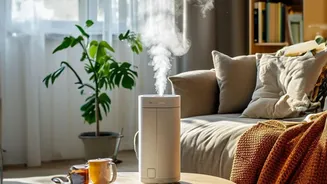
For genuine protection against PM2.5, the gold standard is a High-Efficiency Particulate Air (HEPA) filter. Found in good quality air purifiers, true HEPA filters are certified to capture at least 99.97% of particles that are 0.3 microns in size—the most difficult size to trap. This makes them extremely effective at removing the vast majority of dust, pollen, mould spores, and, most importantly, harmful PM2.5 particles from smog. Studies show that using a portable air purifier with a HEPA filter can significantly reduce indoor PM2.5 concentrations, with reductions ranging from 15% to over 60% depending on the unit, room size, and fan speed. When buying an air purifier, look for one with a 'True HEPA' filter and check its Clean Air Delivery Rate (CADR) to ensure it's powerful enough for your room size.
Low-Tech, High Impact Strategies
Beyond investing in an air purifier, there are several simple yet effective steps you can take. The first is to make your home as airtight as possible during a smog event. Keep windows and doors closed. Use tape or towels to seal any obvious gaps around frames where outside air might leak in. Avoid activities that create more indoor pollution, such as burning incense or candles, frying food, and vacuuming (unless you have a HEPA vacuum). If you have an air conditioner, set it to its recirculation mode. Designating one room, preferably a bedroom, as a 'clean air room' with a running purifier and sealed windows can provide a safe haven for your family.
After all this, should you get rid of your plants? Absolutely not. While they may not be the air‐purifying powerhouses we once thought, houseplants offer numerous other proven benefits. They are known to boost mood, reduce stress, and improve focus. The act of caring for them can be a rewarding hobby, and they undoubtedly make our living spaces more beautiful and calming. So, continue to enjoy your green companions for the aesthetic and psychological well‐being they provide. Just don’t count on them to protect your lungs during the next smog alert.