


Why Go Bananas for Your Garden?
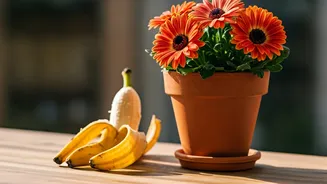
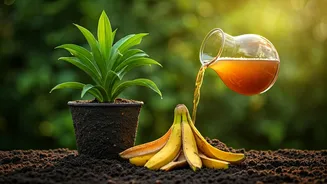
Before you toss that banana peel, consider this: it’s packed with nutrients that your flowering plants crave. The most important of these is potassium, a vital macronutrient that plays a crucial role in a plant’s overall health. Potassium helps regulate
water and nutrient movement within the plant, strengthens cell walls, and, most importantly for gardeners, encourages the development of strong flower buds and vibrant blooms. Think of it as a tonic that helps your plants focus their energy on producing beautiful flowers rather than just leafy growth. Unlike synthetic fertilisers, which can be harsh and risk ‘burning’ your plants if overused, a banana peel solution offers a gentle, slow-release source of these essential nutrients. It’s a perfect example of upcycling kitchen waste into something valuable for your garden.
Recipe: The Simple Banana Peel Tea
Making this garden gold is incredibly simple. There’s no need for complicated equipment, just a few kitchen basics. This recipe creates a nutrient-rich ‘tea’ or infusion that you can then use to water or spray your plants.
**What You’ll Need:**
- 3-4 fresh banana peels
- A large glass jar with a lid (approx. 1 litre)
- Water
**Instructions:**
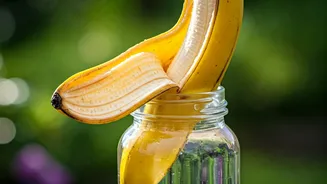
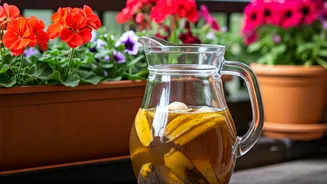
1. **Chop the Peels:** Cut the banana peels into small pieces, about one inch wide. The smaller pieces increase the surface area, allowing more nutrients to leach into the water.
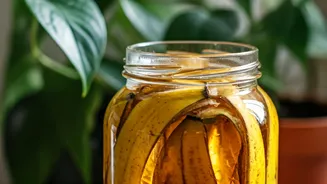
2. **Fill the Jar:** Place the chopped peels into your clean glass jar.
3. **Add Water:** Fill the jar with water, leaving about an inch of space at the top. Tap water is perfectly fine for this.
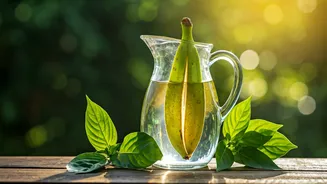
4. **Seal and Wait:** Screw the lid on the jar and place it in a cool, dark spot for 3 to 5 days. You can give it a gentle shake once a day. The water will gradually turn a murky brown as the nutrients are released. The longer you let it steep, the more concentrated the solution will be.
5. **Strain:** After a few days, strain the liquid into another container. Your banana peel tea is now ready to use! The leftover peels can be added directly to your compost bin or buried in the soil near your plants for further decomposition.
How and When to Apply
Once your banana peel tea is ready, it’s best to dilute it before application to make it go further and ensure it’s gentle enough for all plants. A good rule of thumb is to mix one part banana tea with four parts water. For example, mix one cup of the tea with four cups of fresh water.
There are two primary ways to use your diluted spray:
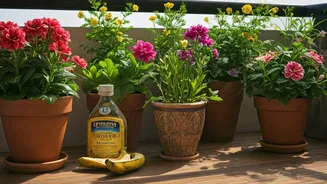
1. **As a Soil Drench:** Simply pour the diluted mixture directly onto the soil around the base of your plants. This is the most effective way to deliver nutrients straight to the root system. Do this in place of a regular watering session once every two weeks during the growing and flowering season.
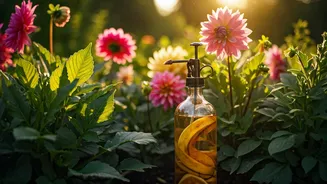
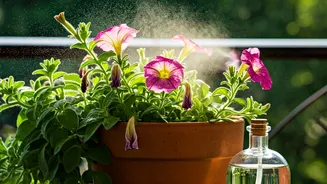
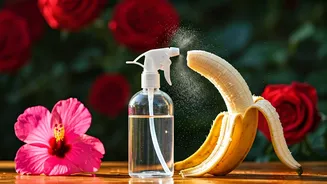
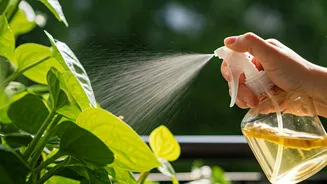
2. **As a Foliar Spray:** Pour the diluted mixture into a clean spray bottle and lightly mist the leaves of your plants. Plants can absorb small amounts of nutrients through their foliage. For best results, do this in the early morning or late evening to avoid leaf scorch from the sun.
A Treat for Roses, Hibiscus, and More
While most plants will appreciate the gentle nutrient boost, this banana peel spray is especially beneficial for plants known for their prolific flowering or fruiting. Potassium-hungry plants will show the most dramatic improvement.
Consider using this natural fertiliser on:
- **Roses:** Potassium is famous for helping roses produce larger, more colourful blooms.
- **Hibiscus:** This spray can encourage the continuous production of its big, tropical flowers.
- **Bougainvillea:** Known for its vibrant bracts, bougainvillea thrives with a good supply of potassium.
- **Tomato and Chilli Plants:** While technically fruits, these plants require potassium for flower production, which leads to a better harvest.
- **Orchids and other Epiphytes:** These plants especially benefit from a gentle foliar spray.
Will It Attract Pests?
This is a common and valid concern for gardeners venturing into organic solutions. The simple answer is no, not if used correctly. The key is that you are using a strained liquid infusion. By removing the solid peel pieces, you remove the decaying organic matter that might attract fruit flies, ants, or other pests. If you were to simply leave whole banana peels on top of the soil, you might invite unwanted visitors. The tea method bypasses this issue entirely, delivering the nutrients without the pest-attracting pulp. It’s a clean, effective, and pest-free way to give your plants the benefits of banana peels.