



Embrace Low-Impact Movement
The foundation of joint-friendly exercise is choosing low-impact activities. This means movements that don't jolt or put heavy stress on your joints, particularly your knees, hips, and ankles. High-impact exercises like running or jumping can be jarring,
but there are plenty of effective alternatives. Walking on softer surfaces, using an elliptical machine, cycling, and swimming are fantastic cardio options. Water-based exercises are especially beneficial, as the water's buoyancy supports your body weight, reducing joint pressure almost entirely while still providing resistance for a great workout. The key is to get your heart rate up without the pounding, making your workout both effective and sustainable.
Modify the Squat for Success
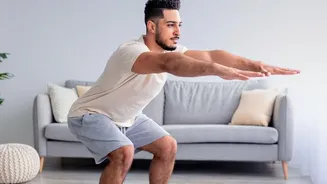
The squat is a fundamental movement for building leg strength, but it can be intimidating. For larger bodies, modifying it is simple and highly effective. A chair squat is an excellent starting point. Stand in front of a sturdy chair with your feet shoulder-width apart or slightly wider to give your body more room. Keeping your chest up, lower your hips back and down until you gently tap the chair, then push through your heels to stand back up. The chair provides a safety net and ensures proper form. You can even sit down completely between reps to make it easier as you start. This modification builds strength in the quads, glutes, and hamstrings with added stability and less strain on the knees.
Rethink Push-Ups and Planks
Upper body and core strength are vital for overall stability. Instead of dropping to the floor for a traditional push-up, use a wall. Wall push-ups work the same muscles in your chest, shoulders, and arms with significantly less pressure on your wrists and back. Stand facing a wall, place your hands slightly wider than your shoulders against it, and step your feet back. Bend your elbows to bring your chest toward the wall, keeping your body in a straight line, then push back to the start. To make it harder, simply step your feet further from the wall. Similarly, planks can be modified by performing them on your knees, which helps build core stability without the full bodyweight load. Placing a cushion under your knees can add extra comfort.
Strengthen Your Core Without Crunches
Traditional crunches can be uncomfortable, especially if you carry more weight around your torso or have a large bust. Luckily, there are many other ways to build a strong core. Standing core exercises are a fantastic alternative. Try standing 'X' crunches, where you march in place while bringing your opposite knee toward your opposite elbow. Another great option is an isometric curl-down. Sit tall on the floor or the edge of a chair, tighten your abdominal muscles, and lean back slightly, holding the position for a few seconds before returning to the start. These movements engage your core muscles effectively without requiring you to lie on your back.
Listen to Your Body and Use Props
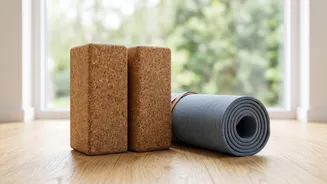
The most important rule in any exercise program is to listen to your body. Pain is a signal to stop or adjust. Discomfort is different from sharp pain; learn to recognize the signs and don't push through anything that feels wrong. Using props can also make a world of difference. Resistance bands are a versatile and low-impact way to add strength training. Yoga blocks can bring the floor closer to you in stretching poses, and a simple chair can provide support for dozens of different movements. Remember that every exercise can be modified. The goal isn't to perform a perfect, textbook move but to find a version that works for your body right now.