


The World’s Most Scenic Railway?
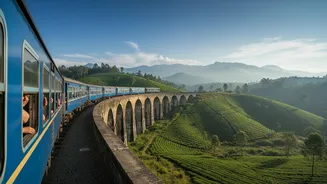
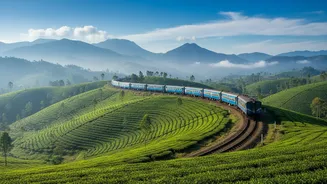
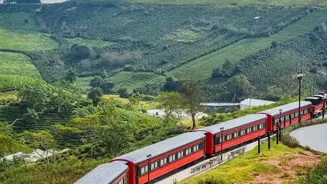
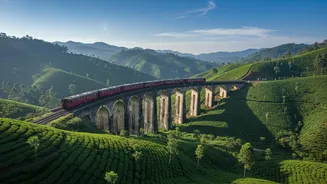
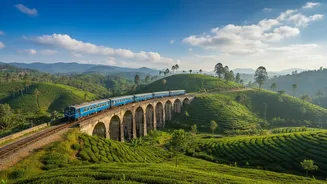
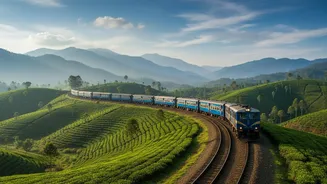
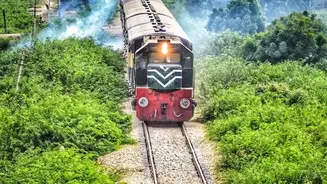
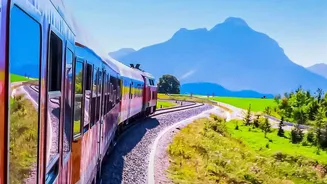
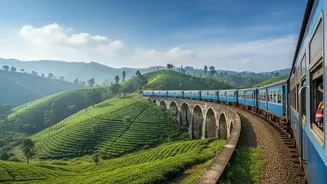
Often hailed as one of the most beautiful train journeys on the planet, the ride from Kandy to Ella is a seven-hour spectacle of Sri Lanka’s Hill Country. The train chugs slowly through a breathtaking landscape of rolling green hills, misty mountains,
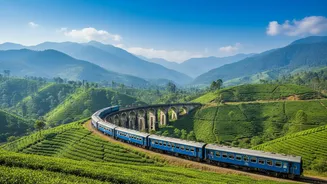
cascading waterfalls, and seemingly endless tea estates. The iconic blue trains, a holdover from the British colonial era when the line was built to transport tea, offer a stark, beautiful contrast against the verdant scenery. It’s this visual magic, complete with open doorways perfect for photo-ops, that has catapulted the journey to global fame. Travelers aren't just commuting; they are participating in a rolling, seven-hour sightseeing tour that has become an essential Sri Lankan experience.
A Perfect Match for Indian Travelers
While travelers from all over the world flock to this ride, it holds a special appeal for Indian passport holders. The reasons are a perfect storm of convenience, culture, and cost. Geographically, Sri Lanka is a short and affordable flight away. Furthermore, Sri Lanka offers a straightforward visa process for Indian citizens, often featuring free 30-day Electronic Travel Authorizations (ETA) that make entry hassle-free. This ease of access, combined with a favorable currency exchange rate, positions Sri Lanka as an aspirational yet highly attainable international destination for many Indians looking for a budget-friendly holiday. The cultural similarities and shared history, including the legacy of Tamil tea plantation workers brought from India, add another layer of connection.
An Unbeatable Budget Experience
A huge part of the train's appeal is its astonishing affordability. A third-class ticket for the roughly seven-hour journey can cost as little as a few hundred Sri Lankan Rupees, which translates to just a couple of U.S. dollars. Even a more comfortable first-class reserved seat is remarkably cheap by Western standards. This allows budget-conscious travelers, a demographic that includes many young Indian tourists and backpackers, to experience a world-class attraction without breaking the bank. The ride itself is the activity, offering hours of entertainment for the price of a simple commute. This value proposition is central to its popularity, making it a cornerstone of any low-cost Sri Lanka itinerary.
How to Actually Get a Seat
The train’s immense popularity means that securing a ticket, especially a reserved seat, requires planning. Tickets can sell out weeks or even a month in advance, particularly during peak season. Travelers have a few options: booking online through the official Sri Lanka Railways website or third-party sites like 12Go Asia, which is often easier for international visitors but may include a small service fee. Another option is to buy tickets in person at a major station like Kandy or Colombo upon arriving in the country. For those who miss out on reserved seats, unreserved second or third-class carriages are an option. This is a more chaotic but arguably more local experience, though it may mean standing for a significant portion of the long journey. Many travelers recommend second-class, as the windows open for better photos, unlike the air-conditioned first-class cars.
More Than Just a Train Ride
The journey is not just about what happens between stations. It connects two of Sri Lanka’s most popular tourist hubs. Kandy, a city rich in culture and home to the sacred Temple of the Tooth Relic, serves as the starting point. The train then winds its way to Ella, a relaxed backpacker-friendly town nestled in the mountains. Ella is famous for its stunning views, hiking trails like Little Adam's Peak, and the iconic Nine Arch Bridge—a massive viaduct the train itself crosses just before arriving at the station. Many travelers break up the journey, stopping for a day or two in the heart of tea country at Nuwara Eliya or Haputale to explore the plantations up close before continuing on to Ella.