


A Two-Part Spacewalk
The mission to replace the faulty Space-to-Ground Antenna (SGANT) was a tale of two spacewalks. On August 18, NASA astronaut Anil Menon and European Space Agency (ESA) astronaut Sophie Adenot ventured outside the station for over six hours. Their goal
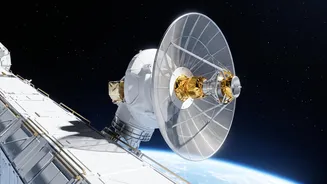
was to remove the broken antenna, which had stopped being able to track relay satellites, and install a new one. However, the zero-gravity repair job proved stubborn. Disconnecting the electrical cables and loosening the bolts on the old unit took much longer than anticipated, eating into their valuable time. With the clock ticking, Mission Control made the call to postpone the installation. The astronauts successfully removed the failed antenna and secured it to the station's truss, but the main event would have to wait.
The Astronauts Behind the Mission
The complex task fell to a seasoned spacewalker and a history-making partner. The August 25 spacewalk was the third for NASA's Anil Menon, who served as the lead, recognizable in his suit with red stripes. He was assisted by ESA's Sophie Adenot, who, during the first spacewalk on August 18, became the first woman from France to perform an extravehicular activity (EVA). While they worked outside, their Expedition 75 crewmates, including NASA astronauts Jessica Meir and Jack Hathaway, supported them from inside the station, with Hathaway operating the Canadarm2 robotic arm to manoeuvre Menon into position. This blend of experience and international cooperation is typical of the complex maintenance required to keep the aging orbital laboratory running.
A Dance of Precision and Teamwork
The second spacewalk on August 25 was a masterclass in orbital mechanics and teamwork. Attached to the end of the 17-metre-long Canadarm2, Menon was carefully guided to retrieve the spare antenna from its external storage platform. Adenot, meanwhile, translated along the station's handrails to assist him. Together, they maneuvered the bulky replacement dish to the Z-1 truss structure, where the old antenna had been. There, they meticulously connected the power and data cables, a delicate task while wearing pressurized gloves. The entire operation, lasting about six and a half hours, was a carefully choreographed dance in the vacuum of space, with every move planned and executed with precision to avoid damaging the new equipment or the station itself.
Restoring a Critical Lifeline
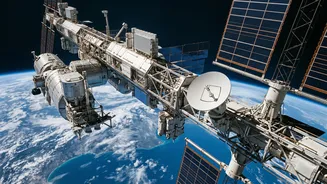
The Space-to-Ground antennas are a crucial part of the ISS's connection to Earth. They are one of the primary systems used to relay high-speed data, video feeds, and voice communications between the station and Mission Control in Houston via NASA's network of tracking and data relay satellites. While the station was able to operate using its second, functional antenna, the failure of one eliminated critical redundancy. Losing that backup capacity put more pressure on the remaining system and increased the risk of a communications blackout. The successful installation restored this vital redundancy, ensuring the continuous flow of scientific data and maintaining a reliable link with the crew.
Mission Accomplished: 'You Just Saved the Video Dish'
As the final connections were made, initial checks from the ground confirmed that the new antenna was receiving power and transmitting data successfully. In a moment of celebration, CAPCOM Anne McClain in Mission Control serenaded the spacewalkers by singing, "You just saved the video dish," a playful twist on the 1979 song "Video Killed the Radio Star." After the successful installation, Menon and Adenot completed their work by moving the failed antenna they had removed a week earlier to a more permanent storage platform. The 283rd spacewalk in support of the station was officially a success, a testament to the skill and perseverance of the astronauts and the ground teams who support them.