



To the Moon, Together
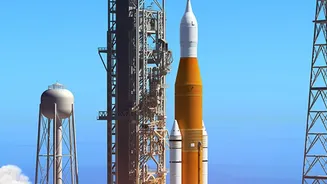
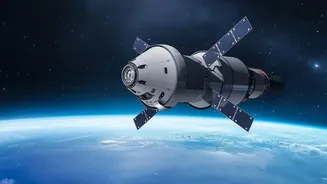
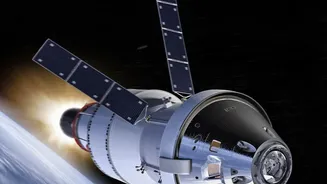
The most visible symbol of this new era is the Artemis program, which aims to establish a sustainable human presence on the Moon. Unlike the Apollo missions of the 20th century, Artemis is fundamentally international. The successful Artemis II mission in April
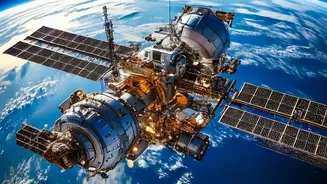
2026, which sent four astronauts on a flight around the Moon, included a Canadian Space Agency (CSA) astronaut, marking the first time a non-American has traveled into deep space. This is just the beginning. The program's long-term vision depends on the Gateway, a small space station that will orbit the Moon, serving as a staging point for lunar landings and future missions to Mars. Key components of the Gateway, such as the primary habitat and telecommunications systems, are being built by the European Space Agency (ESA) and other international partners. NASA is also actively inviting nations like India to participate in building a future lunar base. The Artemis Accords, a set of principles for peaceful lunar exploration, have been signed by dozens of countries, creating a shared framework for the next chapter of space exploration. This collaborative approach not only shares the immense cost and complexity but also ensures that the return to the Moon is a project for all of humanity.
The Shared Search for Life
Beyond the Moon, NASA is leading ambitious missions to answer one of the most profound questions: are we alone? These quests are also deeply collaborative. The Mars Sample Return (MSR) campaign is a landmark partnership between NASA and ESA to bring the first pristine samples of Martian rock and soil back to Earth. The Perseverance rover has been collecting and caching these samples, which a future joint mission will retrieve, launch from Mars, and return for study in the early 2030s. Scientists from around the world will have access to these samples, which could hold clues to whether life ever existed on the Red Planet. Further out in the solar system, the Europa Clipper mission is on its way to Jupiter's icy moon Europa, which is considered one of the most promising places to find a habitable environment. Launched in 2024, the spacecraft will conduct dozens of flybys to study the ocean believed to exist beneath its icy shell. While a NASA-led mission, its findings on the potential for life in an ocean world will be a scientific treasure for the entire global community, guiding future searches for life both within and beyond our solar system.
An Eye on Our Home Planet
While reaching for the stars, NASA's new missions also provide a critical perspective on Earth. The challenges of climate change, natural disasters, and resource management are global, and so are the tools being built to address them. A prime example is the NISAR (NASA-ISRO Synthetic Aperture Radar) mission, a major joint project between NASA and the Indian Space Research Organisation (ISRO). This advanced satellite will provide unprecedented, all-weather data on changes to Earth's land and ice surfaces. By monitoring everything from ice sheet collapse and volcanic activity to deforestation and groundwater supplies, NISAR will deliver crucial information for disaster response and climate modelling. This data will be open and available to researchers and policymakers worldwide, demonstrating how space assets can directly benefit societies across the globe. This mission embodies the spirit of modern space exploration, where international partnerships leverage technology to safeguard our shared home.
Building a Global Highway to the Cosmos
Ultimately, the importance of NASA's newest missions lies in their role as enablers. The agency's technological leadership and ambitious goals create platforms that allow a growing number of countries and private companies to participate in space. Missions like the Nancy Grace Roman Space Telescope, set to launch in late 2026, will create vast new datasets on dark energy and exoplanets accessible to astronomers everywhere. The era of a solitary space race is over. The enormous expense and technical challenges of modern exploration make collaboration a necessity, but it is also a choice. By building partnerships, NASA is not just exploring space; it is fostering a global space community. These missions create shared goals, drive technological innovation across borders, and inspire the next generation of scientists and engineers worldwide. They are building a shared infrastructure, both in orbit and in a global network of expertise, that will serve as the foundation for humanity's future in the cosmos.