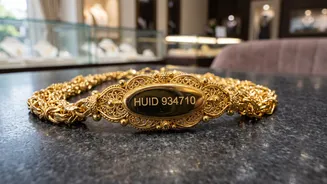







For generations, buying gold in India has been a mix of celebration and a leap of faith. But that leap is now shorter, thanks to a small but powerful code that puts verification right in your hands: the Hallmark Unique ID, or HUID.
The New Standard of Trust
For decades, under-karating
was a persistent issue in the gold market, where jewellery sold as 22-karat might have been closer to 18-karat purity. To protect consumers, the Bureau of Indian Standards (BIS) made hallmarking mandatory for gold jewellery in a phased manner starting from June 2021. This system ensures that the purity of the metal is tested and certified by an independent, licensed Assaying and Hallmarking Centre (AHC). The latest and most crucial part of this system is the Hallmark Unique Identification (HUID). This six-character alphanumeric code is laser-engraved on every single piece of hallmarked jewellery, giving each item a unique digital fingerprint. This traceability is a significant upgrade from older systems, designed to curb counterfeit hallmarking and empower buyers.
Decoding the Three Marks of Purity
When you inspect a piece of gold jewellery today, you should look for three specific marks, which are often tiny and require a magnifying loupe to see clearly. First is the triangular BIS logo, which confirms the certification is from the Bureau of Indian Standards. Second is the purity and fineness grade. This tells you the exact gold content, such as '22K916' (for 22-karat gold, which is 91.6% pure) or '18K750' (for 18-karat gold, which is 75% pure). The third and most powerful mark is the six-digit HUID code. Since April 2023, this three-mark system is mandatory for all new hallmarked jewellery, replacing the older four or five-mark formats.
Your Step-by-Step Verification Guide
Verifying your gold's HUID is a simple process that takes less than two minutes using the official 'BIS CARE' app, available for free on both Android and iOS. First, download and register on the app with your name and mobile number. Once inside, select the 'Verify HUID' option on the home screen. Carefully type in the six-character alphanumeric code engraved on the jewellery. Ask the jeweller for a loupe to read it correctly. Once you enter the code and press search, the app retrieves the item's details directly from the BIS database.
Understanding the Verification Results
A successful search will display several key details about the jewellery piece. This includes the purity grade (e.g., 22K916), the type of article (e.g., 'ring' or 'bangle'), the name of the BIS-registered jeweller who submitted it for hallmarking, and the details of the Assaying and Hallmarking Centre that tested it. Your job is to cross-reference this information. Does the purity shown on the app match what is stamped on the jewellery and printed on your bill? Does the article type match the piece you are holding? A mismatch on any of these points is a significant red flag. If the HUID search returns 'record not found', double-check the code for typos before raising an issue. Some jewellers may even be able to show a photo and the weight of the item as recorded during hallmarking, offering another layer of verification.
What You Should Do at the Counter
The HUID system gives you unprecedented power as a consumer, but it is most effective when used before you pay. Always insist on seeing the hallmark and ask the jeweller to provide a bill that clearly lists the purity, net gold weight, and the HUID for each item you purchase. Do not rely on verbal assurances alone. Remember that while mandatory hallmarking now covers hundreds of districts across India, some jewellers with a very low annual turnover may be exempt. However, any jeweller who chooses to sell hallmarked gold must be registered with BIS. By making the HUID check a standard part of your gold buying habit, you ensure transparency and protect your investment for years to come.