



The Reign of the Sharp Ponytail
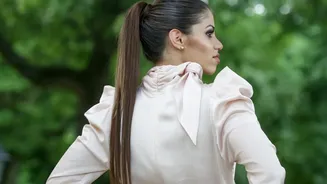
The tight, slicked-back ponytail has become a modern uniform for the effortlessly cool. Seen everywhere from fashion runways to city streets, its appeal lies in its sharp, clean lines and no-nonsense attitude.. This style is about control and intention.
It sculpts the face, highlights the cheekbones, and projects an image of streamlined efficiency.. Often associated with a 'clean girl' aesthetic or a powerful, architectural look, the slicked-back pony is pragmatic and polished.. It’s the hairstyle of choice for those who want to look put-together and ready for anything, transitioning seamlessly from a workout to a high-stakes meeting.. However, its severity is its defining feature; it’s a style that announces its presence with sharp, decisive lines, leaving little room for softness.
The Gentle Grace of the Chignon
The chignon, on the other hand, whispers where the ponytail shouts. Derived from the French phrase 'chignon du cou', meaning nape of the neck, this style is fundamentally about a low, elegant knot of hair.. While a bun can be placed anywhere, a chignon traditionally sits low, creating a softer, more romantic silhouette.. Its history dates back to Ancient Greece, where it was a sign of high social standing, and it has been re-invented through the ages, from the Gibson Girl of the early 1900s to Brigitte Bardot’s voluminous updos in the '60s.. This historical weight gives the chignon a timeless quality that feels less tied to fleeting trends and more rooted in enduring grace..
Defining 'Softer Elegance'
The headline's claim hinges on the idea of 'softer elegance'. But what does that mean in hairstyle terms? It's about the lines and the texture. The slicked-back ponytail is defined by tension—hair pulled taut against the scalp. The chignon, even when neat, is built on twists, tucks, and coils.. This process inherently creates more visual texture and less severity. The classic chignon often incorporates softer elements, like face-framing tendrils or a looser gathering at the nape, which breaks up the harshness. While you can have a slicked-back chignon, the foundational shape is still a rounded, knotted form rather than a linear pull. This rounded shape is psychologically perceived as softer and more approachable than sharp, angular lines.. It evokes a quiet confidence rather than an assertive one.
Occasion, Outfit, and Overall Vibe
Choosing between these two styles often comes down to context. The slicked-back ponytail pairs perfectly with minimalist, modern, or edgy fashion. Think sharp blazers, architectural tops, and a bold, confident attitude. The chignon, meanwhile, complements a wider range of aesthetics, from romantic and bohemian to classic and formal. It’s a go-to for weddings and black-tie events for a reason: it conveys formality without appearing rigid.. A soft, slightly undone chignon can soften a structured outfit, while a neat, tucked-in version adds a touch of refined polish to a simple dress.. It’s about balancing the overall look—if your outfit is already severe, a chignon can add a welcome touch of gentleness.
Reimagining the Chignon for Today
To prevent the chignon from feeling dated, modern interpretations play with texture and placement. Recent celebrity appearances show variations like the 'satin ribbon' chignon, which focuses on a super-smooth, glossy finish.. Others opt for an 'intentionally undone' feel, with curled ends left out for a more relaxed look.. The key is to make it feel personal. You can add a deep side part for drama, incorporate small braids twisting into the bun, or use statement hairpins as an accessory.. The modern chignon isn't about perfectly coiffed, immovable hair; it’s about taking a classic structure and infusing it with a sense of ease and individual style.