





The Chaos of the Clock
Short course events, common in sports like CrossFit, are a whirlwind of speed, power, and pain. These high-intensity, short-duration workouts demand athletes to perform dozens or even hundreds of repetitions against a running clock. For the judges tasked
with ensuring fairness, it’s a monumental challenge. They must simultaneously count reps, enforce movement standards like squat depth or full lockouts, and watch for infractions, all while an athlete moves at a blistering pace. The viewing angle might be poor, fatigue can cause standards to slip in a fraction of asecond, and the sheer volume of movement can overwhelm the human eye. This subjectivity is the source of endless controversy and frustration for athletes who feel they were wrongly penalised and fans who question the legitimacy of the results.
A 'Proof of Work' Philosophy
Enter the concept of 'Proof of Work'. Borrowing the term from the world of cryptocurrency (where it describes a system that proves computational effort), this philosophy reimagines how we validate a repetition. Instead of relying solely on a judge's subjective observation, the task is designed so that its successful completion provides its own clear, objective, and undeniable evidence. The 'work' itself becomes the 'proof' that the standard has been met. This shifts the burden from the judge's interpretation to the event's design. The question is no longer, “Did the judge see it correctly?” but rather, “Did the athlete produce the required proof?” This fundamental change aims to replace ambiguity with certainty.
From Subjective Calls to Objective Proof
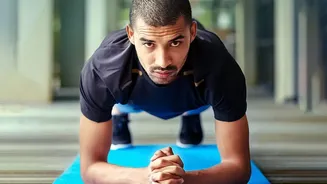
How does this work in practice? It involves building the standard directly into the movement. Imagine a hand-release push-up. The traditional standard requires a judge to see the athlete's chest touch the floor and both hands lift momentarily. A 'Proof of Work' standard might require the athlete to press a low-profile electronic pad on the floor with their chest, causing a light to flash. The rep is only counted if the light appears. Similarly, for a pull-up, instead of a judge estimating if the chin cleared the bar, the athlete might be required to make contact with a hanging target or pad with their chest. This provides a clear, binary outcome—the target was hit, or it wasn't. The result is instant, unambiguous feedback for the athlete, the judge, and the spectators.
Lessons from Other Arenas
This principle isn’t entirely new; it reflects a broader trend of leveraging technology to aid human judgment in elite sports. In gymnastics, for instance, the Fujitsu Judging Support System uses lasers and 3D modeling to track an athlete’s every movement, providing objective data on angles, rotations, and body position to assist the judging panel. In sports like tennis and cricket, Hawk-Eye technology provides definitive rulings on line calls. While introducing expensive technology may not be feasible for every local fitness competition, the underlying principle is the same: designing systems that produce objective data to reduce the potential for human error and bias. The 'Proof of Work' concept applies this logic to the design of the physical task itself.
Easier on Judges, Fairer for All
By building proof into the standard, the cognitive load on judges is dramatically reduced. They are freed from making millisecond judgment calls on range of motion and can focus on other critical elements, like ensuring an athlete performs a two-foot jump or maintains control of an implement. This makes their job less about being an arbiter of subjective calls and more about being a facilitator of a fair contest. For athletes, it eliminates the frustration of 'no-reps' that feel arbitrary. The target is clear and the feedback is immediate. This creates a more level playing field where victory is determined by performance, not by who got the benefit of a judge's doubt.