






Gravity and Speed: The Fundamental Force
The most basic reason steep slopes are hazardous is gravity. Water that falls on flat or gently sloping ground has time to spread out and soak into the soil. On a steep incline, however, gravity gives water a powerful downward pull. The steeper the slope,
the faster the water accelerates. This means that rainfall doesn't have much chance to be absorbed; instead, it immediately begins to travel downhill as surface runoff. A creek that is normally just a few inches deep can swell into a raging river several feet deep in under an hour in mountainous terrain. This rapid collection of water is the first step in creating a flash flood.
Soil's Tipping Point: From Sponge to Slide
Soil acts like a natural sponge, but every sponge has its limit. During prolonged or intense rainfall, the ground becomes saturated, meaning all the pores and spaces in the soil are completely filled with water. Once this saturation point is reached, the soil can no longer absorb any more moisture. From that moment on, every single drop of rain becomes immediate runoff, dramatically increasing the volume and speed of water flowing down the slope. In some cases, even very dry soil can be a problem. After a long dry spell or a wildfire, soil can become hardened and water-repellent, a condition known as hydrophobia, causing water to run off almost as quickly as it would on pavement.
The Debris Factor: When Water Becomes a Weapon
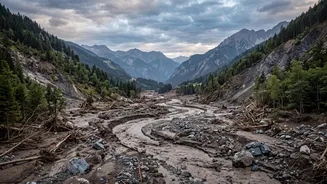
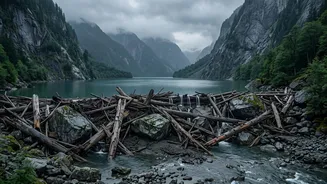
A flash flood in a hilly area is rarely just water. As the fast-moving runoff surges downhill, its high energy scours the landscape, picking up anything in its path. This includes loose soil, sand, gravel, rocks, and uprooted vegetation. The water quickly transforms into a thick, slurry-like mixture known as a debris flow, which is often called a mudslide. This mixture can have the consistency of wet concrete and moves with tremendous force, capable of destroying buildings and roads. The added weight and abrasive power of the debris make the flow far more destructive than water alone. Some fast-moving debris flows have been recorded at speeds over 100 miles per hour, though 10 to 30 miles per hour is more typical.
The Funnel Effect: How Valleys Concentrate Power
The topography of mountainous regions plays a crucial role in concentrating the hazard. Steep hills and mountains are carved with natural gullies, streams, and narrow valleys. During a flash flood, these channels act like funnels, collecting runoff from a large area and forcing it into a confined space. This concentration dramatically increases the water's depth, speed, and erosive power. What might start as a distributed sheet of water across a hillside quickly becomes a focused, high-energy torrent in a valley bottom. This is why settlements, roads, and bridges located in or near these natural drainage paths are particularly vulnerable. The tragic consequences of building in these zones have been seen repeatedly in Himalayan states like Uttarakhand.