


A Planet for All Seasons
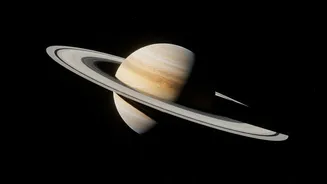
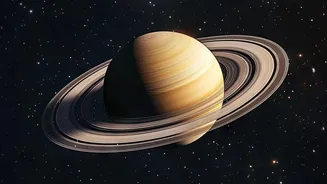
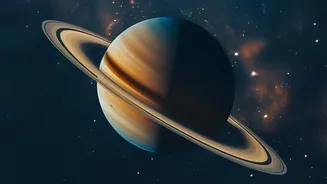
Just like Earth, Saturn has seasons. But on a scale that is difficult to comprehend. The ringed giant takes a leisurely 29 Earth years to complete one orbit around the sun. This means each of its four seasons lasts for more than seven years. This slow,
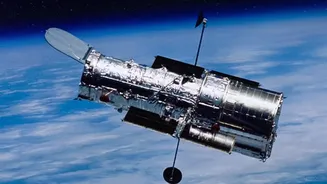
grand cycle is possible because Saturn, like Earth, is tilted on its axis. This tilt means its northern and southern hemispheres take turns bathing in more direct sunlight, leading to long, drawn-out summers and winters. For years, astronomers using the Hubble Space Telescope have been monitoring these changes. As part of the Outer Planet Atmospheres Legacy (OPAL) program, Hubble captures yearly snapshots of our solar system's gas giants to track their dynamic weather over time. These observations have provided an invaluable record of how Saturn's atmosphere evolves.
Hubble’s Evolving Portrait
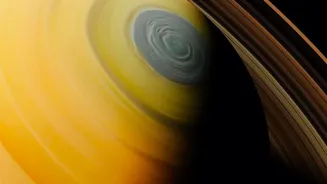
Recent images from Hubble, taken annually between 2018 and 2020, have chronicled the transition from summer to autumn in Saturn’s northern hemisphere. During this period, scientists noted subtle but significant year-to-year changes. The planet’s equator, for instance, grew between 5 and 10 percent brighter. Wind speeds also fluctuated. In 2018, winds near the equator were measured at a staggering 1,600 kilometers per hour, significantly faster than the 1,300 km/h speeds recorded by NASA's Cassini spacecraft years earlier. By 2019 and 2020, they had slowed back down to the Cassini-era speeds. According to lead scientist Amy Simon of NASA’s Goddard Space Flight Center, these variations in brightness and wind could indicate changes in the height and thickness of clouds and haze in Saturn's turbulent atmosphere.
A Shadow Play of Epic Proportions
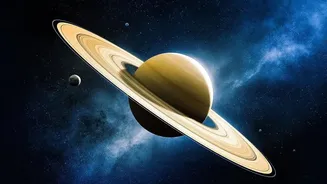
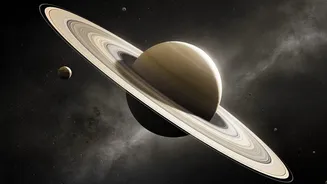
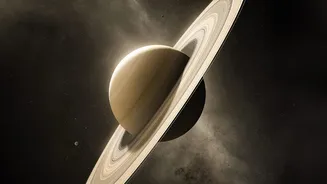
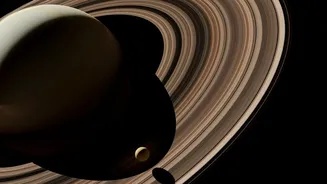
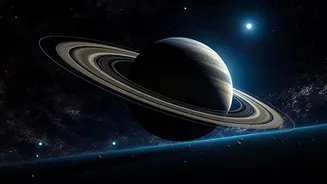
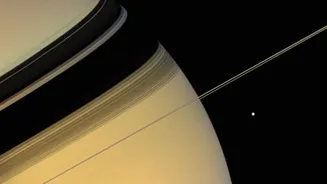
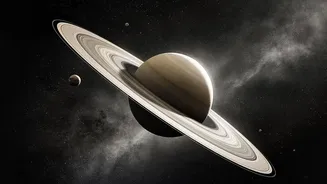
A key driver of these seasonal shifts is the massive shadow cast by Saturn's own rings. As the planet orbits the Sun, the tilt of the rings changes from our perspective. Sometimes they are wide open, and at other times they are almost perfectly edge-on. This changing angle dramatically alters the amount of sunlight reaching different parts of the planet. When the rings are tilted to block the sun, their shadow can cool the atmosphere, influencing everything from temperature to cloud formation. This effect is part of a complex interplay of forces, including solar radiation and the planet’s internal heat, that shapes Saturn's weather. The recent Hubble images, taken after the northern hemisphere's summer solstice, are helping scientists piece together how this solar heating and shadowing effect works on a seasonal scale.
Why These Seasons Matter
Studying these long, slow seasons provides a natural laboratory for understanding the atmospheres of giant planets. The observations help scientists test and refine their models of planetary weather, revealing how a world made mostly of hydrogen and helium responds to changes in solar energy. The yearly check-ins from Hubble are building on the legacy of missions like Voyager and Cassini, creating a long-term baseline to understand what is normal variation and what might be a sign of a larger, more significant change. As Saturn approaches its equinox in 2025—a time when the rings will be perfectly edge-on to Earth—scientists anticipate even more dramatic changes and a unique opportunity to see the planet without its rings obscuring the view. This event will provide an unparalleled chance to study both the atmosphere and the strange, transient 'spokes' that appear in the rings, which are also thought to be a seasonal phenomenon.