







Your Personal Phone
It’s the number one culprit for a reason. Every notification, text, or social media alert is an invitation to switch contexts, and research shows it can take over 20 minutes to fully regain focus after just one interruption. While you may need it for work,
the personal side is a time sink. Keep your phone on 'Do Not Disturb' mode, turned face down, or even in another room. By creating physical distance, you make it harder to mindlessly reach for it. If you need it for calls, adjust your settings to only allow specific callers to break through the silence. This simple act sets a powerful boundary between your work life and your personal life, even when they happen in the same building.
Excessive Clutter and Unrelated Paperwork
A messy desk creates mental clutter. Piles of old magazines, non-work-related books, and random paperwork compete for your attention and can increase stress levels. Your brain perceives a disorganized space as a series of unfinished tasks, which quietly drains your cognitive resources. Remove everything from your desk that isn't essential for your immediate tasks. Adopt a 'one-touch' rule for paper: deal with it, file it, or toss it immediately. For everything else, ask if it serves a daily purpose. If an item isn’t used regularly, it doesn't belong on your prime real estate. A clean workspace signals to your brain that things are under control, allowing you to focus better.
The TV Remote and Other Entertainment Devices
The phrase 'out of sight, out of mind' is critical for a productive home office. If your workspace is in a living room or multi-use area, the television and its remote are a constant, tempting presence. Even having the news on in the background can quickly absorb your attention. The best strategy is to create a physical barrier. If possible, position your desk so you are not facing the television. If that’s not an option, remove the remote from the room entirely before your workday begins. This small bit of friction—having to get up and find the remote—can be enough to deter you from turning on the TV 'just for a minute'.
Household Chores and To-Do Lists
The pile of laundry in the corner or the unwashed dishes you can see from your desk are powerful distractions. They represent personal responsibilities that can feel more urgent than your work tasks. To combat this, schedule time for chores outside of your dedicated work hours. Some experts suggest a quick tidy-up before the work week begins to prevent your environment from becoming a distraction. If you find yourself stepping away to organize a pantry or load the dishwasher, consider using scheduled breaks to tackle these small tasks. This allows you to get them out of your system without letting them derail your workflow entirely.
Too Many Personal Items
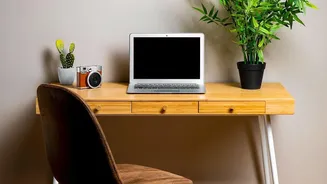
While personalizing your space is tempting, an overabundance of personal mementos can be counterproductive. According to some home organizing experts, items like vacation souvenirs or numerous family photos can send you down a mental rabbit hole, leading to daydreaming instead of deep work. This doesn't mean your space has to be sterile. The key is to be selective. Keep one or two meaningful items that inspire you, but move the rest out of your direct line of sight. Swap a gallery of photos for a simple plant or an inspirational quote related to your goals to maintain a professional mindset.
Uncomfortable Furniture
An uncomfortable chair or a desk at the wrong height isn't just bad for your body; it's a constant, nagging distraction. Physical discomfort like back pain or eye strain from poor ergonomics pulls your focus away from your work. It’s hard to concentrate on a complex problem when you're constantly shifting in your seat to find a comfortable position. While you don't need to buy the most expensive equipment, investing in a supportive, ergonomic chair and ensuring your monitor is at eye level are crucial. Your workspace should support your physical well-being so your mind is free to concentrate fully on the tasks at hand.