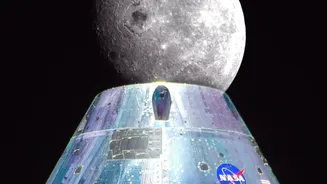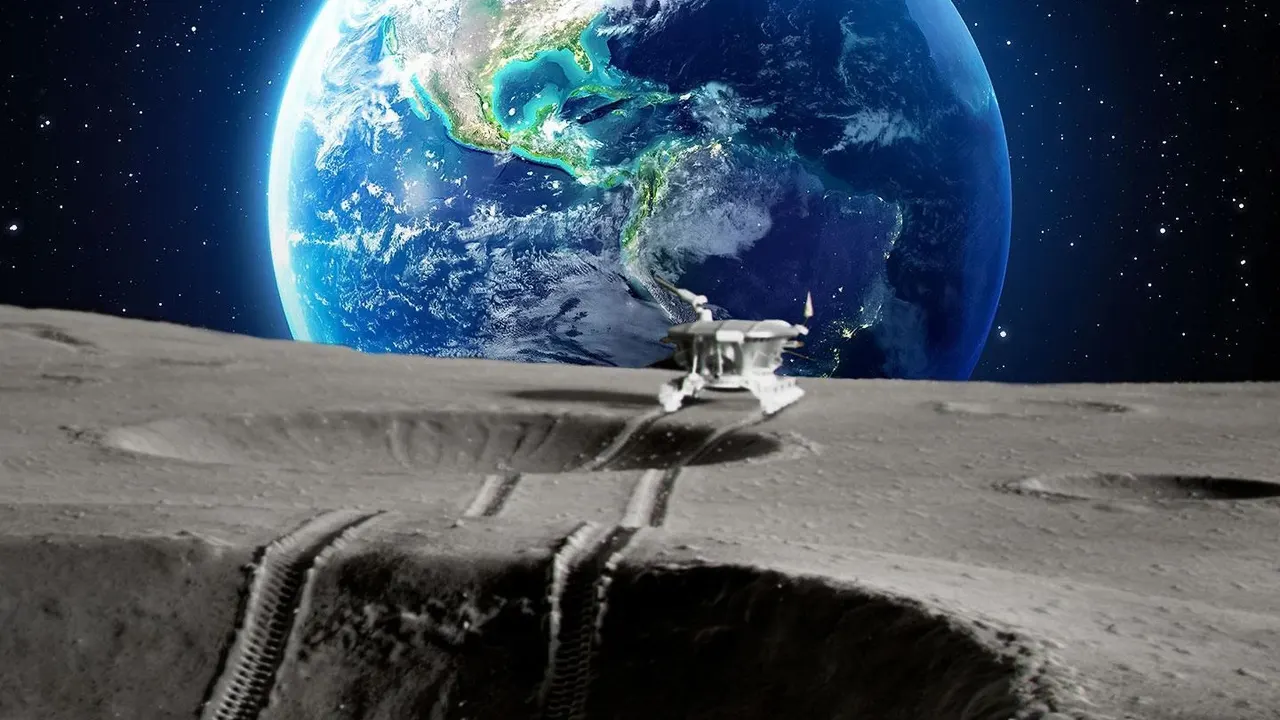





Humanity's return to the Moon is not just about planting flags and taking photos. It's about staying. A series of ambitious cargo and rover missions are the crucial first steps in building the off-world infrastructure for a permanent lunar base.
What is Lunar Infrastructure?
When we
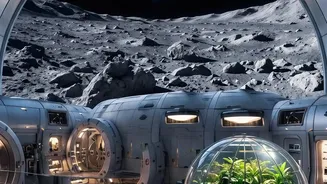
think of infrastructure on Earth, we imagine roads, bridges, and power grids. On the Moon, the concept is similar but far more critical for survival. Lunar infrastructure refers to the foundational elements that will allow astronauts to live and work on the Moon for extended periods. This isn't just about habitats; it includes power generation systems to survive the two-week lunar night, communication relays to talk to Earth, landing pads to prevent dangerous dust clouds during take-off and landing, and facilities for In-Situ Resource Utilisation (ISRU) — a fancy term for living off the land by extracting resources like water ice and oxygen from the lunar soil. These elements form the backbone of what NASA calls the Artemis Base Camp, a planned outpost at the lunar south pole.
The Robotic Delivery Service
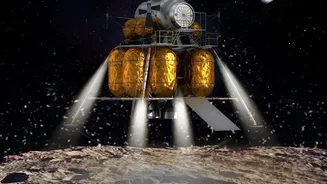
Before astronauts can build a base, the tools and materials need to get there. This is where uncrewed cargo missions come in. Through its Commercial Lunar Payload Services (CLPS) initiative, NASA is contracting private companies to send robotic landers to the Moon. Companies like Blue Origin, Firefly Aerospace, and Intuitive Machines are scheduled to deliver dozens of payloads over the next few years. These initial missions carry scientific instruments to study the lunar environment, but they are increasingly focused on technology demonstrations. For example, Blue Origin's 'Endurance' lander will deliver payloads to the Shackleton Connecting Ridge, a strategic spot near the south pole, to test precision landing and observe how rocket plumes interact with the surface. Astrobotic's larger Griffin lander is also slated to carry heavy cargo, proving that the commercial pipeline for lunar logistics is open for business.
The Rovers: A Robotic Workforce
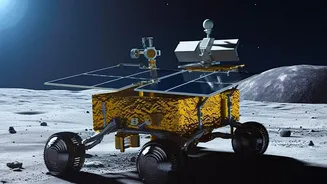
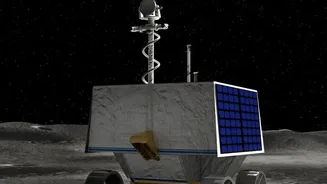
Rovers are the workhorses of lunar construction and exploration. They are evolving from purely scientific explorers into versatile machines for transport, prospecting, and building. One key mission is NASA's VIPER (Volatiles Investigating Polar Exploration Rover), set to be delivered by a Blue Origin lander in 2027. VIPER will hunt for water ice in the permanently shadowed craters of the south pole, a resource vital for future astronauts. Beyond prospecting, a new generation of rovers is being developed. The Lunar Terrain Vehicle (LTV) will serve as a 'moon buggy' for Artemis astronauts, but it can also be operated remotely. This means NASA can use it for tasks like mapping terrain or hauling equipment before humans even arrive. Other concepts involve teams of smaller, autonomous rovers working together on construction tasks, like levelling ground for landing pads.
Powering a Lunar Future
Perhaps the single biggest challenge for a permanent lunar base is power. The Moon's south pole offers near-continuous sunlight on some crater rims, but also permanent darkness in the craters below, with extreme temperature swings. To ensure a steady supply of energy, especially during the 14nday lunar night, NASA is developing a hybrid power system. This includes advanced, deployable solar arrays, but the real game changer is nuclear power. Small scale fission power systems, designed to provide around 40 kilowatts of continuous energy, are being developed with a goal of having a reactor on the Moon by the early 2030s. These reactors would provide a reliable baseline of power for life support, recharging rovers, and running experiments, regardless of the time of day.
A Global Effort
The push to build a lunar presence is not limited to the United States. China, in partnership with Russia and other nations, is planning the International Lunar Research Station (ILRS), also at the south pole. Its upcoming Chang'e missions are designed to scout resources and test technologies like 3D printing with lunar soil. The European Space Agency (ESA) is developing the Argonaut, a large cargo lander, and contributing to NASA's efforts. Meanwhile, India's ISRO, building on the historic success of Chandrayaan3's south pole landing, is also a key player, collaborating with international partners on future missions. This global mix of collaboration and competition is accelerating the pace of development, making a future with lunar infrastructure more tangible than ever.