







The Monsoon's Treacherous Grip
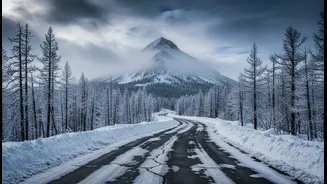
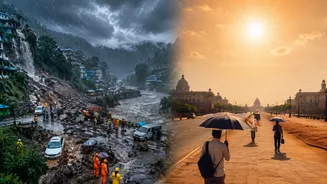
For much of the Indian Himalayas, the monsoon season from June to September is a period of intense risk. In states like Himachal Pradesh and Uttarakhand, relentless downpours saturate the fragile mountain slopes, leading to frequent and devastating landslides.
Roads that serve as vital arteries for towns like Shimla and Manali can be washed away or blocked for days, stranding tourists and cutting off communities. Recent monsoon seasons have seen an increase in these extreme weather events, with flash floods and collapsing infrastructure becoming a tragically common feature. For travellers, this translates to cancelled plans, dangerous journeys, and the very real threat of being caught in a natural disaster. News reports from July 2026 confirm this pattern, with heavy rains causing widespread disruption and road blockages across these sub-Himalayan states.
The Great Himalayan Barrier
The secret to Ladakh's serene weather lies in its unique geography. It is situated on the Tibetan plateau, on the other side of the main Himalayan range. These colossal mountains, which include some of the world's highest peaks, act as a formidable wall against the moisture-laden monsoon clouds that sweep in from the Indian Ocean. As these clouds travel north, they are forced to rise by the sheer height of the Himalayas. This upward journey causes them to cool, condense, and release all their moisture as heavy rain and snow on the southern, windward side of the mountains—the very regions like Uttarakhand and Himachal that experience such intense monsoons.
Life in the Rain Shadow
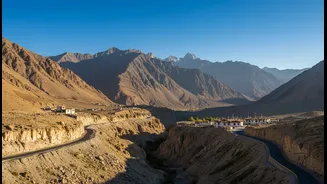
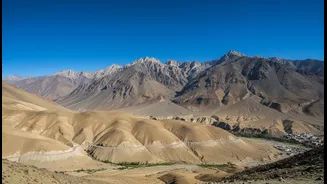
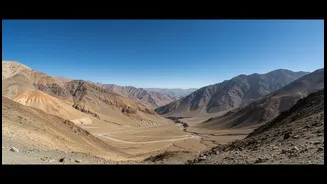
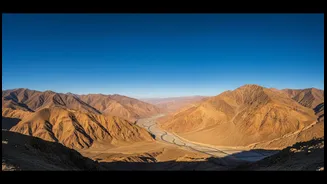
By the time the winds cross over the towering Himalayan peaks to reach Ladakh, they have been stripped of almost all their moisture. This phenomenon is known as a "rain shadow effect," and it is the primary reason for Ladakh's arid climate. As the now-dry air descends onto the Ladakhi plateau, it warms up, further reducing the chance of precipitation. The result is a high-altitude cold desert, one of the driest places in India, receiving less than 10 cm of rainfall annually. While the rest of the country is drenched, Ladakh enjoys long, sunny days and brilliantly clear skies, making it an anomaly in the monsoon-swept subcontinent.
An Ideal Summer Sanctuary
This dramatic climatic difference makes Ladakh the perfect travel destination during the monsoon months. July and August are considered peak season here precisely because the weather is so favourable. With daytime temperatures hovering between a comfortable 20°C and 30°C and minimal rainfall, conditions are ideal for exploring. All major internal roads to iconic sites like Pangong Lake, Nubra Valley, and Tso Moriri are typically open and accessible. This allows travellers to enjoy trekking, mountain biking, cultural festivals, and epic road trips under sunny skies, while other Himalayan regions are largely off-limits or hazardous.
A Note of Caution for Road Travellers
While Ladakh itself is dry, getting there by road requires careful planning. The two main highways—from Manali and Srinagar—both traverse the monsoon-affected sub-Himalayan rain belts in their lower sections. The Manali-Leh highway, in particular, is notorious for rain, landslides, and road closures in the stretches before it climbs into the rain shadow past Baralacha La pass. Similarly, the route from Srinagar can face disruptions around Zojila Pass. Though conditions dramatically improve once you enter Ladakh proper, it's wise to build extra buffer days into your itinerary for potential delays. For a completely hassle-free journey, flying directly into Leh is the most reliable option, allowing you to bypass the treacherous lower-altitude roads entirely.