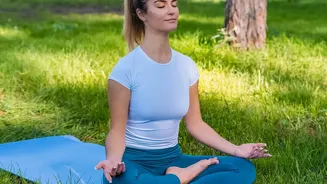







Understanding Breath Awareness
Breath awareness is not about controlling or changing your breath; it's about observing it. The goal is simply to notice the sensation of air entering and leaving your body without judgment. This practice serves as an anchor to the present moment, helping
to quiet the mental chatter that often contributes to stress. When you focus on the physical sensation of breathing—the rise and fall of your belly or the feeling of air at your nostrils—you give your mind a gentle, steady point of focus. This simple act of observation can trigger the body's relaxation response, moving you from a state of 'fight-or-flight' to 'rest-and-digest'. It’s a foundational skill in mindfulness that helps build a stronger connection between your mind and body.
Core Technique: Diaphragmatic (Belly) Breathing
One of the most effective and fundamental breathing exercises is diaphragmatic breathing, often called belly breathing. Many of us tend to breathe shallowly from the chest, but this technique encourages using the full capacity of our lungs by engaging the diaphragm, a large muscle at the base of the lungs. To start, find a comfortable position, either lying on your back with your knees bent or sitting in a chair with your feet flat on the floor. Place one hand on your upper chest and the other on your belly, just below your rib cage. Inhale slowly through your nose for a count of three or four, focusing on letting your belly expand and rise. The hand on your chest should remain relatively still. Then, exhale slowly through your mouth, allowing your belly to fall. At first, this might feel unnatural or tiring, but with practice, it will become easier and more automatic.
A Simple Rhythm: Box Breathing
Box breathing, also known as square breathing, is a simple and memorable technique for calming nerves and improving focus. It's widely used because its structured, four-part cycle is easy to follow, even during stressful moments. The pattern involves inhaling, holding the breath, exhaling, and holding again, all for an equal count, like the four sides of a box. To practice it, sit upright and get comfortable. First, exhale completely. Then, inhale slowly through your nose for a count of four. Hold your breath for a count of four. Next, exhale slowly through your mouth for a count of four. Finally, pause and hold your breath for a count of four before beginning the next cycle. Repeat this for a few minutes whenever you need to re-centre yourself.
Your First 3-Minute Beginner Session
Ready to try it out? This short session is perfect for a quick reset during a busy day. Find a quiet place where you can sit or lie down comfortably. Close your eyes if it helps you focus. For the first minute, simply bring your awareness to your natural breath. Don't try to change anything; just notice the rhythm and the sensations. For the second minute, transition into diaphragmatic breathing. Place a hand on your belly and feel it rise with each inhale and fall with each exhale. Focus on making your breaths slow and gentle. For the final minute, let go of any specific technique and return to just observing your breath. Notice if you feel any calmer or more settled than when you started.
A 5-Minute Mindful Breathing Practice
When you have a little more time, this session can help deepen your practice. Begin by settling into a comfortable position. For the first minute, follow the box breathing pattern: inhale for four, hold for four, exhale for four, and hold for four. This will help establish a calm, steady rhythm. For the next three minutes, let go of the counting and switch your focus to the physical sensations of your breath. Notice the temperature of the air as you inhale and exhale. Feel the subtle expansion and contraction in your torso. If your mind wanders, gently guide your attention back to the breath without frustration. In the final minute, simply rest. Let your breath return to its natural pattern and enjoy the sense of stillness you've cultivated.
Making It a Habit
The benefits of breath awareness grow with consistency. The key is to make it a regular part of your routine, even if it's just for a few minutes each day. Try linking your practice to an existing habit, a technique known as habit stacking. For example, you could practice for three minutes right after you brush your teeth in the morning, during your commute, or just before you go to sleep at night. You can also use it in moments of stress—before a big meeting, when stuck in traffic, or when you feel overwhelmed. Over time, turning to your breath will become a natural and effective way to manage stress and stay grounded.