



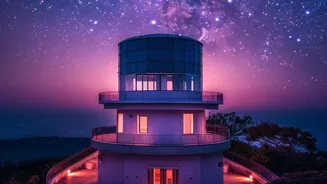
Start with Your Unaided Eyes
Your most important stargazing tools are the ones you were born with. The human eye is a remarkable instrument, capable of seeing distant stars, planets, and even galaxies. To make the most of them, you need to allow your eyes to 'dark-adapt'. It takes
about 20 to 30 minutes for your pupils to fully dilate and for your eyes to build up the light-gathering sensitivity needed to see faint objects. During this time, avoid looking at bright screens or sources of white light, which will instantly reset the process. If you need a light, use a red flashlight, as red light has the least impact on your night vision.
Choose the Right Time and Place
Your location is everything. The biggest obstacle to a clear view is light pollution—the glow from cities and towns that washes out the night sky. Use a light pollution map online to find a darker spot away from urban centres. Even a short drive can make a huge difference. Beyond location, timing matters. A bright, full Moon acts like a giant natural streetlamp, making it harder to see stars, so plan your sessions around the new moon phase for the darkest skies. Finally, check the weather forecast; clouds are an astronomer's most common frustration.
Let Your Smartphone Be Your Guide
You may be avoiding your phone's bright screen, but it can still be your most powerful ally. Several free and low-cost mobile apps act as a digital planetarium in your pocket. Apps like Star Walk 2, SkyView Lite, or Stellarium Mobile use your phone's GPS and compass to identify the stars, constellations, and planets you're pointing at in real time. Many have a red-light mode to preserve your night vision. These apps are perfect for learning your way around the sky and identifying the fascinating objects you spot.
A Beginner's Celestial Checklist
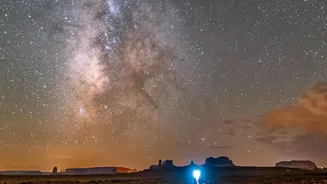
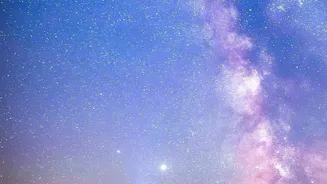
Once you're outside, what should you look for? Start with the easy targets. The Moon is a spectacular object, offering different views as its phases change. Planets are also great beginner targets; they shine with a steady light, unlike the twinkling of distant stars. Venus, Mars, Jupiter, and Saturn are often bright enough to be seen with the naked eye. On a dark, clear night, you may see the faint, milky band of our own galaxy, the Milky Way, stretching across the sky. And keep an eye out for meteors, or 'shooting stars'—fleeting streaks of light that can appear at any moment.
The First Upgrade: Binoculars
When you feel ready for a closer look, resist the urge to buy a complicated telescope. Instead, consider a good pair of binoculars. They are more affordable, easier to use, and provide a wide field of view that is perfect for scanning the sky. A standard pair, such as 7x50 or 10x50, will gather significantly more light than your eyes alone. Through binoculars, the Moon transforms into a landscape of craters and mountains, you can spot the four largest moons of Jupiter, and faint star clusters will resolve into glittering collections of individual stars. Binoculars are often considered the best first investment for an aspiring amateur astronomer.