
Act Fast: The First Steps
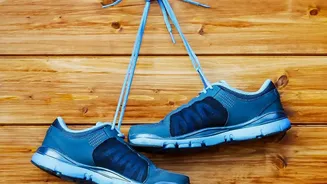
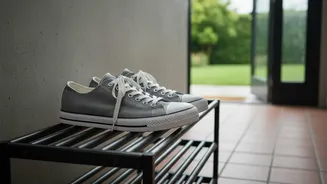
The moment you're out of the rain, your mission to save your shoes begins. Speed is crucial to prevent bacteria and mould from growing, which is what causes that musty smell. First, take your shoes off and give them a good shake to remove any excess water.
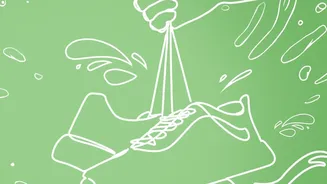
If they are muddy, wipe them down with a damp cloth. Next, remove the insoles and laces. This simple step opens up the shoe, allowing air to circulate more freely and helping all the individual parts to dry much faster. Insoles, in particular, can hold a lot of moisture, so letting them air out separately is key.
The Classic Newspaper Method
It’s an age-old trick for a reason: it works. Crumple up old newspaper and stuff it loosely inside your shoes, making sure to reach all the way into the toe area. The paper is highly absorbent and will begin to draw moisture out from the shoe's interior. For extremely soaked shoes, you might need to replace the damp newspaper with fresh, dry sheets every few hours. This method is gentle and effective for almost all types of shoes, including leather and canvas. To absorb moisture from the outside, you can also wrap a dry towel around the shoes.
Bring in the Fan for Faster Results
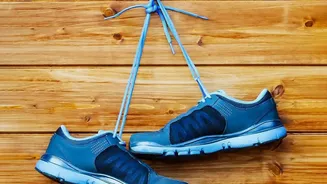
If you need your shoes dry by morning, a fan is your best friend. The constant airflow dramatically speeds up the evaporation process. After preparing your shoes by removing the insoles and laces, place them in front of a table or floor fan. Don't place them too close. You can position them on their sides or prop them up so the air flows directly into the opening. For an even better setup, you can use old wire hangers bent into 'S' shapes to hang the shoes from the fan's grill, ensuring air circulates all around them.
Special Care for Leather and Suede
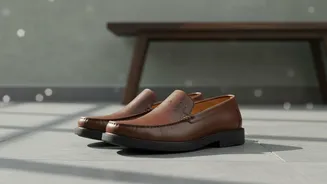
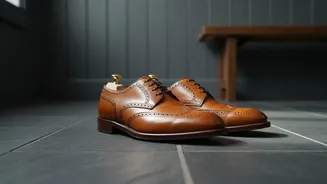
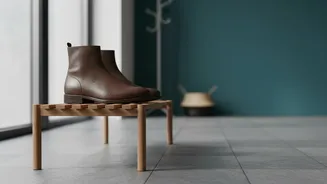
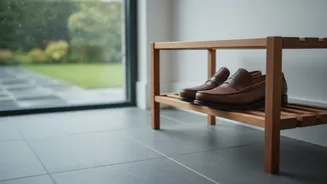
Leather and suede require a more delicate approach. While the newspaper method is safe, direct heat is their biggest enemy. Never place leather shoes near a radiator, heater, or in direct sunlight, as the intense heat can cause the material to crack, warp, and become brittle. For suede, blot excess moisture gently with a towel and let it air dry completely at room temperature, which might take a day or two. Once dry, you can use a special suede brush to restore its texture. For leather, applying a quality conditioner after it's fully dry will help restore its natural oils and prevent cracking.
What You Must Absolutely Avoid
In a rush, it can be tempting to use high-heat methods, but these often do more harm than good. Avoid using a hair dryer on a high setting, as the concentrated heat can melt glue and damage synthetic materials. Tossing shoes into a clothes dryer is also a bad idea, as the tumbling action and heat can deform them and break down their structure. Even leaving them in direct sunlight can cause materials to fade and degrade over time. Patience and airflow are always the safer, more effective options.
Getting Rid of Lingering Odours
Sometimes, even after your shoes are dry, a faint, unpleasant smell remains. This is usually due to bacteria that thrived while the shoes were damp. A simple and effective way to combat this is by sprinkling a bit of baking soda inside each shoe and leaving it overnight. The baking soda will absorb any residual moisture and neutralise odours. Just remember to tap out the powder before you wear them again. Placing dry tea bags or cedar inserts inside your shoes can also work wonders to absorb moisture and leave them smelling fresh.