






A Crisis in the Cold Desert
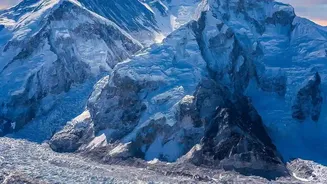
Ladakh, a stunning landscape nestled in the Himalayas, is a cold desert that receives less than 100mm of rainfall annually. For centuries, its communities have relied almost exclusively on the seasonal melting of snow and glaciers for water to irrigate
crops like barley and apples. However, climate change is disrupting this ancient cycle. Glaciers are receding at an alarming rate, and winter snowfall is becoming less predictable. The crucial meltwater that farmers need for sowing crops in the critical spring months of April and May now often arrives too late in the season, leading to crop failure and threatening food security across the region. This timing mismatch creates a paradox: a torrent of unusable water in the frigid winter and a dire scarcity in the crucial planting season.
An Idea Born from Simple Observation
The solution came not from a high-tech laboratory, but from a simple observation by local engineer and innovator Sonam Wangchuk. One day in May, he noticed a patch of ice still intact under a bridge, shielded from the direct sun, long after the surrounding ice had melted. This sparked an idea: what if you could store the abundant, unused stream water from winter in a way that it would last until spring? The key was geometry. Wangchuk realised that a cone shape, which presents the minimum surface area to the sun for its volume, would melt much slower than a flat sheet of ice. This was the conceptual birth of the ice stupa, named for its resemblance to traditional Buddhist monuments that dot the Ladakhi landscape.
How an Ice Stupa Works
The engineering behind an ice stupa is brilliantly simple and requires no electricity or pumps. A pipeline is laid to divert water from a stream at a higher altitude during the winter. Using the power of gravity, the water travels down the pipe, building up natural pressure. At the chosen location, the pipe goes vertically upwards, and the water sprays out from a sprinkler-like outlet into the freezing sub-zero air. As the water droplets fall, they freeze instantly, accumulating layer by layer around a basic frame of willow branches. Over the winter, this process builds a massive cone of ice, some reaching over 30 metres high and capable of storing millions of litres of water that would have otherwise flowed away. As temperatures rise in spring, the stupa slowly melts, releasing a steady supply of water precisely when farmers need it most.
More Than Just Ice
The true strength of the project lies in its community-led approach. This is not a solution imposed from the outside; it is built and managed by the very people it benefits. The initiative, pioneered by Wangchuk and his organisation, the Students' Educational and Cultural Movement of Ladakh (SECMOL), has inspired widespread participation. To encourage adoption, an annual Ice Stupa Competition was launched, fostering a sense of ownership and friendly rivalry between villages to build the tallest stupa. This community involvement is crucial, as the structures require maintenance, particularly in preventing pipes from freezing during construction. The project taps into indigenous knowledge of water management while providing a modern, scalable solution, empowering villagers to become active participants in securing their own future.
From Local Solution to Global Symbol
The first prototype ice stupa, built in 2013-2014, successfully stored 150,000 litres of water and lasted well into May, proving the concept's viability. Since then, the project has scaled significantly. Through organisations like the Himalayan Institute for Alternatives, Ladakh (HIAL), dozens of stupas have been built across the region, storing tens of millions of litres of water and irrigating thousands of newly planted trees. The idea has gained global recognition, earning Sonam Wangchuk a Rolex Award for Enterprise in 2016 and inspiring similar projects in other mountain regions, including the Swiss Alps and even Chile. The ice stupas have become powerful symbols of grassroots climate adaptation and have helped bring global attention to the challenges faced by Himalayan communities.