

What Exactly Is Friselle?
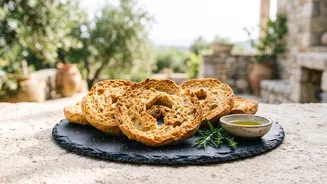
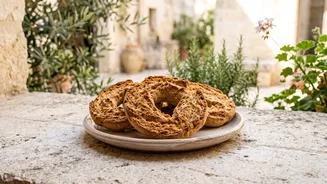
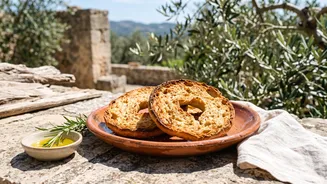
At first glance, friselle (or freselle) might look like a batch of oversized, misshapen bagels left out to dry. Hailing from the sun-drenched southern regions of Italy like Puglia, Campania, and Calabria, friselle are a type of bread defined by their
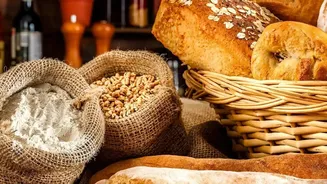
extraordinary hardness and ring shape. Made from simple ingredients like durum wheat or barley flour, water, yeast, and salt, their real secret lies not in what they contain, but in how they are made. The name itself is thought to come from the Latin 'frendere', meaning to crumble or grind, which perfectly describes what would happen if you tried to eat one unprepared. They are the Italian equivalent of a rusk, a bread built for resilience.
A Bread Born of Necessity
Friselle's origins are deeply practical, rooted in the peasant and fishing cuisines of Southern Italy. Before refrigeration, creating food that wouldn't spoil was a matter of survival. Fishermen, farmers, and sailors needed provisions that could last for weeks or even months at sea or in the fields. The hole in the centre of the friselle was even said to have a purpose: it allowed sailors to string them onto a rope for easy storage on board their ships. Historically, there were two main versions: a more common one made with barley for everyday people and a pricier one made from durum wheat for wealthier families and special occasions. This humble food became so vital it was nicknamed the 'bread of the Crusaders', who carried it on their long journeys to the Holy Land.
The Secret is in the Second Bake
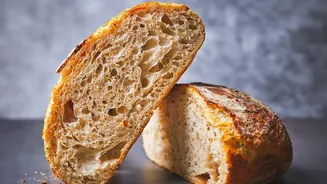
The key to friselle's longevity and signature texture is its double-baking process, known in Italian as 'biscotto', meaning 'twice-cooked'. First, the dough is shaped into rings and baked until cooked through but still pale. Then, while still warm, each ring is cut horizontally in half and returned to a low-temperature oven for a second, much longer bake. This second round removes almost all the remaining moisture, resulting in an incredibly hard, dry bread that is resistant to mould. When stored correctly in an airtight container away from moisture, friselle can last for many months, making them a reliable pantry staple.
The Ritual of Preparation
Biting into a dry frisella is not recommended; it's a jaw-breaking experience. The essential step before eating is rehydration, a ritual known as 'sponzatura'. This involves a quick dip in cold water—and 'quick' is the operative word. Just a few seconds are enough to soften the porous interior while leaving a satisfying crunch. In ancient times, fishermen would simply dip them in clean sea water. Once softened, the rough, open-pored side is ready to be dressed. This surface is perfect for soaking up flavours without turning the whole thing to mush. Some even use the rough surface like a grater, rubbing a ripe tomato half directly onto it.
Classic Toppings and Modern Twists
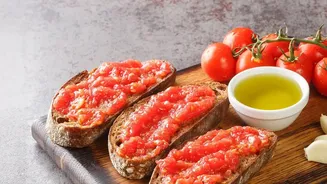
The quintessential way to serve friselle is 'al pomodoro': topped with chopped ripe tomatoes, a generous drizzle of high-quality extra virgin olive oil, salt, and a sprinkle of oregano. This simple combination is a hallmark of Italian summer cuisine. Think of it as a sturdier, more rustic cousin to bruschetta. But the options don't stop there. Other popular toppings include fresh mozzarella or creamy burrata, salty anchovies, olives, or grilled vegetables like courgettes and peppers. For a Calabrian-style kick, some rub the bread with a garlic clove before dipping and add a pinch of red pepper flakes. In Crete, a similar bread called 'dakos' is topped with tomatoes, olive oil, and fresh goat cheese.