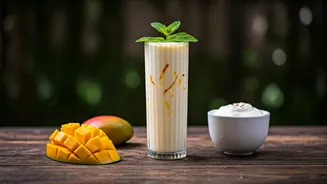









The Anatomy of a Perfect Sip
At its core, a mango lassi is a beautifully simple creation. It’s a smoothie-like drink made by blending ripe, sweet mangoes with dahi (plain yogurt), a splash of milk or water to achieve the perfect consistency, and a touch of sweetener like sugar or honey
if needed. [2, 3] What elevates it from a mere mango smoothie to a true lassi is often the subtle hint of spice, usually a pinch of ground cardamom, which adds a fragrant warmth that complements the fruit. [5] Some recipes also call for optional additions like saffron or rose water for a more complex flavour profile. [3, 5] The key is the balance: the rich sweetness of the mango, the tangy creaminess of the yogurt, and that whisper of spice all coming together in a chilled, sippable form. [2]
A Sip of History
The lassi itself has ancient roots in the Indian subcontinent, specifically in the pastoral region of Punjab. [6, 7] Believed to have originated as far back as 1000 B.C., it began as a yogurt-based drink, which could be either salty (namkeen) or sweet (meethi). [7, 19] Lassi is even mentioned in ancient Ayurvedic texts for its digestive and cooling properties. [4, 8] The drink was traditionally served in unglazed clay cups called kulhars, which imparted an earthy aroma and helped keep the beverage cool in an era before refrigeration. [7] The addition of mango pulp is a more modern, yet seamless, evolution. Given that mangoes are native to India, it was a natural and inspired pairing that has since become the most popular lassi variety worldwide. [7, 19]
The Science of Cool
The headline's claim is more than just poetry; there’s a reason lassi is considered a supreme summer beverage. [11] Yogurt, the drink's foundation, is known in Ayurveda and traditional Indian food wisdom for its natural cooling properties that help lower body temperature. [9, 16] On a scientific level, the dairy fats in yogurt can bind to capsaicin—the compound that makes spicy food feel hot—which is why a lassi is the perfect accompaniment to a fiery Indian meal. [19, 23] Furthermore, the blend of yogurt and water or milk provides excellent hydration and replenishes electrolytes lost in the heat. [9] Rich in probiotics, lassi also supports gut health, which can sometimes be sluggish in hot weather. [9, 14] It provides a quick source of energy without the sharp crash associated with sugary sodas. [14, 16]
A Symbol of Hospitality and Joy
In India, lassi is more than just a menu item; it's woven into the cultural fabric. It's a symbol of hospitality, often offered to guests as a sign of welcome. [18] It’s also a celebratory drink, present during festivals and family gatherings. [4, 18] For many, it’s a taste of home and comfort, enjoyed as a breakfast smoothie, a midday snack, or a digestive aid after dinner. [7] Its global popularity soared in the 1990s, coinciding with the rise of fruit-flavoured yogurts in the West. [19] The mango lassi offered something both familiar (a yogurt drink) and excitingly new (the flavour of an iconic South Asian fruit), making it an easy and delicious entry point into Indian cuisine for people around the world. [19]