



A Football Field Moving at 28,000 KMPH
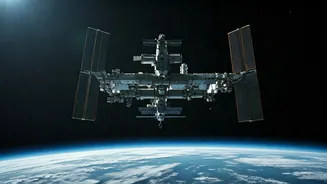
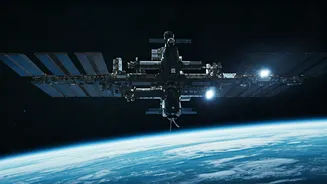
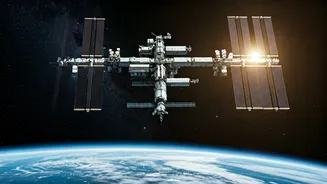
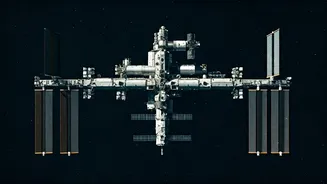
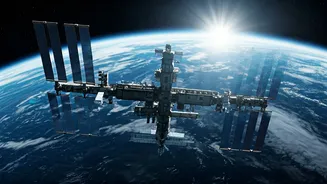
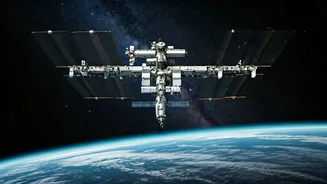
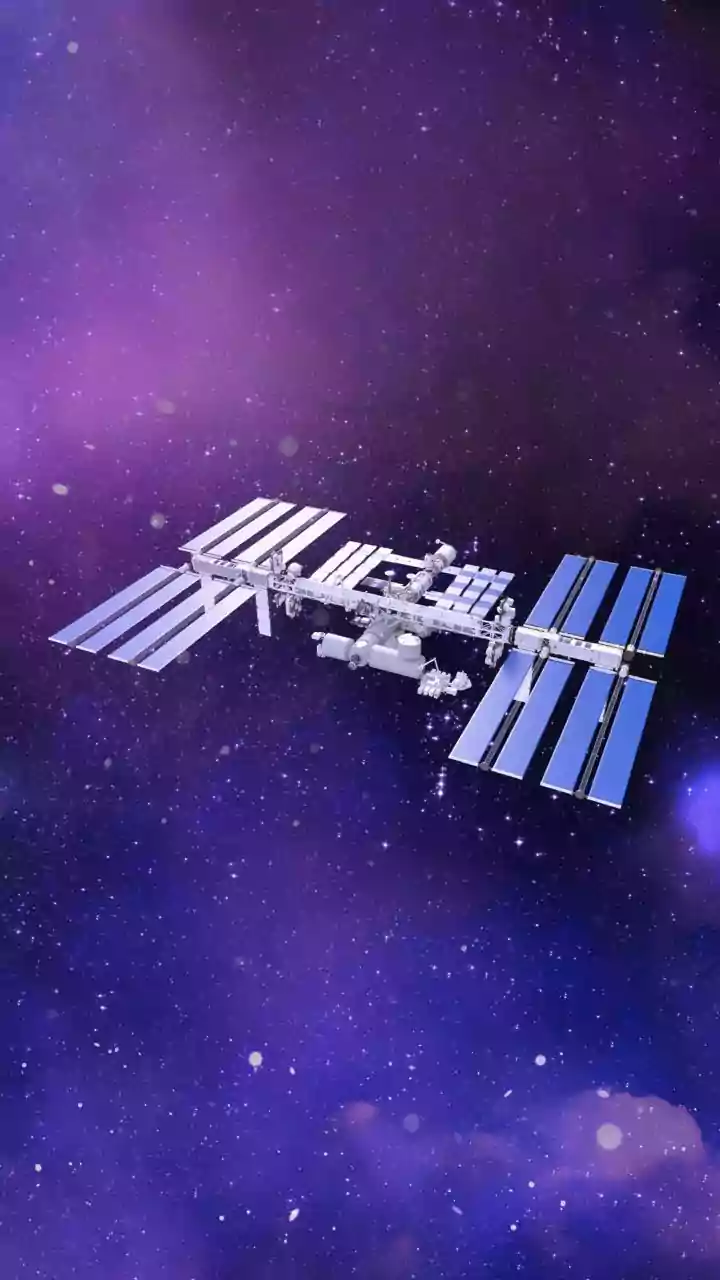
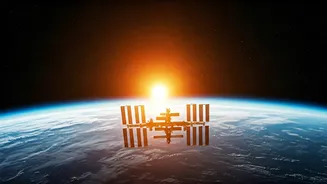
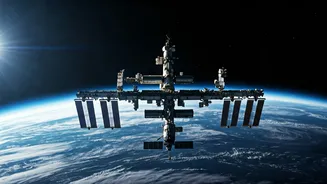
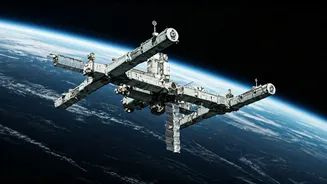
It’s hard to grasp the sheer scale and speed of the ISS. End-to-end, its truss and solar arrays stretch about 109 metres, which is roughly the size of a football field. This massive structure, weighing about 4.2 lakh kilograms, hurtles through space at
a staggering 28,000 kilometres per hour. To put that in perspective, it circles the entire planet once every 90-92 minutes. This means the astronauts on board witness 16 sunrises and 16 sunsets every single day, completely upending any normal sense of day and night.
The Unique Smell of Space and… People
What does a constantly inhabited metal can in space actually smell like? According to astronauts, it’s a unique and potent mix. Descriptions often include a combination of antiseptic, garbage, and body odour. When astronauts return from a spacewalk, their suits can carry a distinct scent of burnt steak, ozone, or gunpowder. Add to that the lingering odours from living in close quarters where you can't exactly open a window for fresh air or take a normal shower, and you get a truly peculiar atmosphere. UK astronaut Tim Peake once described it as smelling “like a barbecue that’s gone wrong.”
The Ultimate Recycling Programme
Water is an incredibly precious resource in space, as launching it from Earth is expensive. To solve this, the ISS is equipped with a highly advanced water recycling system. The Environmental Control and Life Support System (ECLSS) captures moisture from every possible source—including the crew's breath, sweat, and even urine. This collected wastewater is then purified through a complex process of distillation and filtration. The system is so efficient that it recovers about 98% of all water on board, turning it into drinking water that is often cleaner than what most people drink on Earth.
It Runs on Millions of Lines of Code
Keeping this high-tech outpost running requires an immense amount of software. The flight software on the US segment of the ISS alone consists of more than 1.5 million lines of code. This is supported on the ground by another 3 million lines of code for simulations. Dozens of computers across the station's modules work together, monitoring everything from life support to scientific experiments. This complex digital nervous system is what allows for the seamless operation of the most ambitious international collaborative project ever undertaken.
A Stepping Stone for India's Space Ambitions
The ISS has long been a symbol of global cooperation, and India is now a part of that story. While astronauts of Indian origin like Sunita Williams and Kalpana Chawla have been to space, 2025 marked a new chapter. Indian Air Force Group Captain Shubhanshu Shukla became the first Indian citizen to visit the International Space Station as part of the Axiom-4 mission. During his 14-day stay, he conducted several experiments handpicked by ISRO, focusing on everything from nutrition to the effects of microgravity. This mission is seen as a crucial learning experience for India's own ambitious Gaganyaan programme, which aims to send Indian astronauts into orbit on an Indian spacecraft.
The Most Expensive Thing Ever Built
Building a home in space does not come cheap. The International Space Station holds the title for the single most expensive object ever constructed by humanity. By 2010, the estimated cost from all participating nations—including the United States, Russia, Japan, Canada, and the European Space Agency—had surpassed $150 billion (or over €100 billion). This figure covers the development, assembly in orbit via numerous space flights, and operational costs. The continued investment reflects a global commitment to scientific discovery and exploring humanity's future in space.