



What Eight Hours of Sitting Does to You
Our bodies are designed for movement, not for staying static in a chair. When you sit for extended periods, several negative changes occur. Your hip flexors, the muscles at the front of your hips, become short and tight. Simultaneously, your glute muscles can
weaken from lack of use. This combination tilts your pelvis, often contributing to lower back pain. Further up, your shoulders tend to round forward and your head juts out, straining your neck and upper back as you lean toward a screen. This cumulative effect, sometimes called 'desk body,' can lead to chronic pain, reduced flexibility, and a greater risk of injury.
Foam Rolling to the Rescue
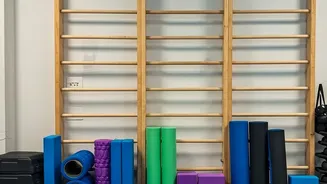
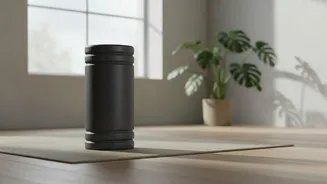
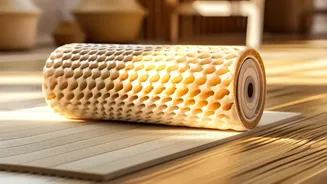
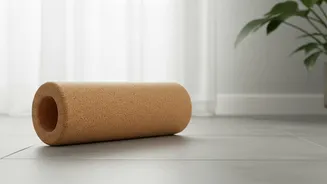
Foam rolling is a form of self-myofascial release, which is essentially a self-massage to ease tension in your muscles and the connective tissue (fascia) that surrounds them. For those who sit all day, foam rolling helps address the knots and adhesions that form in overworked or shortened muscles. By applying sustained pressure to these tight spots, you can increase blood flow, improve flexibility, and restore the muscle to its intended length. This can provide immediate relief from stiffness and, over time, help correct the postural imbalances caused by sitting. Think of it as ironing out the wrinkles your chair creates in your body.
Key Foam Rolling Moves
Consistency is more important than intensity. Aim for 30 to 60 seconds on each of these areas a few times a week. 1. Hip Flexors: Lie face down with the foam roller positioned under your left hip, supporting your upper body on your forearms. Keep your right leg bent and off to the side for stability. Gently roll up and down over the front of your hip, pausing on any tender spots for a few breaths until you feel a release. Then switch sides. 2. Thoracic Spine (Upper/Mid-Back): Lie on your back with the foam roller placed horizontally under your shoulder blades. Cross your arms over your chest or place your hands behind your head to support your neck. Keeping your feet flat on the floor and glutes slightly lifted, slowly roll up and down between your mid-back and the top of your shoulders. This helps counteract the hunching posture from desk work. 3. Hamstrings: Sit on the floor with your legs straight out and place the roller under your upper hamstrings. Lift your hips off the floor, supporting yourself with your hands. Slowly roll from just below your glutes to the area just above the back of your knees. To increase pressure, you can cross one leg over the other.
Mobility: Your Secret Weapon for Movement
While foam rolling helps release tight muscles, mobility exercises actively improve the range of motion in your joints. Mobility is about strengthening your body through its full functional movement patterns, which is crucial for reversing the stiffness caused by sitting. These are not static stretches you hold for long periods; instead, they are dynamic movements that teach your joints to move freely and safely. Good mobility in your hips and thoracic spine is particularly important for desk workers, as these are the areas that become most restricted. Adding mobility drills ensures that once your muscles are loosened, your joints are capable of moving correctly.
Essential Mobility Drills
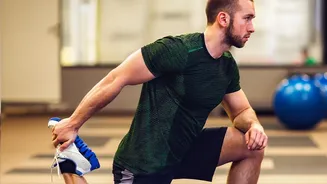
Perform these exercises in a slow, controlled manner. Aim for about 8-12 repetitions for each movement. 1. Cat-Cow: Start on your hands and knees with a neutral spine. Inhale as you drop your belly toward the floor and look up, creating an arch in your back (Cow). Exhale as you press into your hands, round your spine toward the ceiling, and tuck your chin to your chest (Cat). This movement improves spinal flexibility. 2. Seated Thoracic Rotation: Sit tall on the edge of a chair, feet flat on the floor. Cross your arms over your chest. Keeping your hips still, gently rotate your upper body to the left as far as you comfortably can. Hold for a moment, then return to the center and rotate to the right. This directly targets rotational stiffness in your mid-back. 3. Half-Kneeling Hip Flexor Stretch: Kneel on your right knee (use a cushion if needed) with your left foot forward, creating a 90-degree angle at your left knee. Gently tuck your tailbone and squeeze your right glute. You should feel a stretch in the front of your right hip. For a deeper stretch, you can gently push your hips forward. Hold for 30 seconds and switch sides.