





A New Frontier for India
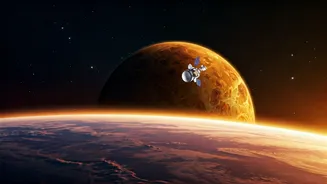
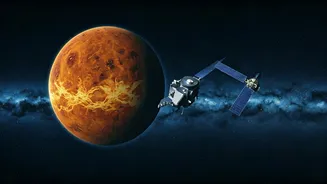
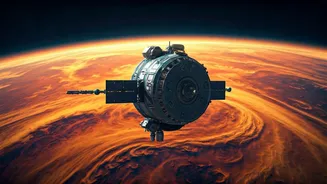
ISRO's Venus Orbiter Mission, named Shukrayaan-1, marks India's ambitious next step in planetary exploration. Following the celebrated successes of the Mangalyaan (Mars Orbiter Mission) and Chandrayaan missions to the Moon, Shukrayaan represents a new
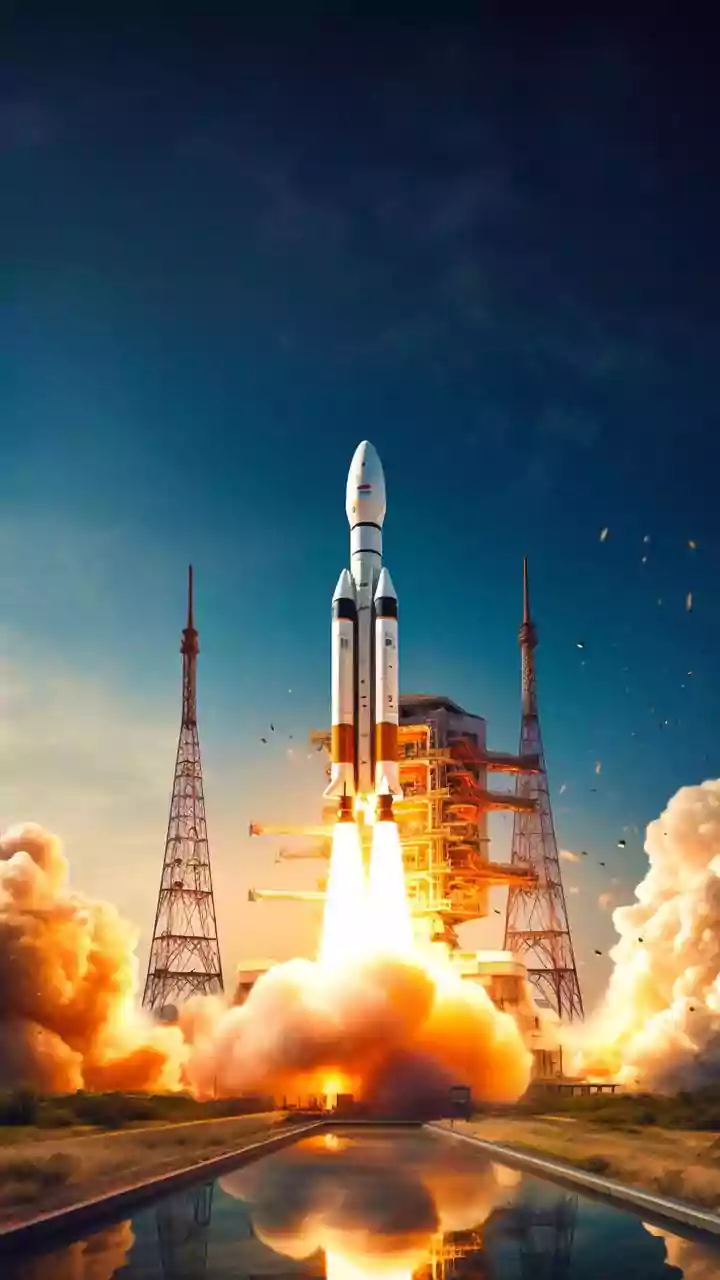
level of scientific and technical challenge. The Union Cabinet approved the mission in September 2024, with a launch targeted for March 2028. The spacecraft, launched aboard a powerful LVM-3 rocket, will embark on a 112-day journey to our neighbouring planet. This mission not only solidifies India's position as a major player in space exploration but also joins a renewed global interest in Venus, with NASA and the European Space Agency also planning missions.
Earth's 'Evil Twin'
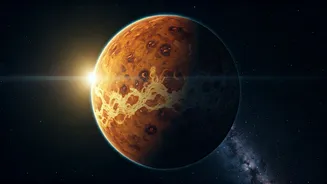
Venus is often called Earth's twin, and for good reason. It's nearly the same size, mass, and density. Scientists believe that billions of years ago, Venus may have had a climate similar to Earth's, possibly with oceans, rain, and perhaps even continents. However, the two planets took dramatically different evolutionary paths. Today, Venus is a hellscape. Its surface temperature averages a staggering 465 degrees Celsius—hot enough to melt lead. The atmospheric pressure at its surface is over 90 times that of Earth, equivalent to being nearly a kilometre underwater. Understanding what caused Earth's twin to become so inhospitable is a primary driver for the Shukrayaan mission.
A Runaway Greenhouse Catastrophe
The key to Venus's transformation lies in its atmosphere, which is composed of 96% carbon dioxide. This dense blanket of gas triggered a 'runaway greenhouse effect'. While the greenhouse effect is a natural process that warms Earth, on Venus it went into overdrive. Any early oceans would have boiled away, releasing vast amounts of water vapour—itself a potent greenhouse gas—into the atmosphere, trapping more and more heat in a devastating feedback loop. This process turned the planet into the scorching, toxic world we see today. Venus serves as a natural laboratory for the most extreme case of climate change, offering a stark cautionary tale.
The Mission's Scientific Blueprint
Shukrayaan-1 is equipped with a suite of sophisticated instruments designed to peel back the layers of Venus's mysteries. Its primary objectives are to map the planet's surface and subsurface, and to study the complex chemistry and dynamics of its atmosphere. A high-resolution Synthetic Aperture Radar (SAR) will pierce through the dense clouds to map geological features, including volcanoes and lava flows. For the first time, a ground-penetrating radar will investigate the shallow subsurface. Other instruments will analyse the composition of the atmosphere, study how it interacts with the solar wind, and monitor the thick clouds of sulfuric acid. This data will be vital for understanding why Venus lost its water and evolved so differently from Earth.
Informing Earth's Climate Future
The ultimate goal of studying Venus extends far beyond planetary science. By providing an extreme example of the greenhouse effect, data from Shukrayaan-1 will help scientists refine and test the climate models they use to predict future changes on Earth. While Earth is not in danger of becoming Venus overnight, studying our sister planet provides invaluable insights into atmospheric physics and the tipping points that can lead to dramatic climate shifts. Understanding how Venus's climate collapsed can help us better appreciate the delicate balance that makes Earth habitable and reinforce the urgency of protecting our own atmosphere. The mission is, in essence, a quest to understand our own planet's past, present, and potential future by looking at our cosmic neighbour.