




For over three decades, the Hubble Space Telescope has been humanity’s eye on the cosmos. But its time may be running out. Facing a slow but steady orbital decay, NASA has made a pivotal decision: asking the private sector for help.
Why Hubble Is in Trouble
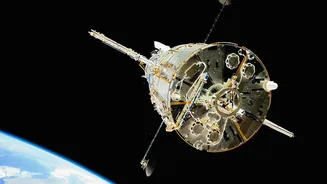
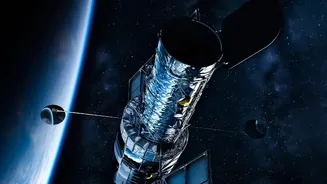
The Hubble Space Telescope
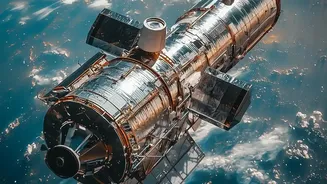
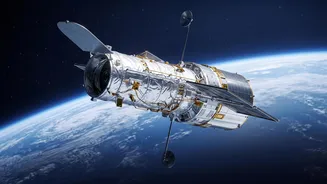
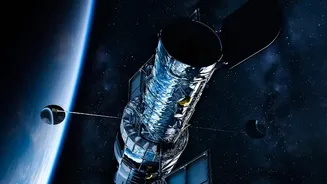
isn't failing because its parts are broken; it's in danger because it's slowly falling. Launched in 1990, Hubble circles the Earth in a low orbit. Even hundreds of kilometres up, there are faint traces of Earth's atmosphere that create a tiny amount of drag on the telescope. Over 36 years, this minuscule friction has caused Hubble's orbit to decay, pulling it closer to the planet. It has no propulsion system of its own to counteract this effect. NASA predicts that without intervention, the telescope could re-enter the atmosphere sometime between 2033 and 2038, where it would largely burn up. This process is accelerated by solar activity, which heats and expands the upper atmosphere, increasing the drag.
NASA's Unprecedented 'Help Wanted' Sign
To prevent Hubble's premature demise, NASA has issued a formal Request for Information (RFI), essentially putting out a call to the commercial space industry for ideas. This isn't a contract for a mission yet, but a market study to see what's possible. The RFI, released in late October 2026, asks companies to propose concepts for one of three main objectives: boost Hubble to a higher, more stable orbit; service it with new components to enhance performance; or, as a last resort, guide it to a safe, controlled deorbit over an unpopulated area of the ocean. The primary goal is a 'reboost' to an altitude of at least 600 kilometres, which could add another 15 to 25 years to its operational life.
A New Era of Space Servicing
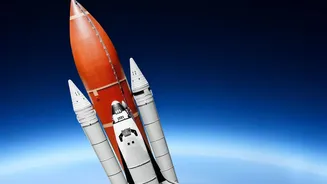
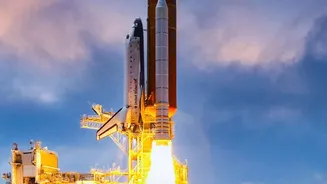
This public-private approach marks a significant shift from how Hubble was maintained in the past. Five times between 1993 and 2009, NASA astronauts flew on the Space Shuttle to conduct daring in-person repairs and upgrades. These missions were critical to fixing its flawed mirror and installing new, more powerful instruments. The final shuttle servicing mission in 2009 left the telescope in peak condition, but did not provide an orbital boost. With the Space Shuttle fleet now retired for over a decade, NASA no longer has its own vehicle capable of reaching Hubble. This has opened the door for the burgeoning commercial space sector, which has developed new capabilities for in-space operations. As NASA associate administrator Nicky Fox noted, the commercial industry has evolved rapidly, offering new ways to capture and service satellites.
Who Could Answer the Call?
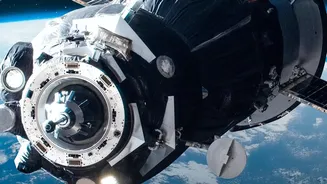
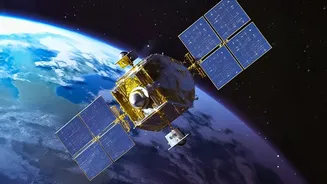
The most prominent name associated with a potential Hubble rescue is SpaceX. In 2022, the company, in partnership with the private Polaris Program led by billionaire astronaut Jared Isaacman, signed an agreement with NASA to study the feasibility of using a Dragon spacecraft to dock with and reboost the telescope. That study concluded such a mission was technically possible. Now, with Isaacman serving as NASA Administrator, the new RFI opens the opportunity to the entire industry, inviting concepts that could be robotic or crewed. Other companies specializing in satellite servicing, such as Astroscale, which had previously submitted a concept, could also be contenders. The RFI requires any responding company to provide the entire package: the launch, the spacecraft, and the mission operations.
The Stakes of the Mission
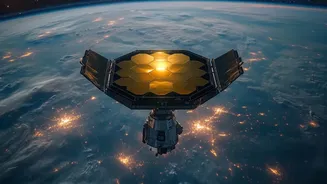
Saving Hubble is more than just preserving a piece of history; it’s about safeguarding a unique scientific instrument. While the James Webb Space Telescope (JWST) is its successor, it primarily observes in infrared light. Hubble remains one of the world's premier telescopes for observing in visible and ultraviolet light, making its capabilities complementary to JWST, not redundant. A successful reboost would ensure these crucial observations can continue for another generation. However, the mission is fraught with risk. Hubble was designed to be serviced by astronauts from the shuttle's payload bay, not to be automatically docked with by a modern spacecraft. Any attempt to grab and push the multi-billion dollar observatory must be executed flawlessly to avoid causing catastrophic damage.