



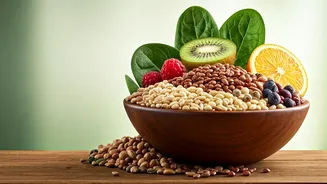




The Unsung Hero of Your Diet
For decades, fibre was typecast as 'roughage'—a boring, functional ingredient primarily associated with preventing constipation. But this simplistic view misses the point entirely. Think of fibre as a complex carbohydrate with a secret identity. While
our bodies can't digest it, this is precisely where its power lies. Instead of being broken down and absorbed, it travels through our digestive system largely intact, playing multiple crucial roles along the way. It’s not just a background character; it’s the scriptwriter, director, and star of your gut’s daily drama.
Feeding Your Inner Ecosystem
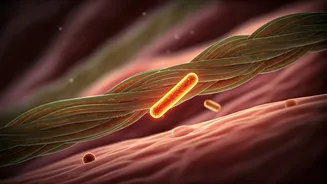
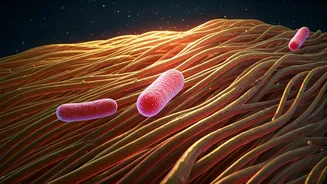
Your gut is home to trillions of microorganisms—bacteria, fungi, and viruses—collectively known as the gut microbiome. A healthy, diverse microbiome is critical for everything from digestion to immunity. This is where fibre truly gets its 'main character energy'. It acts as a prebiotic, which is essentially the preferred food for your good gut bacteria. When these beneficial microbes feast on fibre, they thrive and multiply. More importantly, they produce powerful compounds called short-chain fatty acids (SCFAs), like butyrate. Butyrate is a superstar in its own right, serving as the primary energy source for the cells lining your colon, reducing inflammation, and strengthening the gut barrier. By feeding your gut bacteria, fibre is essentially cultivating a healthy internal garden.
The Two Faces of Our Star
Like any great actor, fibre has range. It isn't a single entity but a group of compounds that are broadly classified into two types: soluble and insoluble. Both are vital for a blockbuster performance. **Soluble fibre** dissolves in water to form a gel-like substance. This gel slows down digestion, which helps you feel fuller for longer and plays a role in managing blood sugar levels. It can also help lower cholesterol. Think of the soft texture of cooked oats, dal, beans, and the flesh of fruits like apples and guavas. **Insoluble fibre** does not dissolve in water. Instead, it adds bulk to stool and helps it move more quickly through the digestive tract, promoting regularity. This is the 'roughage' we often hear about. You'll find it in whole-wheat flour, millets, nuts, cauliflower, and the skins of many fruits and vegetables.
The Ripple Effect of a Star Performance
A well-fed gut doesn't just keep your digestion on track. The benefits of fibre's main character performance radiate throughout the body. A healthy gut microbiome is intrinsically linked to a robust immune system, as a significant portion of your immune cells reside in the gut. The 'gut-brain axis'—a constant two-way communication channel—means a happy gut can contribute to a better mood and reduced anxiety. Some research even links gut health to clearer skin and better weight management. By making fibre the protagonist of your diet, you are supporting a holistic system of wellness that goes far beyond just your stomach.
How to Cast Fibre in a Leading Role
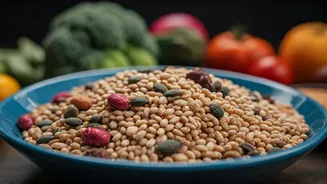
Giving fibre the spotlight it deserves doesn't require a drastic dietary overhaul. It's about making simple, consistent swaps. Start your day with a bowl of oats, daliya, or a paratha made from whole-wheat atta instead of maida. Make dals, chana, and rajma a central part of your lunch and dinner. Snack on a piece of fruit instead of a packaged biscuit. Add a handful of nuts and seeds to your yoghurt or salad. Choose brown rice or millets like jowar and bajra over white rice a few times a week. The key is to increase your intake gradually and drink plenty of water to help the fibre do its job smoothly. Let fibre be the star of your plate, and your body will give it a standing ovation.