





The Thin Air of Mars
Before astronauts can take their first steps in a Martian habitat without a helmet, we need to solve the planet's air problem. The Martian atmosphere is incredibly thin and almost entirely hostile to human life. It is composed of about 96% carbon dioxide,
with only a tiny fraction of oxygen. For any long-term human presence, from a small research outpost to a future colony, hauling all the necessary oxygen from Earth is simply not feasible. A rocket powerful enough to lift a few astronauts off Mars for the return journey would require an estimated 25 metric tons of oxygen just for fuel. This logistical challenge has made “in-situ resource utilization,” or living off the land, a top priority. The goal is to create oxygen directly on Mars from the resources already there, and the most abundant resource is carbon dioxide.
An Electric Tree on Another World
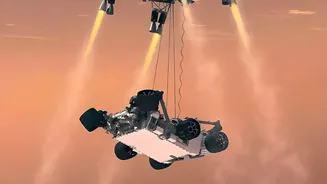
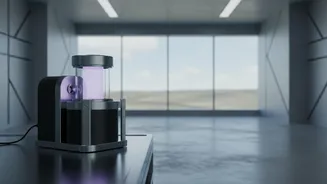
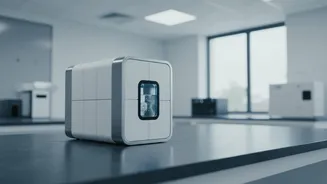
The leading technology for this task is called electrolysis, a process that uses electricity to split molecules. On the International Space Station, electrolysis splits water into hydrogen and oxygen. But on Mars, where water is scarce, scientists are focused on splitting carbon dioxide (CO2) into breathable oxygen (O2) and carbon monoxide (CO). The primary device testing this on Mars is NASA's MOXIE, or the Mars Oxygen In-Situ Resource Utilization Experiment. Riding aboard the Perseverance rover, this toaster-sized instrument has proven the concept works. By heating the Martian air to about 800 degrees Celsius and using an electrochemical process, MOXIE has successfully produced pure oxygen. After completing its mission in 2023, MOXIE proved it could reliably generate about 6 to 12 grams of oxygen per hour, roughly the rate of a small tree on Earth.
A Leap in Efficiency
While MOXIE was a resounding success, its output is modest. Sustaining astronauts and fueling rockets requires a system that is hundreds of times more productive. This is where recent scientific advancements come in. Researchers have been working on new methods and materials to dramatically increase the rate of CO2 electrolysis. One promising approach involves using different types of reactors and catalysts. For instance, research from teams at the University of Antwerp and the University of Lisbon explored using plasma to split CO2. Plasma, an energized state of matter, is well-suited to the low-pressure Martian environment and has shown impressive results in lab settings, with one reactor design showing it could produce oxygen up to 30 times faster than MOXIE. Another area of innovation is in developing new catalysts, which are substances that speed up chemical reactions without being consumed. These breakthroughs are crucial for designing larger, more efficient oxygen factories for Mars.
Beyond Breathable Air
The ability to generate large quantities of oxygen on Mars has implications far beyond just providing breathable air. The primary consumer of Martian-made oxygen would actually be rockets. Liquid oxygen is a key component of rocket propellant, and producing it on-site would eliminate the need to transport immense quantities from Earth, radically changing the economics of a round trip to Mars. Furthermore, the byproducts of these reactions could also be valuable. The carbon monoxide generated from CO2 splitting can be combined with hydrogen (which could be produced by splitting Martian water ice) to create methane, another rocket fuel. Some processes even allow for the creation of nitrogen-based fertilizers from the Martian atmosphere, another critical ingredient for establishing a self-sustaining settlement where crops could be grown.
The Path to a Martian Outpost
Despite these promising developments, the road to a breathable Mars habitat is still long. The systems tested in labs must be proven to work reliably in the harsh and variable Martian environment, which sees extreme temperature swings and dust storms. A full-scale oxygen plant would need to be a robust, continuously operating system, likely running for thousands of hours to produce the required stockpiles of oxygen before the first astronauts even arrive. The power requirements are also substantial; any future oxygen factory would need a dedicated, high-output power source, likely a scaled-up solar array or a small nuclear reactor. The recent boost in electrolysis rates represents a critical piece of the puzzle, making the prospect of these large-scale systems more feasible. It's a significant step toward turning science fiction into scientific fact and ensuring that when humans finally arrive on Mars, they can stay.