




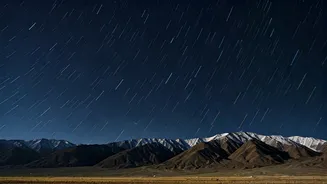


The Celestial Show of Late July
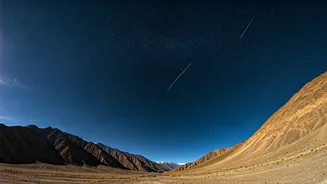
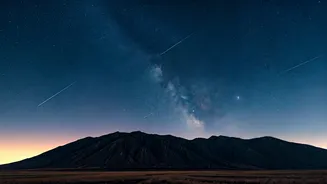
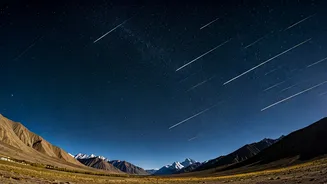
Late July 2026 offers a double feature for sky-gazers. Two meteor showers, the Southern Delta Aquariids and the Alpha Capricornids, will reach their peak activity around the night of July 30-31. The Delta Aquariids are the more prolific of the two, promising
around 20-25 meteors per hour under perfect conditions. While the Alpha Capricornids produce only about five per hour, they are renowned for their exceptionally bright and dramatic fireballs that streak across the sky. However, there's a catch: a bright, full moon on July 29 will wash out some of the fainter meteors on the peak nights. The best strategy is to plan your viewing for the week leading up to the 30th. Watch in the hours after midnight, once the moon has set, to experience the darkest skies and the best show.
Why Ladakh Is an Astronomer’s Paradise
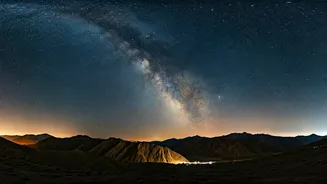
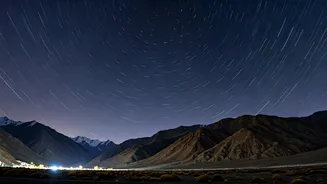
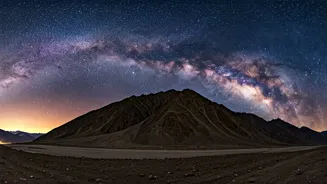
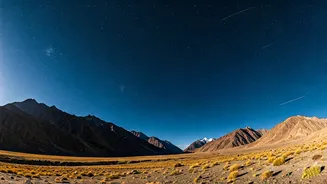
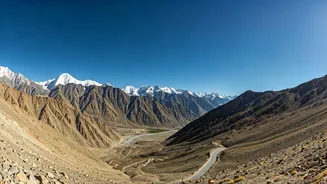
There’s a reason astronomers and photographers flock to Ladakh: its conditions are nearly perfect for stargazing. Situated at altitudes often exceeding 10,000 feet, the region lies above a significant portion of the Earth’s atmosphere. This high altitude means the air is thin, dry, and holds less moisture, resulting in exceptionally clear and stable skies. Furthermore, Ladakh’s remote location and sparse population mean it suffers from minimal light pollution, allowing the Milky Way and fainter stars to shine with breathtaking intensity. It is, without a doubt, one of the best places on the planet to witness the night sky in all its glory.
Pinpointing the Best Viewing Spots
While almost anywhere in Ladakh away from town lights will offer a great view, some spots are legendary. Hanle, home to India’s first-ever Dark Sky Reserve and the Indian Astronomical Observatory, is considered the gold standard. Its extreme altitude and protected status ensure unparalleled darkness. For a truly unique experience, head to the high-altitude lakes of Pangong Tso or Tso Moriri. On a calm night, the still waters create a perfect mirror, reflecting the star-dusted heavens above. Tso Moriri is generally less crowded, offering a more peaceful communion with the cosmos. The otherworldly sand dunes of the Nubra Valley, near villages like Hunder or Diskit, also provide a fantastic and surreal backdrop for your meteor-watching vigil.
Acclimatisation: Your Most Important Task
Before you even think about the stars, you must think about your health. Ladakh’s high altitude can cause Acute Mountain Sickness (AMS), which can be serious if ignored. If you are flying into Leh (altitude: 11,500 feet), the local administration mandates a strict rest period of 36 to 48 hours for acclimatisation. This is not a suggestion; it is a requirement for your safety. During this time, you must avoid any strenuous activity, including long walks or immediate travel to higher mountain passes. Drink plenty of water—at least four to five litres a day—and avoid alcohol, which speeds up dehydration. Listen to your body. If you experience headaches, dizziness, or nausea, rest until you feel better. Only once you are properly acclimatised should you venture to higher, more remote viewing spots.
Packing for a Night Under the Stars
Even in July, nights in Ladakh are cold, and temperatures can easily drop towards freezing, especially at higher altitudes. Layering your clothing is essential. Start with a thermal base layer, add a fleece or wool sweater, and top it with a windproof and waterproof outer jacket. Don’t forget a warm cap, gloves, and thick socks. For your stargazing expedition, pack a small daypack with essentials. A red-light torch is highly recommended as it helps you see in the dark without ruining your night vision, unlike a standard white flashlight. Bring a thermos with a hot beverage like tea or hot chocolate, some snacks, and a portable battery bank for your phone. If you plan on taking photos, a sturdy tripod is non-negotiable to capture the long exposures needed for astrophotography.