






What is Geoengineering, Exactly?
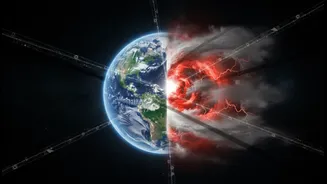
At its core, geoengineering refers to a set of proposed technologies designed to intentionally manipulate the Earth's natural systems to counteract the effects of climate change. Think of it as planetary-scale climate intervention. The conversation around
these technologies is growing because, despite global efforts, greenhouse gas emissions continue to rise, and some scientists believe we may need more drastic measures to avoid catastrophic warming. These are not small-scale projects; they involve altering fundamental processes of our oceans, soils, and atmosphere.
The Two Main Approaches
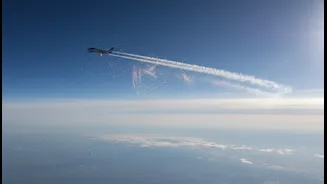
Geoengineering concepts generally fall into two broad categories. The first is Carbon Dioxide Removal (CDR), which, as the name suggests, aims to suck legacy carbon dioxide out of the atmosphere. Methods include building large 'direct air capture' facilities that act like giant air purifiers, planting massive forests, or fertilizing the ocean with iron to stimulate carbon-absorbing phytoplankton blooms. The second, and more controversial, category is Solar Radiation Management (SRM), or solar geoengineering. This approach doesn't remove carbon but aims to cool the planet by reflecting a small fraction of sunlight back into space. The most talked-about SRM method involves injecting tiny reflective particles, like sulfur aerosols, into the stratosphere, mimicking the cooling effect of a large volcanic eruption.
The 'Big Questions': Unforeseen Risks
The allure of a potential quick fix is powerful, but the unknowns are massive and deeply concerning. Solar geoengineering, for instance, could have profound and unpredictable effects on regional weather patterns. An attempt to cool the globe could inadvertently cause severe droughts or flooding in different parts of the world. Some research, based on past volcanic eruptions, suggests stratospheric injections could lead to reduced rainfall and river flow. There are also fears it could damage the ozone layer. Furthermore, SRM does nothing to stop ocean acidification, as it doesn't remove CO2 from the air. Perhaps the most frightening risk is the 'termination shock': if we start injecting aerosols and then suddenly stop for any reason (political instability, lack of funds), global temperatures could rebound with terrifying speed, far too quickly for ecosystems and societies to adapt.
Who Controls the World's Thermostat?
Beyond the scientific risks lie thorny ethical and geopolitical questions. Who gets to decide if we deploy these technologies? The effects of geoengineering would not respect national borders. An action taken by one country or a coalition could have devastating impacts on another, potentially sparking international conflict. There is currently no international treaty or governing body with the authority to regulate geoengineering activities, leading to a governance vacuum. While there is a non-binding moratorium under the UN Convention on Biological Diversity, the lack of a formal, enforceable framework means the risk of a 'rogue actor'—a single nation or even a corporation—unilaterally deploying the technology remains a serious concern.
What's at Stake for India?
For India, these questions are particularly urgent. The nation's climate vulnerability is high, and its economy and food security are deeply intertwined with the seasonal monsoon. Solar geoengineering could potentially disrupt these delicate weather patterns, with one study warning that atmospheric sulfate injection could be a 'double-edged sword' for the region. On the other hand, as a major scientific power, India has a critical role to play in the research and governance conversation. A small survey of Indian climate experts revealed that most support more government-funded research, particularly in climate modelling, to understand local impacts and to ensure India's specific interests, like monsoon stability, are prioritised in any global discussion. Currently, India has no specific laws governing geoengineering, a gap that some experts argue needs to be addressed.