
A Giant Leap in Complexity
The Chandrayaan-4 mission represents a monumental step up from its predecessor. While Chandrayaan-3 involved a lander and a rover that performed experiments on the lunar surface, Chandrayaan-4 is designed for a round trip. This makes it one of the most
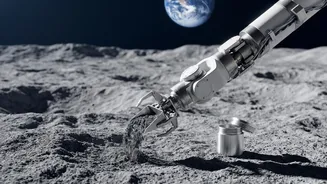
complex missions ISRO has ever undertaken. The primary goal is to collect up to three kilograms of lunar rock and soil, known as regolith, from the Moon's south pole region and return it safely to Earth for detailed scientific analysis. Success would make India only the fourth country in history to accomplish this feat, joining the ranks of the United States, the former Soviet Union, and China.
An Ambitious Five-Part Mission
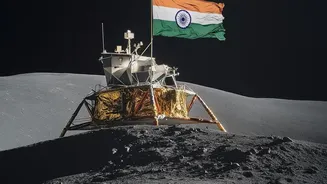
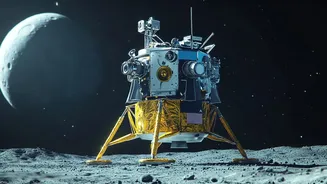
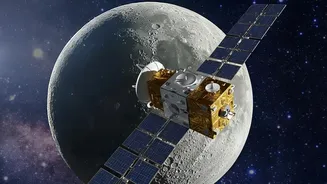
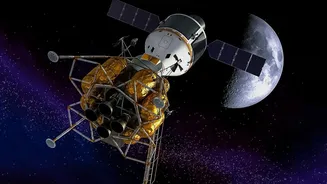
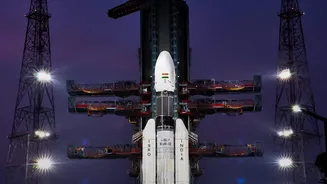
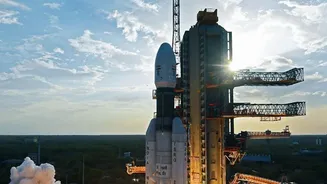
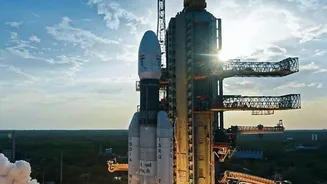
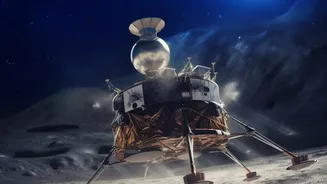
To achieve this, Chandrayaan-4 will not be a single spacecraft but a complex, five-module system requiring two separate rocket launches. The combined weight of the modules is too heavy for even India's most powerful rocket, the LVM3, to carry in one go. The mission architecture involves a Propulsion Module to travel towards the Moon, a Descender Module to land, an Ascender Module to lift off from the lunar surface with the samples, a Transfer Module to carry the samples in lunar orbit, and a Re-entry Module to bring them back through Earth’s atmosphere. This intricate plan requires ISRO to master several new technologies, including launching a vehicle from another celestial body and performing automated docking between two spacecraft in lunar orbit—manoeuvres India has never attempted before.
Why Bring Lunar Soil to Earth?
While rovers can conduct valuable on-site analysis, there is no substitute for studying extraterrestrial samples in laboratories on Earth. Instruments on a spacecraft are limited by size, weight, and power. Back on Earth, scientists can use state-of-the-art equipment that is far too large or delicate to send into space, such as advanced microscopes and mass spectrometers. These tools can unlock secrets about the Moon's origin, its geological history, and the composition of its poles, which are believed to hold water ice. Samples from the lunar south pole are particularly valuable as no nation has ever retrieved them. The analysis could provide crucial information about the potential for using lunar resources, like water ice, for future long-term human missions.
Timeline and Technical Hurdles
With a projected launch date around 2028, ISRO is on an aggressive timeline. The Union Cabinet approved the mission in September 2024 with a significant budget allocation. A major hurdle was demonstrating the ability to dock two spacecraft in orbit, a critical step for transferring the lunar sample. ISRO successfully tested this capability with its SPADEX (Space Docking Experiment) mission, which performed autonomous docking manoeuvres in Earth orbit in 2025. While this de-risks a major component of the mission, Chandrayaan-4 will need to replicate this success in the more challenging environment of lunar orbit. The mission will also be a testbed for technologies essential for India's long-term goal of sending astronauts to the Moon by 2040.