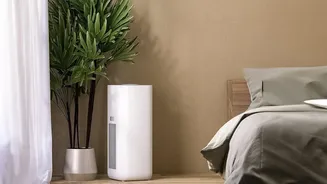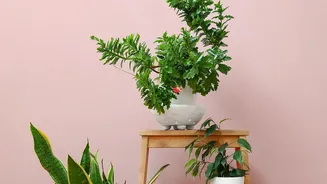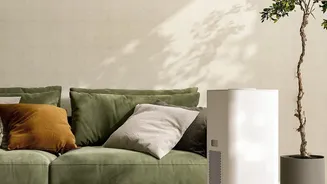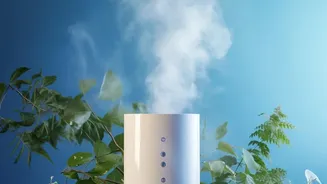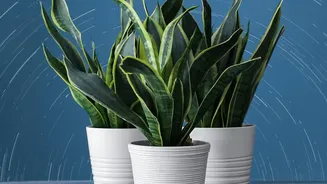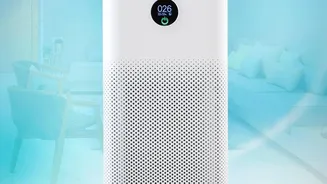






The desire for cleaner, healthier air inside our homes has many of us turning to two popular solutions: leafy houseplants and electric air purifiers. But when it comes to actually removing pollutants, how do they stack up? Let's clear the air.
The Legend of the Leafy Purifier
The belief
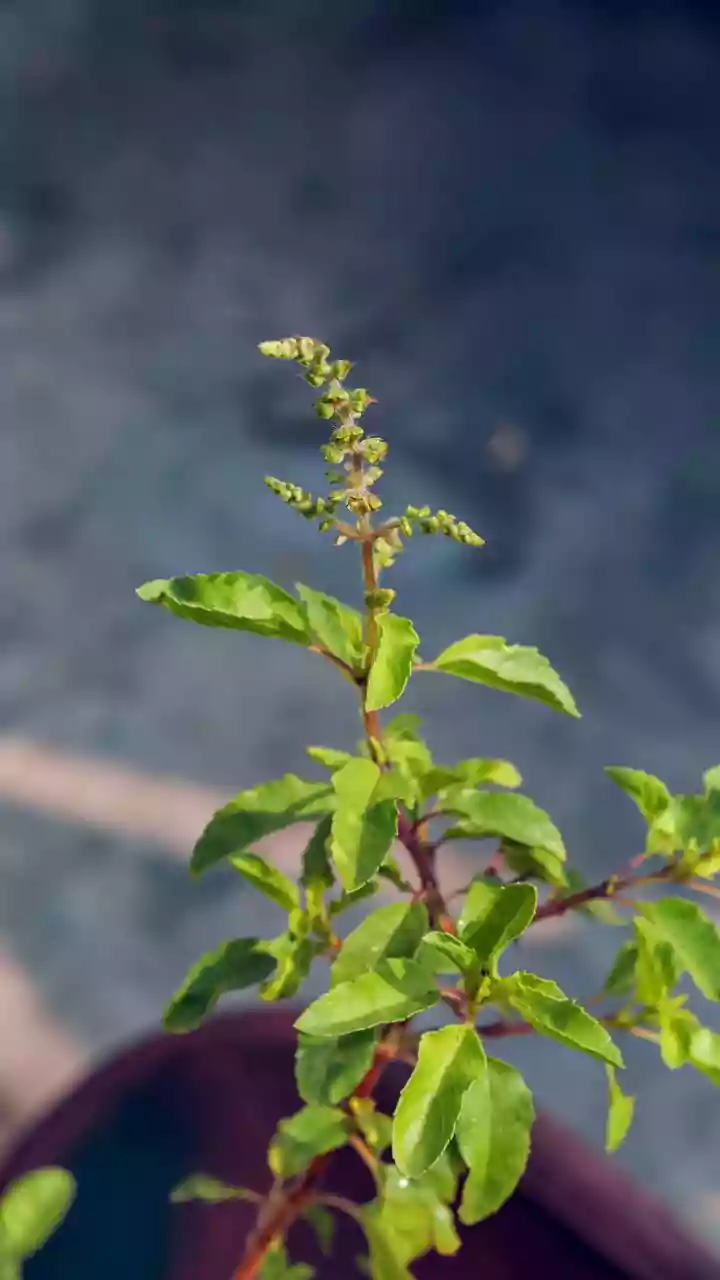
that houseplants are nature's air filters is widespread, largely thanks to a famous 1989 NASA study. This research showed that, in a small, sealed chamber, certain plants could absorb harmful volatile organic compounds (VOCs) like formaldehyde and benzene from the air. The study was scientifically sound and sparked a decades-long trend of promoting plants like the snake plant and peace lily as tools for purifying indoor spaces. The problem, however, arises when translating these findings from a sealed lab environment to a real-world living room.
The Reality of Plant Power
More recent analysis has put the NASA study into perspective, concluding that houseplants have a negligible effect on air quality in a typical home. The key difference is air exchange. Our homes are not sealed chambers; air constantly flows in and out through windows, doors, and ventilation systems. This natural airflow dilutes pollutants far more quickly and effectively than a few potted plants can. To match the air-cleaning power of a building's basic ventilation, you would need an impractical number of plants—some studies estimate between 10 and 1,000 plants per square metre. While plants offer proven psychological benefits and can boost humidity, they aren't the solution for removing significant amounts of pollutants.
Enter the HEPA Filter
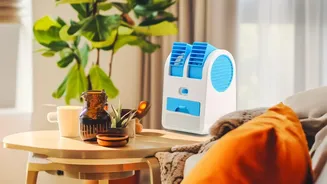
This is where mechanical air purifiers come in. The gold standard in air purification is the HEPA filter. HEPA stands for High-Efficiency Particulate Air. By definition, a true HEPA filter is certified to trap at least 99.97% of airborne particles that are 0.3 microns in size. This 0.3-micron size is considered the most difficult to capture, with both larger and smaller particles being trapped at even higher rates. Unlike plants, which are passive, an air purifier actively pulls large volumes of room air through this dense, pleated filter, physically removing pollutants with each pass.
What HEPA Filters Actually Capture
HEPA filters are exceptionally effective at removing particulate matter from the air. This includes a long list of common indoor irritants that can trigger allergies and asthma. The particles efficiently trapped by HEPA filters include dust, pet dander, pollen, mould spores, bacteria, and smoke particles. For households concerned about allergens or fine particulate pollution (like PM2.5) making its way indoors, a HEPA purifier offers a powerful and scientifically validated solution for cleaning the air.
The Limits of the Machine
While powerful, HEPA filters are not a silver bullet for all types of indoor pollution. Their expertise is in capturing particles, not gases. Volatile organic compounds (VOCs)—the very chemicals plants were studied for removing—are gaseous pollutants that can be released by paint, new furniture, and cleaning products. Standard HEPA filters alone cannot remove these gases or other odours. To address this, many air purifiers combine a HEPA filter with an activated carbon filter. The activated carbon works through a process called adsorption, trapping gas and odour molecules on its porous surface, providing more comprehensive air cleaning.
The Verdict: A Complementary Approach
When comparing houseplants and air purifiers for the primary purpose of cleaning the air, the winner is clear. Air purifiers with HEPA filters are significantly more effective at removing airborne particles like dust, pollen, and dander. Recent studies show a single air purifier can be thousands of times more effective than a houseplant. However, this doesn't mean you should discard your green friends. Houseplants provide undeniable aesthetic and mental wellness benefits that a machine cannot. The ideal solution for a truly healthy home environment may be to use both: an air purifier to do the heavy lifting of pollutant removal and houseplants to enhance the space and boost your mood.