






A Market Ready for Liftoff
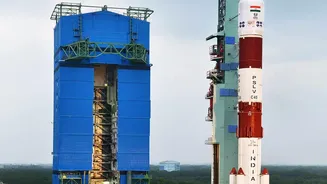
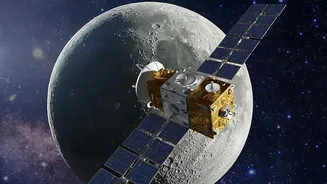
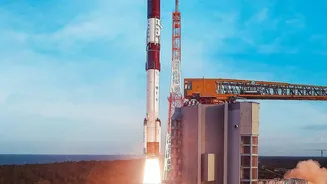
India's space economy, currently valued at around $9 billion, is on an explosive growth trajectory. Projections suggest it could reach between $40 to $45 billion within the next decade. This expansion is not happening by accident. It's fueled by strategic
policy reforms, most notably the Indian Space Policy 2023, which has formally opened the doors for private companies to participate in everything from building rockets to operating satellites. The government's goal is to move beyond a state-run monopoly and cultivate a vibrant ecosystem where private innovation and investment can flourish. This has led to a dramatic surge in space startups, growing from just one in 2014 to over 440 by mid-2026.
The New Job Frontier: Beyond the Astronaut
When you think of a space career, you might picture an astronaut or a rocket scientist at ISRO. While those roles remain vital, the landscape of opportunities is becoming much broader and more diverse. The private sector's entry is creating demand for professionals across the entire value chain. This includes roles in aerospace engineering, satellite manufacturing, propulsion systems, and avionics. But it also extends to software developers building mission control systems, data scientists analysing satellite imagery, and specialists in robotics and AI. Even non-technical roles are expanding, with a growing need for experts in space law, policy, finance, and business development to support this new commercial industry.
The In-Demand Skillset
To secure a place in this burgeoning industry, aspiring professionals need a specific blend of skills. A strong foundation in engineering—particularly aerospace, mechanical, electronics, and computer science—remains critical. Proficiency in software like Python and MATLAB, along with tools for computational fluid dynamics (CFD) and finite element analysis (FEA), is highly sought after. However, the fastest-growing track often involves software and data. Expertise in embedded systems, C++, AI, machine learning, and geospatial data analysis are in high demand as companies turn satellite data into commercial products for agriculture, climate monitoring, and urban planning. Beyond technical know-how, companies value systems thinking—the ability to understand how complex parts of a mission fit together.
Who's Hiring? The Public and Private Players
ISRO continues to be a premier employer, focusing now more on advanced research, deep space exploration, and national security missions. However, the most dynamic growth in hiring is coming from the private sector. Startups like Skyroot Aerospace (launch vehicles), Agnikul Cosmos (3D-printed engines), and Pixxel (hyperspectral imaging) are leading the charge, having already raised significant funding and launched successful missions. Other key players to watch include Dhruva Space (satellites) and Manastu Space (green propulsion). These companies are actively recruiting engineers and scientists, often offering a faster-paced environment and greater ownership of projects compared to traditional government roles.
Navigating the New Ecosystem
The government has created new institutions to manage this transition. IN-SPACe (Indian National Space Promotion and Authorisation Centre) acts as a single-window agency to authorise and support private space activities. It's the facilitator helping private companies use ISRO's facilities and get regulatory clearance. Meanwhile, NewSpace India Limited (NSIL) is the commercial arm of ISRO, focused on marketing and selling mature technologies and services to the world. This clear division of roles is designed to allow ISRO to focus on pioneering research while the private sector drives manufacturing, commercialisation, and scale, ultimately strengthening India's position in the global space economy.