





The Challenge: A Cosmic Needle in a Haystack
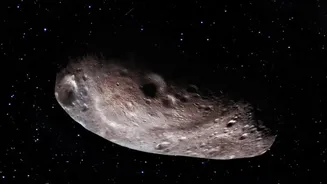
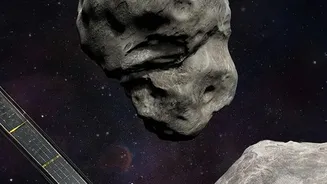
Finding a potentially hazardous near-Earth object (NEO) is an immense challenge. These asteroids are often small, dark, and moving incredibly fast against the backdrop of billions of stars. The task is to systematically photograph huge swathes of the sky,
night after night, searching for faint points of light that have moved. This requires telescopes with a unique combination of power and speed—the ability to see faint objects across a very wide field of view, and to do so rapidly before the Earth’s rotation moves the target area out of sight. It's a high-tech, high-stakes game of cosmic 'spot the difference'.
Wide-Field Imaging: The Eyes on the Sky
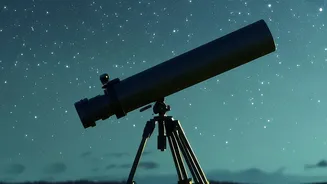
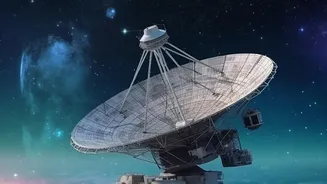
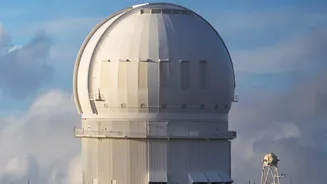
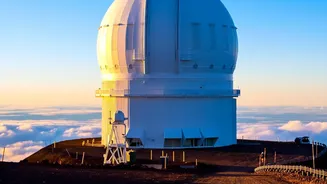
Modern asteroid hunting relies on dedicated survey telescopes designed for this specific purpose. Programs like the Catalina Sky Survey (CSS) in Arizona and the Pan-STARRS telescopes in Hawaii are leaders in this field. Unlike telescopes that zoom in on a single galaxy for hours, these instruments are built to see wide sections of the sky at once. Pan-STARRS, for example, uses a 1.8-meter mirror and a colossal 1.4-gigapixel digital camera, one of the largest in the world, to photograph an area of the sky 36 times the size of the full moon in a single exposure. They can survey vast portions of the sky every night, generating a massive amount of data.
The 'Blink Comparator' Goes Digital
The core technique for finding asteroids involves taking a series of images of the same patch of sky, typically several minutes apart. Sophisticated software then aligns these images and rapidly compares them. While distant stars remain fixed, any object closer to us, like an asteroid, will appear to move from one frame to the next. This moving dot is automatically flagged by computers for further analysis. This is a digital evolution of an old astronomical technique where observers would manually 'blink' between two photographic plates to spot moving objects. Today, powerful algorithms do the heavy lifting, sifting through terabytes of data each night to find potential candidates that human observers then verify.
From Candidate to Calculated Risk
Once a potential NEO is detected, the work has just begun. These initial observations, called a 'tracklet', are sent to the Minor Planet Center, a global clearinghouse for asteroid data. From there, a network of astronomers around the world, including both professionals and amateurs, performs follow-up observations. Each new data point helps scientists refine the object's orbit with greater precision. This allows organizations like NASA's Planetary Defense Coordination Office (PDCO) to calculate the asteroid's trajectory for decades into the future and determine if it poses any threat to Earth. The more observations, the more certain the prediction becomes.
The Next Generation of Planetary Defense
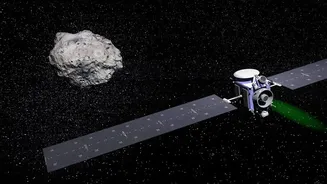
The technology is constantly evolving. The Vera C. Rubin Observatory, soon to be fully operational in Chile, is expected to revolutionize the field. Its massive camera and wide-field capabilities will likely discover more asteroids in its first year than all other telescopes combined, significantly boosting our census of potentially hazardous objects. Furthermore, space-based telescopes like NASA’s upcoming NEO Surveyor will hunt for asteroids in infrared light. This allows it to spot dark asteroids that reflect very little sunlight and to search for objects in regions of the sky obscured by the Sun's glare, filling a critical blind spot for ground-based observatories.