
Mapping the Lunar Shadows
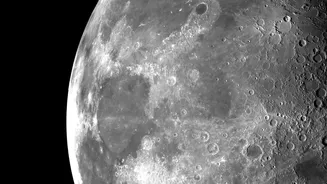
In a study published in Science Advances, researchers from NASA's Goddard Space Flight Center detailed a groundbreaking new map of the Moon's south pole. This isn't a map of cities or roads, but of potential “survivable niches” for microscopic life. Using
data from NASA’s Lunar Reconnaissance Orbiter, scientists modeled how temperature and, crucially, deadly ultraviolet (UV) radiation from the sun impact the lunar surface. The resulting maps identify specific zones, some as large as a crater floor and others as small as an astronaut's bootprint, where microbes might be able to withstand the harsh conditions.
Why the South Pole is Special
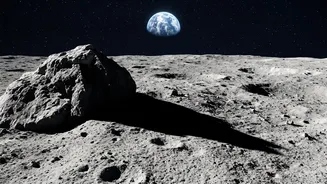
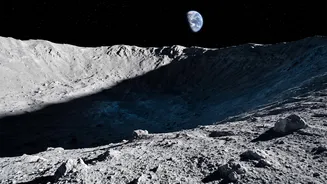
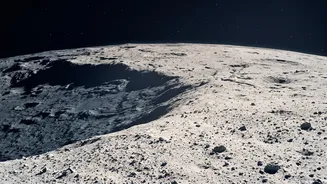
Unlike the Moon's equatorial regions visited by the Apollo missions, the poles offer a unique environment. Because of the Moon’s slight axial tilt, the sun hangs low on the horizon, as if a flashlight is skimming across a table. This creates long shadows from crater rims and ridges, some of which are “permanently shadowed regions” (PSRs) that haven't seen direct sunlight in billions of years. These PSRs are incredibly cold—as low as minus 203°C—which allows water ice to remain frozen and stable. More importantly, the shadows offer powerful protection from the relentless bombardment of solar radiation that sterilizes most of the lunar surface.
What is a 'Survival Niche'?
It’s crucial to understand that scientists are talking about survival, not growth or reproduction. The research team simulated what would happen to common Earth microbes, like those found on spacecraft or even human skin, if they were introduced to these polar regions. The models showed that within these sheltered niches, some resilient organisms could enter a dormant state, called cryptobiosis, and remain viable. The study found that certain fungal species, like Aspergillus niger, were especially hardy, able to survive even in areas with some limited sunlight due to its strong resistance to UV radiation. In some optimal, shaded spots, microbes could potentially survive for a day, a week, or possibly even longer.
No, It Doesn’t Mean There’s Life on the Moon
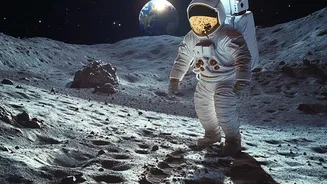
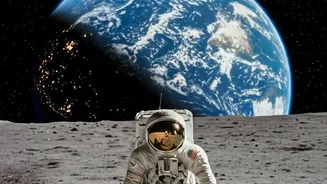
The study does not claim that life exists on the Moon. Rather, it highlights a critical consideration for future exploration: planetary protection. Humans are natural carriers of microbes, and it's inevitable that astronauts on missions like Artemis will bring microscopic hitchhikers with them. This new research shows that our contamination could persist in these cold, dark craters. This could complicate the primary scientific goal of studying the Moon's pristine chemistry to understand the early solar system. If scientists find organic molecules, they need to be sure they are genuinely lunar and not just something they brought from home.
A Roadmap for Artemis and Beyond
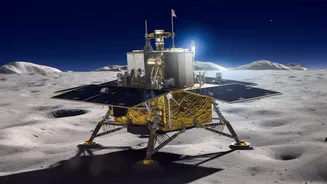
This research provides a vital roadmap for upcoming missions. With the Artemis program aiming to establish a sustained human presence near the lunar south pole, knowing where Earth-based microbes might survive is essential. These maps will help mission planners select landing sites and design experiments, ensuring that we can study the Moon's resources, like its water ice, without inadvertently compromising the scientific record. In a sense, the south pole is a natural laboratory to study the limits of life, but only if we understand what was there before we arrived. This work is a crucial first step in exploring responsibly, setting a precedent not just for the Moon, but for the eventual human exploration of Mars.