






The High Cost of Constant Connection
The modern professional's workday is often defined by a relentless stream of incoming emails. The average person receives over 120 messages daily, with many feeling compelled to check their inbox constantly. This habit, however, comes at a steep cognitive
price. Research shows that every time you switch from a task to check your email, it can take up to 23 minutes to fully regain your focus. This phenomenon, known as 'attention residue', means that even a quick glance at your inbox can degrade your cognitive performance for a significant period. For remote workers who already face blurred lines between work and home, this constant digital distraction can lead to fragmented work, increased stress, and a feeling of being busy without being productive.
Adopting a Deep Work Mindset
The antidote to this culture of constant connectivity is the concept of 'deep work', a term popularized by author Cal Newport. Deep work refers to the ability to focus without distraction on a cognitively demanding task. It’s in these uninterrupted stretches that we produce our most creative, valuable, and high-quality work. Instead of letting the inbox dictate the day's agenda, this philosophy advocates for intentionality. A key strategy is 'batching': processing emails at scheduled times rather than responding as they arrive. This simple shift allows professionals to create and protect large blocks of time for the work that truly matters, transforming email from a constant interruption into a managed task.
How Smart AI Gatekeepers Work
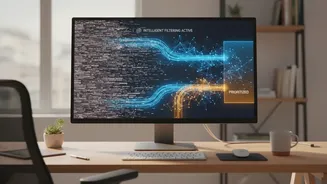
This is where AI-powered email tools come in. Unlike traditional spam filters, these modern 'gatekeepers' use machine learning to understand your email habits and priorities. Services like SaneBox, for example, connect to your existing email account and work at the server level, learning from your behavior to determine what's important. It analyses which senders you reply to quickly, which emails you ignore, and which newsletters you never open. Based on these patterns, the AI automatically filters non-urgent mail—like newsletters, CCs, and promotional offers—into separate folders for later review. This means your primary inbox only contains messages that likely require your immediate attention, effectively turning a firehose of information into a manageable stream.
From Constant Drips to Controlled Batches
The core function of these tools is to facilitate email batching. By automatically sorting messages, they remove the temptation to check every notification. Instead of a constant drip of low-priority messages throughout the day, you receive a single daily or weekly digest of everything that was filtered. You can then process this 'batched noise' in one go, at a time you choose, without derailing your focus. Some tools go even further. Superhuman, an entire email client built for speed, uses AI to help you triage messages with keyboard shortcuts and even draft replies. While SaneBox focuses on quietening the inbox by filtering what gets in, Superhuman focuses on speeding up how you process what’s there. For many, the two can even be used together to powerful effect.
Finding the Right Tool for You
Choosing the right tool depends on your primary pain point. If your biggest problem is simply the sheer volume of non-urgent email, a filtering service like SaneBox is a great, low-friction starting point because it works with your existing email client. If you spend hours a day actively responding to emails and want to become faster and more efficient at the task itself, a dedicated client like Superhuman might be a worthwhile investment. Many services offer free trials, allowing you to test which approach best suits your workflow. The key is to find a system that helps you enforce boundaries, reduce decision fatigue, and ultimately spend less mental energy on your inbox and more on the deep, focused work that drives your career forward.