







A City Built on Unstable Ground
Mumbai's unique geography is a core part of the problem. Much of the city and its suburbs are situated on terrain that includes steep hills and slopes. These are not solid mountains of granite, but are often composed of fractured rock with a significant
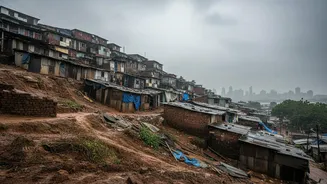
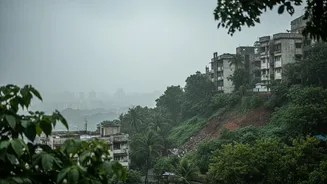
cover of soil and debris. This combination is naturally less stable, especially when external pressures are applied. Areas in the eastern suburbs like Ghatkopar, Vikhroli, and Kurla, as well as regions around the Sanjay Gandhi National Park, are known for this risky topography. A Geological Survey of India (GSI) report identified 249 landslide-prone locations across the city, highlighting that many of these are concentrated in hilly regions. This inherent geological vulnerability sets the stage for disaster long before the first raindrop falls.
The Monsoon's Dangerous Power
The primary trigger for most of Mumbai's landslides is the intense seasonal rainfall. When rain saturates the soil on a slope, two things happen. First, the water adds immense weight to the landmass. Second, it reduces the friction between soil particles that holds the slope together. A hillside that appears stable can suddenly give way when the ground reaches a critical saturation point. Recent tragedies, like the landslide in Ghatkopar in August 2026 that claimed eight lives, occurred after periods of heavy rain, when a section of a hillock collapsed onto homes below. Experts warn that climate change may be contributing to more extreme and unpredictable rainfall, increasing the frequency and intensity of these events.
The Human Factor: Construction and Encroachment
Natural geography and weather are only part of the story. Unplanned urban development and human activity significantly amplify the risk. The immense pressure for housing in a dense city like Mumbai has led people to build homes in hazardous locations, often through informal settlements. Construction on slopes, or cutting into the base of a hill to create space for buildings, removes the natural support of the terrain, making it more prone to failure. Deforestation on these slopes for construction also removes vegetation that helps bind the soil together. These factors, combined with poor or non-existent drainage systems that don't allow rainwater to flow away safely, create a perfect storm for disaster.
A Complex Social Challenge
For many families, living in a landslide-prone area is not a choice but a necessity driven by Mumbai's severe housing crisis. These settlements offer affordable rent in a city known for its high cost of living. Despite authorities like the BMC issuing warnings and asking residents to evacuate during the monsoon, many have nowhere else to go. This creates a complex problem where warnings are issued but cannot always be heeded by families who are economically trapped. While the BMC and other authorities have identified hundreds of vulnerable spots and are working on mitigation measures like retaining walls, the sheer scale of the issue and funding challenges mean many high-risk areas remain unattended. In some cases, authorities have stated they may need to resort to forceful evictions from the most dangerous encroachments to prevent future loss of life.
Recognising the Warning Signs
For those living in or near these vulnerable areas, vigilance is key. Residents should watch for critical warning signs that a slope may be unstable. These can include new cracks appearing in plaster, foundations, or retaining walls; the tilting or cracking of trees or utility poles; and the appearance of new, unexplained springs or soggy ground. The uprooting of trees during heavy rain can be a precursor to a larger collapse, as seen in the Kurla landslide where a falling tree brought down rocks and boulders. Reporting these signs to municipal authorities immediately can provide crucial time for assessment and potential evacuation. The BMC's disaster management cell also conducts training for locals on identifying warnings and evacuation procedures.