



What Exactly Is Compost Broth?
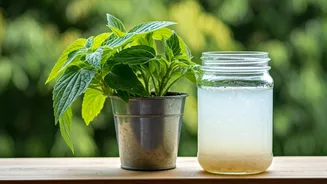
Think of compost broth—often called 'compost tea'—as a nutrient-packed energy drink for your plants. It's a liquid fertilizer made by steeping finished, mature compost in water. This process extracts not only essential macro and micronutrients (like nitrogen,
phosphorus, and potassium) but also a massive population of beneficial microorganisms. These tiny microbes are the real heroes. They improve the soil structure, help plants absorb nutrients more efficiently, and can even suppress common plant diseases. It is different from 'leachate,' which is the dark liquid that sometimes drains from the bottom of a compost bin. Leachate can contain harmful pathogens and should be used with caution, whereas properly brewed compost broth is a pure, life-giving elixir for your garden.
Why Your Balcony Herbs Need It
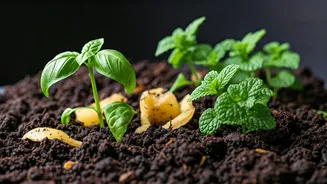
Plants in containers, like those on a balcony, have a finite amount of soil and nutrients. Over time, watering flushes these nutrients out, leaving your herbs hungry and struggling. Chemical fertilizers offer a quick fix but do nothing for the long-term health of the soil. In fact, they can lead to a build-up of salts that can harm your plants. Compost broth, on the other hand, feeds the soil itself. The beneficial bacteria and fungi create a healthy ecosystem within the pot, mimicking what happens in a natural forest floor. This 'living soil' helps retain moisture, aerates the roots, and provides a slow, steady release of nutrients, resulting in stronger, more resilient, and more flavourful herbs.
How to Brew Your Own Batch
Making compost broth is surprisingly simple. You don’t need any fancy equipment. Here’s what you’ll need: * A 20-litre bucket * 1-2 kilograms of finished, earthy-smelling compost * An old cotton cloth, jute sack, or a long sock * Water (preferably rainwater or dechlorinated tap water. To dechlorinate, just let the water sit out for 24 hours.) **Step 1:** Place your finished compost into the cloth or sack and tie it up securely, like a giant tea bag. **Step 2:** Fill your bucket about three-quarters full with water. **Step 3:** Submerge the compost 'tea bag' into the bucket of water. Agitate it a bit to get things started. **Step 4:** Let the mixture steep for 24 to 48 hours. Stir it a couple of times a day to aerate the brew, which helps the beneficial aerobic microbes multiply. The finished broth should be a light to medium brown colour, like weak tea, and have a pleasant, earthy smell.
The Golden Rule: Dilute, Dilute, Dilute
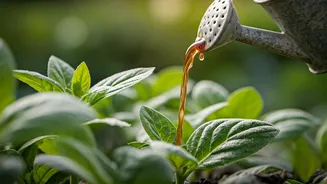
Your freshly brewed compost broth is highly concentrated and must be diluted before use. Applying it directly can be too intense for your plants and may cause 'nutrient burn,' which damages the leaves and roots. The general rule of thumb is a 1:10 ratio. That means for every one part of compost broth, you should add ten parts of water. The final liquid should look like very pale, weak tea. It's always better to err on the side of making it too weak rather than too strong. You can always feed your plants again, but you can't undo the damage from over-fertilizing.
Feeding for Blooms vs. Leaves
The headline mentions blooms, and this is an important distinction for herbs. For herbs that you want to flower—like lavender, chamomile, borage, or even rosemary—a regular feeding with compost broth during their growing season will provide the phosphorus and potassium needed for robust flowering. However, for most culinary herbs where you prize the leaves—such as coriander (dhania), mint (pudina), basil (tulsi), and parsley—the goal is to prevent or delay flowering (a process called 'bolting'). For these leafy herbs, use the compost broth more sparingly, perhaps once a month. It will still promote lush, healthy foliage, but excessive feeding can signal to the plant that it's time to produce seeds and flowers, which often turns the leaves bitter and ends the plant's productive life.
Application and Timing
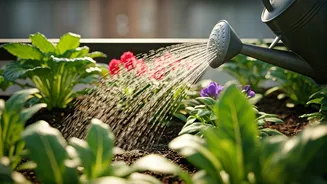
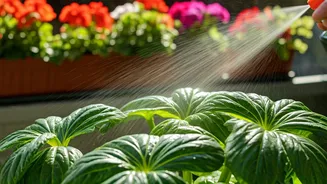
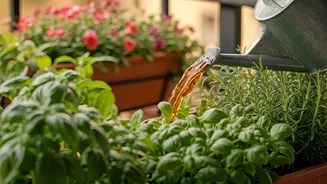
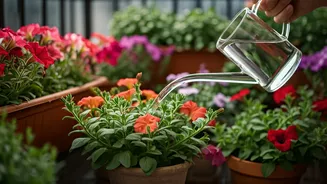
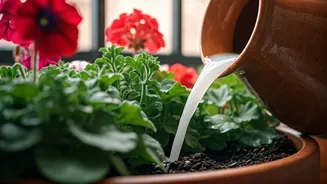
The best way to use your diluted compost broth is to water your plants with it directly at the soil level. Drench the soil thoroughly until you see a little bit of liquid run out of the drainage holes at the bottom of the pot. This ensures the nutrients and microbes reach the entire root system. Avoid just spraying the leaves, as the primary benefit comes from enriching the soil. As for timing, a good schedule is to feed your herbs once every two to three weeks during their active growing season. Reduce feeding during dormant periods, like the peak of a harsh winter or a scorching summer, when plants are not actively growing.