


Yuksom: A Historic Starting Point
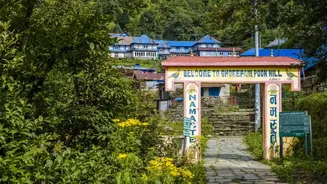
Yuksom holds a special place in Sikkimese history as the site where the first Chogyal (king) was crowned in 1642. Its name means 'meeting place of the three learned monks', and this spiritual and historical significance permeates the air. Located at an altitude
of 1,780 meters (5,840 feet), it serves as the official starting point for treks into the Kanchenjunga National Park, a UNESCO World Heritage Site. The village is the last motorable point, making it the natural base camp where trekkers acclimatize, arrange guides and porters, and secure necessary permits before venturing into the high Himalayas.
Planning Your Himalayan Journey
Proper preparation is key to a successful trek. The best times to embark on this journey are during two main seasons: spring (March to May) and autumn (September to November). Spring offers trails bursting with colourful rhododendron blooms, while autumn provides crystal-clear skies and the sharpest mountain views. This trek is considered moderate to difficult, requiring a good level of physical fitness to handle daily hikes of 5-7 hours and significant altitude gain. All trekkers, both Indian and foreign nationals, require permits to enter the Kanchenjunga National Park, which are typically arranged through a registered Sikkim tour operator in Yuksom. Foreign nationals also need a Restricted Area Permit (RAP), also known as an Inner Line Permit (ILP), to enter Sikkim itself.
The Six-Day Dzongri Trek Itinerary
This itinerary offers a condensed yet spectacular version of the longer Goecha La trek, culminating in the stunning views from Dzongri Top.Day 1: Arrival and Acclimatisation in Yuksom (1,780 m).Arrive at Yuksom from NJP station or Bagdogra airport, a scenic 6-7 hour drive. Settle into your guesthouse, meet your trekking crew, and spend the day acclimatizing. You can explore local sites like the Coronation Throne of Norbugang and Kathok Lake.Day 2: Trek from Yuksom to Sachen (2,255 m | 8 km | 5-6 hours).The adventure begins as you enter the Kanchenjunga National Park. The trail winds through dense forests of oak, pine, and magnolia, crossing several picturesque suspension bridges over the Prek Chu river and its tributaries.Day 3: Trek from Sachen to Tshoka (2,983 m | 7 km | 4-6 hours).Today involves a steady climb. You first reach Bakhim, which offers the first proper mountain views, before continuing to the charming Tibetan refugee settlement of Tshoka. This village is famous for its monastery and the surrounding rhododendron forests that are a spectacle in spring.Day 4: Trek from Tshoka to Dzongri (4,020 m | 9 km | 6-7 hours).This is the most challenging day of the ascent. The trail climbs steeply through vibrant rhododendron forests, passing Phedang, before emerging into the vast alpine meadows of Dzongri. The altitude gain is significant, and the air becomes noticeably colder.Day 5: Dzongri Top Sunrise and Trek back to Tshoka (12 km | 6-7 hours).You'll wake before dawn for a short hike to Dzongri Top (4,200 m). The reward is a breathtaking sunrise panorama of the Kanchenjunga massif, including Mt. Pandim and other iconic peaks. After soaking in the views, you'sll descend all the way back to Tshoka for the night.Day 6: Trek from Tshoka to Yuksom (15 km | 6-7 hours).The final day is a long but rewarding descent. You will retrace your steps through the familiar forests, crossing the rivers once more before arriving back in Yuksom, where you can celebrate the successful completion of your trek.
Essential Gear and Packing List
Packing light but smart is crucial. Key items include layered clothing (thermal base layers, fleece jackets, and a waterproof and windproof outer shell), sturdy trekking boots with good ankle support, a comfortable backpack (50-60 litres), and a smaller daypack. Other essentials are a warm hat, gloves, sunglasses, sunscreen, a reusable water bottle, a personal first-aid kit with medications for altitude sickness, and a powerful headlamp or torch. Trekking poles are highly recommended to ease the strain on your knees during steep ascents and descents. Ensure you have all necessary documents, including your ID and photocopies, for permit checks.