





The Heat Shield’s Fiery Tale
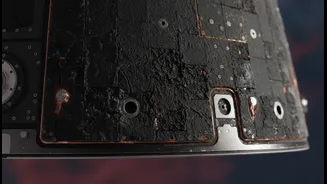
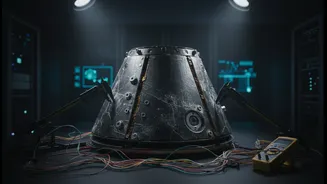
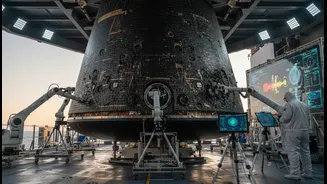
The single most critical inspection is of the heat shield. During its uncrewed Artemis I flight, Orion’s heat shield experienced unexpected char loss, where pieces of the protective material chipped off rather than burning away smoothly as designed. This
was a major red flag. For Artemis II, which carries a crew, the stakes are infinitely higher. Upon recovery, engineers will meticulously scan every centimetre of the 16.5-foot shield. They are looking for evidence of erosion, cracking, and uneven wear. The data from Artemis I revealed that gases built up within the shield's material, causing pressure that led to the cracking. This post-flight analysis will confirm if modifications made for Artemis II were successful, ensuring the shield can reliably protect astronauts from the 2,800-degree Celsius heat of reentry on future missions to the Moon.
Scanning for Scars from Space
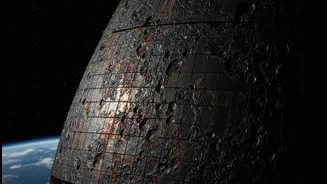
Deep space is not empty. It's filled with micrometeoroids and orbital debris (MMOD) — tiny particles traveling at hypervelocity speeds. While most are no bigger than a grain of sand, they can cause significant damage. A key part of the post-flight checklist is a detailed inspection of the Orion crew module’s exterior for impact craters. After Artemis I, NASA identified five potential MMOD impact sites on the thermal tiles. Finding and analyzing these tiny craters helps NASA validate its models of the deep space environment. This information is vital for understanding the risks to the spacecraft and ensuring the hull remains secure, protecting the crew from the vacuum of space on long-duration missions to the Moon and, eventually, Mars.
A Deep Dive into the Crew Cabin
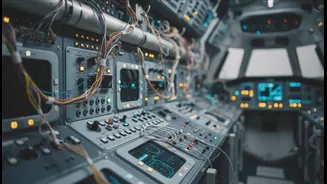
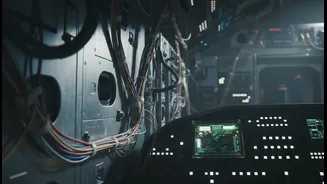
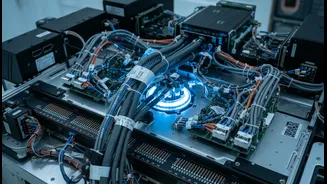
While the exterior tells a story of the journey, the interior holds the data on how the crew and systems performed. Once on the ground, teams will download over 155 gigabytes of data from thousands of sensors packed inside Orion. This is the spacecraft’s ‘black box’. A top priority is analyzing data from radiation sensors. One of the biggest dangers in deep space is radiation from solar flares and cosmic rays. Data from monitors placed around the cabin will tell scientists exactly how much radiation the crew was exposed to and how effective Orion's shielding is. Furthermore, engineers will inspect all life support systems, from the circuitry that scrubs carbon dioxide from the air to the waste management system, both of which presented some challenges during the flight. Every component must be understood to ensure the cabin is a safe haven for astronauts.
Verifying the Parachutes and Separation
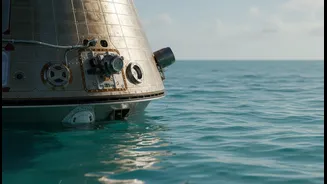
A perfect spaceflight can end in disaster if the landing goes wrong. The final moments of Orion's return depend on a complex sequence of parachutes and pyrotechnic bolts. After splashing down, recovery teams work to retrieve key hardware, though this proved challenging after Artemis I, where parachutes were not recovered for inspection. For Artemis II, analyzing the performance of the entire parachute system is a top-level priority. Did they deploy at the right time and in the right sequence to slow the capsule from hundreds of kilometres per hour to a gentle splashdown? Additionally, engineers will examine the separation bolts that release the service module before reentry. On Artemis I, these bolts showed unexpected melting and erosion, an issue that required design modifications for the crewed flight. Checking this hardware confirms that the systems meant to bring the crew home safely are performing flawlessly.