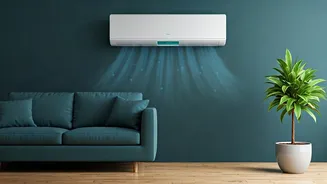








What is Dry Mode?
Dry Mode, often represented by a water droplet symbol on your AC remote, is a function that acts as a dehumidifier. Its primary job is not to drastically lower the room's temperature but to remove excess moisture from the air. This makes the environment
feel far more comfortable and less oppressive, especially during the monsoon season or in coastal areas where humidity is a constant battle. Think of it as tackling the clamminess in the air rather than just the heat.
How It Works Its Magic
When you activate Dry Mode, the air conditioner's internal process changes. The compressor, the part responsible for cooling, runs in shorter, intermittent cycles instead of continuously. Simultaneously, the indoor unit's fan runs at a low speed. This combination allows warm, moist air to pass over the cold evaporator coils for a longer duration. The moisture in the air condenses into water, which is then collected and drained away. The result is drier, fresher-feeling air circulated back into the room without making it excessively cold.
Dry Mode vs. Cool Mode: The Key Difference
The fundamental difference lies in their primary goal. Cool Mode is designed to reduce the temperature in the room as quickly as possible. To do this, its compressor and fan work hard, consuming more energy. Dry Mode, on the other hand, prioritizes removing humidity. While some cooling is a natural byproduct of the dehumidification process, the temperature will not drop as significantly as it does in Cool Mode. On a day that is hot and sticky, Cool Mode is the right choice. But on a day that is mild yet uncomfortably damp, Dry Mode is the smarter, more efficient option.
When Should You Use It?
Dry Mode is most effective in situations where high humidity is the main cause of discomfort, not high heat. It’s the perfect setting for rainy days during the monsoon, when the air is heavy with moisture but the outside temperature is moderate. If you find your home feeling stuffy, your clothes feeling slightly damp, or see condensation on your windows, these are clear signs that it’s a good time to switch to Dry Mode. It's also an excellent choice for nights when you want to sleep comfortably without the intense chill that Cool Mode can sometimes produce.
The Comfort and Cost Benefits
Using Dry Mode offers several compelling advantages. First, it significantly improves comfort by tackling the root cause of that sticky feeling. By lowering humidity, it can also improve indoor air quality by inhibiting the growth of mould and dust mites, which thrive in damp conditions. Perhaps the most attractive benefit is energy efficiency. Because the compressor works less intensively in Dry Mode, your AC consumes significantly less electricity compared to when it's running on Cool Mode. This can lead to noticeable savings on your monthly power bills while keeping your home feeling fresh.