






A Landmark for India, A Laboratory on the Moon
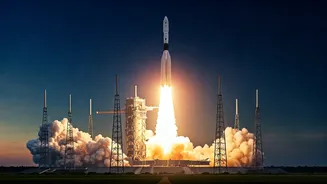
Shiv Shakti Point is the official name given to the landing site of India's Chandrayaan-3 mission, a historic achievement that made India the first nation to soft-land a spacecraft near the lunar south pole. Announced by Prime Minister Narendra Modi,
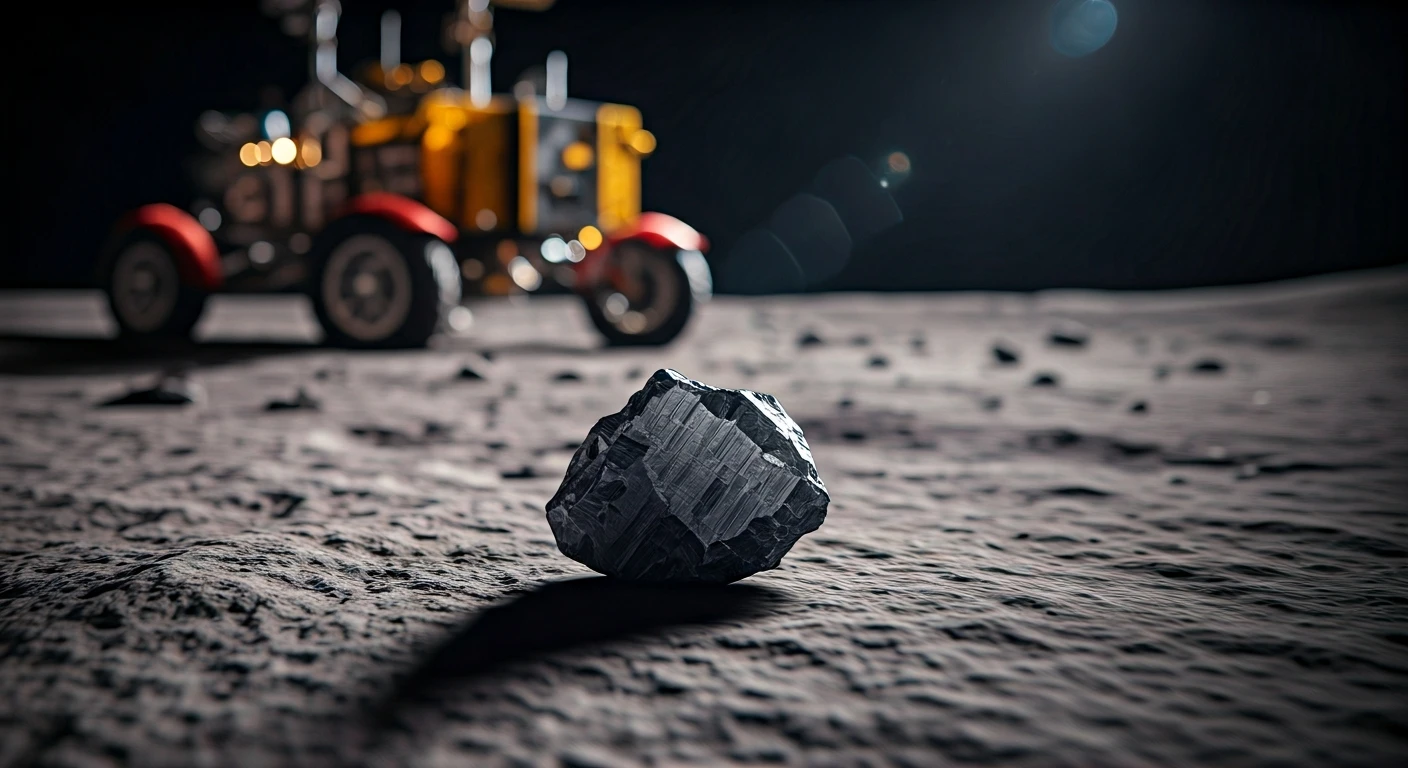
the name carries deep cultural resonance, symbolising the fusion of masculine and feminine cosmic energies. Beyond its symbolic importance, this location, officially recognised as 'Statio Shiv Shakti' by the International Astronomical Union, has been transformed into a unique, active laboratory. For over a decade, scientists had eyed the lunar south pole for its scientific potential, particularly the presence of water ice in permanently shadowed craters. Now, with boots—or rather, wheels—on the ground, ISRO is conducting pioneering science, turning a point of national pride into a source of invaluable global knowledge.
Reading the Moon's Geological Diary
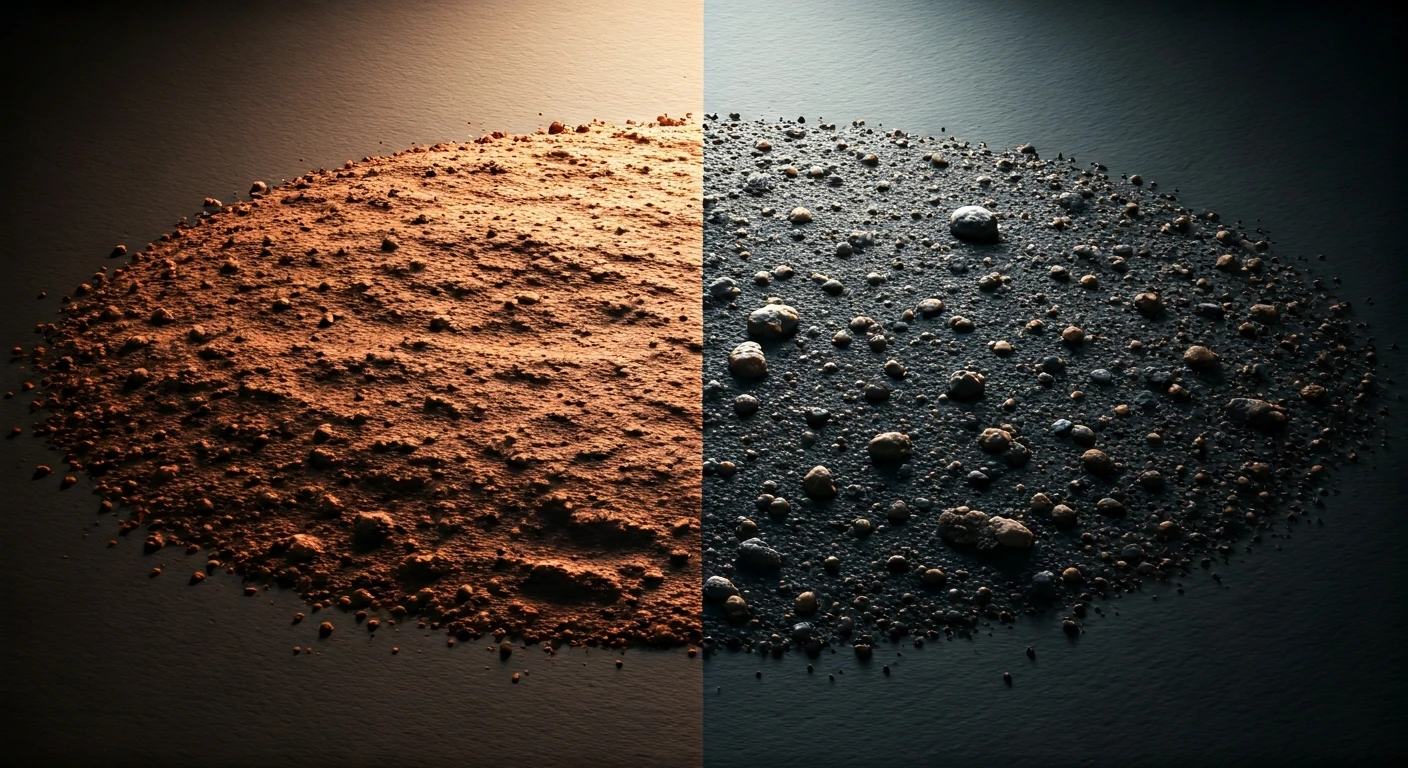
The phrase 'layered past' refers to the Moon's geological history, which is preserved in layers of rock and soil, much like a diary's pages. Each layer tells a story of a different era—a violent asteroid impact, an ancient volcanic eruption, or slow changes from 'space weathering'. Scientists from Physical Research Laboratory (PRL) in Ahmedabad and ISRO have been at the forefront of deciphering these stories. Recent studies have revealed that the soil at Shiv Shakti Point is not uniform; it's a complex mixture of materials. Some of this material appears to have been excavated from deep within the Moon's crust and mantle by colossal, ancient impacts, like the one that formed the massive South Pole-Aitken basin billions of years ago. This makes the landing site a treasure trove, offering a rare glimpse into the Moon's primitive building blocks without having to drill deep into the surface.
The Detective's Toolkit on Board
To read this complex lunar history, the Pragyan rover and Vikram lander came equipped with a suite of advanced scientific instruments. Two key players are the Alpha Particle X-ray Spectrometer (APXS) and the Laser-Induced Breakdown Spectroscope (LIBS). The LIBS instrument fires a high-powered laser to vaporise a tiny portion of lunar soil, creating a plasma. By analysing the light from this plasma, scientists can determine the elemental composition. The APXS, meanwhile, bombards the surface with alpha particles and X-rays to make the lunar soil emit its own characteristic X-rays, which reveals the elements present and their quantities. These tools work in tandem to create a detailed chemical profile of the landing site, confirming elements like sulphur, aluminium, iron, calcium, and more.
A Surprising Connection in the Soil
One of the most remarkable findings is the striking chemical similarity between the soil at Shiv Shakti Point and a lunar meteorite found in Antarctica in 1982, known as ALHA 81005. A study led by PRL scientists found that both samples are unusually rich in iron and magnesium but have less aluminium than typical lunar highlands. This doesn't mean the meteorite came from Shiv Shakti Point. Instead, it suggests that both are representative of a widespread, but previously undersampled, type of lunar crust. This connection validates the science being done on lunar meteorites on Earth and helps scientists place them in a specific geological context on the Moon itself, enhancing our understanding of the Moon's overall crustal diversity.
Listening for Whispers from Below
The Moon isn't entirely silent. The Vikram lander carries the Instrument for Lunar Seismic Activity (ILSA), a highly sensitive device designed to detect 'moonquakes' and other vibrations. This is the first MEMS technology-based instrument to operate on the Moon. ILSA’s primary job is to measure ground vibrations, whether from meteorite impacts or internal geologic activity. During its operational period, ILSA recorded over 250 seismic events. While many were linked to the rover's movements, about 50 signals appeared to be from natural sources, the origins of which are still being investigated. By studying how these seismic waves travel beneath the surface, scientists can map out different layers of regolith and rock, directly probing the 'layered past' hinted at in the surface chemistry. Analysis of data from other instruments has already suggested the upper regolith consists of two distinct layers just within the first few centimetres.