






What Are Quantum Foundations?
Quantum mechanics describes the strange rules governing the universe at the microscopic level of atoms and particles. Its predictions are incredibly accurate, forming the basis for everything from lasers and microchips to quantum computing. However, the 'why'
behind these rules—the quantum foundations—has been debated since the days of Einstein and Schrödinger. At its heart, the weirdness comes from concepts like superposition (a particle being in multiple states at once) and entanglement (two particles linked instantly over vast distances). These ideas clash with our everyday intuition, leading physicists to constantly search for a deeper, more complete picture of what the theory is telling us about reality itself.
The Old Angle: An 'Imaginary' Problem
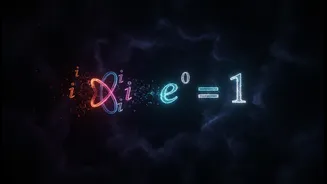
For nearly 100 years, the mathematics of quantum mechanics has relied on a special type of number called a complex number. These numbers have two parts: a 'real' part and an 'imaginary' part (a multiple of the square root of -1). This mathematical framework has been considered essential for describing core quantum phenomena, such as how a particle's wave-like properties evolve. In 2021, a study even seemed to confirm that complex numbers were an indispensable part of the theory. This led to the widespread belief that the 'imaginary' component was not just a convenient mathematical tool, but a fundamental feature of the universe.
The New Angle: A Reality Without Imaginary Numbers
In a recent breakthrough, physicists have challenged this long-held assumption. A study from researchers at Heinrich Heine University Düsseldorf and the German Aerospace Center, published on July 13, 2026, shows that quantum mechanics can be formulated using only real numbers. They re-examined the postulates used in previous studies and found that one of the core assumptions was more restrictive than necessary. By relaxing it, they successfully developed a working model of quantum mechanics that makes all the same predictions as the standard theory, but without needing complex numbers. This suggests that the 'imaginary' part of quantum math may have been a helpful crutch rather than a fundamental pillar.
Why Does This Simplification Matter?
Removing imaginary numbers from the core of quantum theory does more than just tidy up the equations. It forces a profound re-evaluation of what the theory means. If complex numbers are not essential, it suggests that the nature of quantum reality might be simpler than we thought. This work settles a debate that has simmered since the 1920s, showing that while complex numbers make the math easier to write, they aren't required for it to work. This shift in perspective could open up new avenues of research and influence how we approach even bigger challenges, like unifying quantum mechanics with Einstein's theory of gravity.
The Bigger Picture: A Fresh Look at Old Mysteries
This new work is part of a broader trend of re-examining quantum foundations from the perspective of information. Many physicists now believe that concepts like information, distinguishability, and randomness are key to unlocking the theory's secrets. Some approaches aim to derive quantum mechanics from basic principles about information processing. This information-centric view treats quantum paradoxes not as problems, but as useful resources that enable powerful technologies like quantum cryptography and quantum computing. By stripping the theory down to its essential components, whether by removing imaginary numbers or starting from information principles, scientists are gaining a clearer view of the fundamental nature of our universe.