






The Full-Body Workout: Muscle Engagement
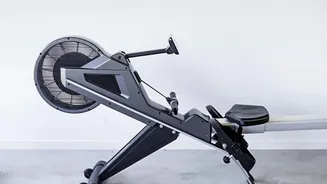
Indoor rowing is renowned for being a comprehensive, full-body workout. A single stroke engages an impressive 86% of your muscles, targeting the lower body, core, and upper body in a coordinated sequence. The initial push, or 'drive', is powered by the large
muscles of the legs—quadriceps, glutes, and hamstrings. The core, including abdominals and lower back, then works to stabilise the torso, while the arms and back muscles, like the lats and rhomboids, complete the stroke. This makes it an incredibly efficient way to build balanced, functional strength. Hiking, on the other hand, is primarily a lower-body exercise. It's fantastic for strengthening the calves, hamstrings, glutes, and quads. Navigating uneven terrain and inclines also heavily engages your core for stability and balance. While your upper body gets some work from using trekking poles or scrambling over obstacles, it doesn't receive the same consistent engagement as it does in rowing.
Heart Health and Calorie Burn
Both activities are excellent for cardiovascular health, strengthening the heart and improving lung capacity. When it comes to burning calories, however, intensity is key. Vigorous indoor rowing is a powerhouse, capable of burning between 400 and 700 calories per hour, and sometimes more, depending on your effort. Because it uses so many muscle groups at once, it elevates the heart rate quickly and creates a high energy demand. Hiking's calorie burn is more variable, typically ranging from 370 to 500 calories per hour. Factors like the steepness of the trail, the weight of your backpack, and your pace will significantly influence the total. While a brisk hike can be a great cardio workout, rowing at a high intensity is generally more time-efficient for burning calories.
The Mental Wellbeing Factor
Here, the comparison becomes one of meditative focus versus restorative nature. The steady, rhythmic motion of indoor rowing can be incredibly meditative. Many users report entering a 'flow state', where the mind calms, stress is reduced, and focus is entirely on the moment. This rhythmic motion can lower stress hormones like cortisol and release mood-boosting endorphins. Hiking offers a different, but equally powerful, set of mental benefits rooted in our connection to nature—sometimes called the biophilia effect. Being outdoors has been shown to reduce stress, anxiety, and feelings of depression. The natural scenery, fresh air, and disconnection from technology encourage mindfulness and can boost creativity and problem-solving skills. For many, the mental uplift from being in a green, natural environment is a primary reason to choose a hike.
Joint Impact and Injury Risk
For those concerned about joint health, indoor rowing is a clear winner. The seated, fluid motion is exceptionally low-impact, placing minimal stress on the knees, hips, and ankles. This makes it an ideal choice for people with existing joint issues, those recovering from injuries, or anyone looking to minimise wear and tear while still getting an intense workout. In fact, rowing can even help support bone density. Hiking is also considered a low-impact activity compared to running, but the impact level varies. Walking on a flat, even trail is very gentle on the joints. However, hiking on steep, rocky, or uneven terrain increases the forces on your knees and ankles, especially during descents, which can be a concern for some.
Accessibility, Cost, and Convenience
From a practical standpoint, hiking is arguably the most accessible form of exercise. It's free, can be done almost anywhere, and requires minimal specialised gear to start—a good pair of shoes is all you need. It's also a great social activity. The biggest drawback is its dependence on weather and daylight. Indoor rowing provides the ultimate convenience. A rowing machine at home or the gym is available 24/7, regardless of the weather. This makes it easier to maintain a consistent routine. The main barrier is cost and space. A quality rowing machine can be a significant investment, ranging from a few hundred to over a thousand dollars, and it requires dedicated space in your home.