



Why Is the Far Side So Different?
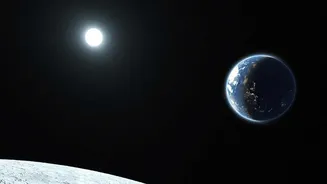
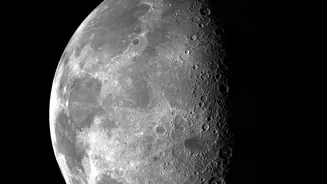
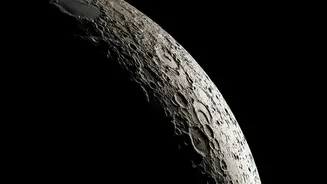
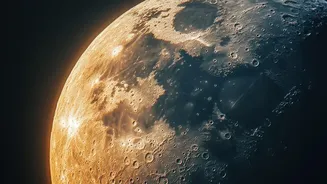
The Moon is tidally locked with Earth, meaning it rotates at the same rate it orbits, forever showing us the same face. The near side is defined by vast, dark volcanic plains called 'maria'. In stark contrast, the far side is almost entirely covered in bright,
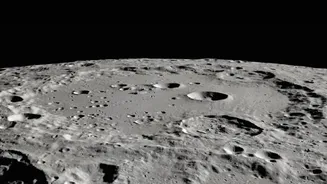
heavily cratered highlands and has a crust that is significantly thicker. This dramatic difference, known as the lunar dichotomy, has puzzled scientists for decades. Until recently, our understanding was limited to remote sensing data from orbiters. Actually holding and analysing rocks from the far side was a long-held dream of lunar science, a necessary step to truly understand why our celestial neighbour has two such different faces.
A Groundbreaking Mission
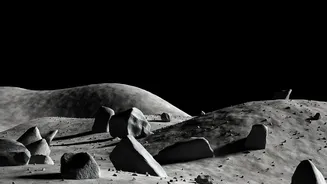
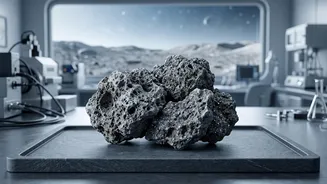
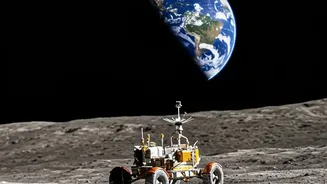
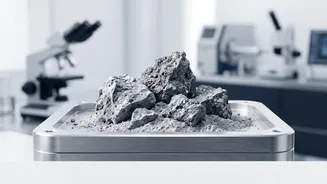
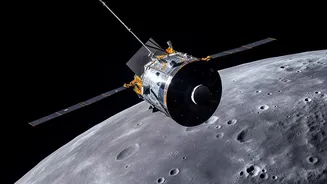
China's Chang'e-6 mission made history in 2024 by successfully landing in the Moon's South Pole-Aitken (SPA) Basin, the largest and oldest impact crater in the solar system, and returning with precious cargo. The probe collected 1,935.3 grams of rock and soil, the first physical material ever retrieved from the lunar far side. This achievement has been hailed as a major technical feat, providing an unparalleled opportunity to ground-truth orbital data and answer fundamental questions about the Moon's formation and evolution. These samples are now under intense study by scientists worldwide, ushering in a revolutionary era of lunar research.
First Glimpses: What the Samples Reveal
Initial analysis has already yielded fascinating results. Scientists discovered that far side soil is looser and more porous than samples from the near side. It also appears to be much drier, containing up to 200 times less water than some near-side samples, a finding that challenges previous assumptions about water distribution on the Moon. Geologically, the samples contain a diverse mix of materials, including local basalt fragments and debris ejected from other areas. These basalt pieces have provided evidence of volcanic activity on the far side as recently as 2.8 billion years ago and as far back as 4.2 billion years ago, extending the known timeline of lunar volcanism. These findings are crucial puzzle pieces in understanding the Moon's prolonged geological activity.
Solving the 'Two-Faced' Mystery
The fresh analysis is providing powerful new theories to explain the lunar dichotomy. One recent study from October 2026 suggests that uneven heating from Earth's gravitational pull after the Moon became tidally locked may be the cause. This temperature difference could have driven large-scale circulation in the Moon's ancient magma ocean, pushing crust-forming materials toward the far side, resulting in its thicker crust. Other research points to the colossal impact that formed the South Pole-Aitken Basin as a key event that profoundly reshaped the crust and upper mantle long after the magma ocean solidified. Another study revealed the far side's mantle is about 70-100°C cooler than the near side's, providing a crucial clue about the internal thermal differences that shaped the two hemispheres.
Implications for India and the World
These discoveries are not just academic; they have profound implications for the future of space exploration. Understanding the composition and resource availability—especially water ice—on the far side is critical for planning future lunar bases. For India, a leading space-faring nation with its own successful lunar missions like Chandrayaan, these global findings provide valuable context. India's Chandrayaan-1 was instrumental in confirming the presence of water on the Moon in 2008. As nations plan a return to the Moon, the data from Chang'e-6, combined with insights from missions like India's, will create a comprehensive map for humanity's next giant leap, informing everything from landing site selection to resource utilisation and our understanding of Earth's own origins.